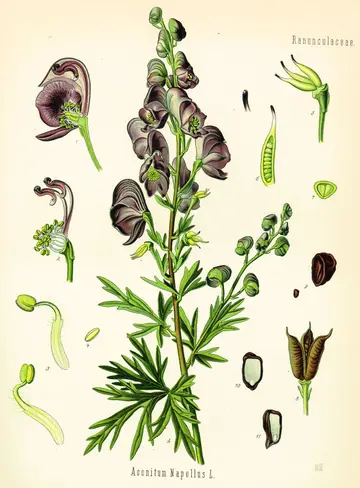
Description
Form
climber, perennial, deciduous
Flower colour
WhiteGreen
Flowering
No reliable data in the sources.
Habitat
Leaves
Deciduous leaves on branched stems with grooves that are easy to feel when handling the plant.
Flowers
Scented, greenish-white flowers with fluffy sepals beneath.
Fruit and seeds
Many fruits form in each flower cluster, each with a long, silky plume; together they give the look of an old man's beard.
Classification
- KingdomPlantae
- PhylumTracheophyta
- ClassMagnoliopsida
- OrderRanunculales
- FamilyRanunculaceae
- GenusClematis
- SpeciesClematis vitalba
Native range
According to POWO it is native from Portugal and Spain to Great Britain, central Europe, the Balkans, Greece, Türkiye, Lebanon-Syria, the Caucasus, Iran and Afghanistan, and to Morocco and Algeria.
Growing conditions
Soil
Base-rich, alkaline soils; a moist climate with warm summers.
Culture and history
An invasive climber
According to Wikipedia a single plant can produce more than 100,000 seeds, it climbs several times faster than English ivy and it also spreads from stem and root fragments, so it is invasive in many places outside its native range, such as New Zealand.
Toxicity
ASPCA lists the genus Clematis as toxic to cats, dogs and horses; the entry covers the whole genus. The toxic principle is an irritant glycoside (protoanemonin); signs are salivation, vomiting and diarrhoea.
In an emergency call your local poison centre; for pets, contact a vet straight away. See also: plants and pets.
Look-alikes
- Common ivy (Hedera helix): Also climbs trees and walls, but it is evergreen, with dark green leaves of three to five lobes on young shoots. Old man's beard is deciduous and easy to recognise in autumn by its silky-plumed fruits. Compare side by side →
Questions
Why is it called old man's beard?
According to Wikipedia the many fruits in each flower cluster carry long, silky plumes that together look like a white beard.
Old man's beard: is it toxic to cats and dogs?
Toxic to cats and dogs. Protoanemonin: salivation, vomiting.
Old man's beard: what is its scientific name?
Clematis vitalba L., in the genus Clematis and the family Ranunculaceae.
Sources
- Wikipedia: Clematis vitalba
- ASPCA Animal Poison Control: Clematis (Clematis spp.)
- Plants of the World Online (Kew) · native range (WCVP)
- GBIF · classification
- Wikidata
- Türkiye Bitkileri: Clematis vitalba
Checked: 2026-11-24. Spotted a mistake? Tell us.