Telling them apart
Common ivy vs Old man's beard
Common ivy (Hedera helix) and Old man's beard (Clematis vitalba) look similar enough to be confused. They belong to different families: Araliaceae (ivy family) and Ranunculaceae (buttercup family).
CautionCommon ivy is poisonous to people. Never pick or eat a wild plant unless you are certain of its identity. If poisoning is suspected, call your local poison centre or emergency number.
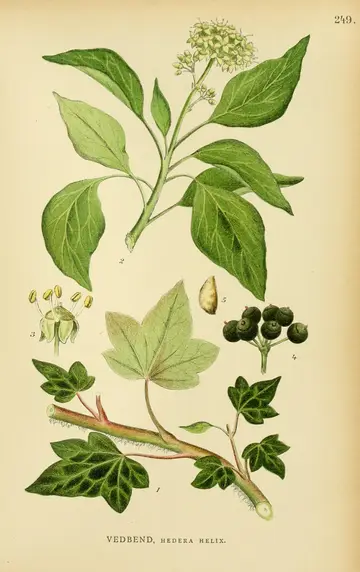
Image wanted. A licensed image will be added when found.
How to tell them apart
- Common ivy: Also climbs trees and walls, but it is evergreen, with dark green leaves of three to five lobes on young shoots. Old man's beard is deciduous and easy to recognise in autumn by its silky-plumed fruits.
Side by side
| Common ivy | Old man's beard | |
|---|---|---|
| Scientific name | Hedera helix | Clematis vitalba |
| Family | Araliaceae (ivy family) | Ranunculaceae (buttercup family) |
| Form | climber, perennial, evergreen | climber, perennial, deciduous |
| Height | Climbs to 20–30 m | — |
| Flower colour | Green, Yellow | White, Green |
| Origin | Europe, North Africa and western Asia | Europe, North Africa and western Asia |
| Toxicity | People: toxic · Cats: toxic · Dogs: toxic | Cats: toxic · Dogs: toxic |
| Flowering | — | |
| Leaves | Leaves on young climbing shoots are 3- to 5-lobed and dark green. On mature flowering shoots they are unlobed and egg-shaped. | Deciduous leaves on branched stems with grooves that are easy to feel when handling the plant. |
| Flowers | In autumn, small balls of greenish-yellow flowers open at the tips of mature shoots; they are one of the last nectar sources of the season. | Scented, greenish-white flowers with fluffy sepals beneath. |
| Fruit and seeds | Small, black berries that ripen in winter; an important winter food for birds. | Many fruits form in each flower cluster, each with a long, silky plume; together they give the look of an old man's beard. |
All pairs: look-alike plants · Full pages: Common ivy, Old man's beard