Description
Form
herbaceous, annual
Height: 1–2 m
Flower colour
Yellow
Flowering
June–September
Leaves
Large, palm-shaped, 3- to 7-lobed, rough-hairy leaves.
Flowers
Single flowers 5–8 cm across in the leaf axils, pale yellow with a dark red-purple centre, like a hollyhock flower; each lasts only a day.
Fruit and seeds
A long, five-angled, hairy, many-seeded capsule; picked young, it turns woody when ripe.
Classification
- KingdomPlantae
- PhylumTracheophyta
- ClassMagnoliopsida
- OrderMalvales
- FamilyMalvaceae
- GenusAbelmoschus
- SpeciesAbelmoschus esculentus
Native range
According to POWO it is native to India, Bangladesh and the western Himalaya. A West African or Ethiopian origin has also been proposed; its wild ancestor is not known for certain.
Growing conditions
Light
Full sun.
Water
Regular.
Soil
Free-draining, fertile soil.
Temperature
Loves heat; does not grow in cool weather and is not frost hardy.
The pods harden within days, so pick them often.
Look-alikes
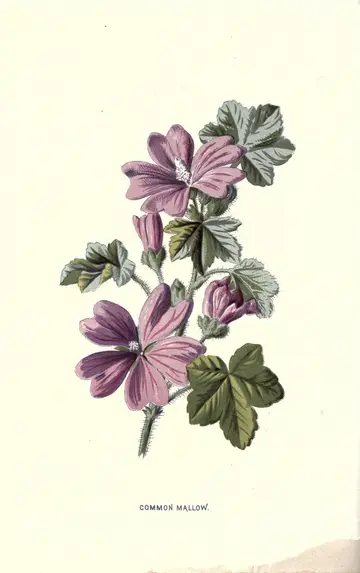
- Common mallow: Same family; its flowers are much smaller and pinkish-purple, and its fruit is a flat ring. Compare side by side →
Questions
Which family does okra belong to?
Okra is in the mallow family (Malvaceae), related to hollyhock, mallow and cotton.
Okra: when does it flower?
In summer and autumn: June–September. Months are for temperate northern-hemisphere climates and shift with altitude and weather.
Okra: how do you grow it?
Light: Full sun. Water: Regular. Soil: Free-draining, fertile soil. Temperature: Loves heat; does not grow in cool weather and is not frost hardy. The pods harden within days, so pick them often.
Okra: what is its scientific name?
Abelmoschus esculentus (L.) Moench, in the genus Abelmoschus and the family Malvaceae.
Sources
- Wikipedia: Okra
- World Flora Online
- Plants of the World Online (Kew) · native range (WCVP)
- GBIF · classification
- Wikidata
Checked: 2026-11-17. Spotted a mistake? Tell us.