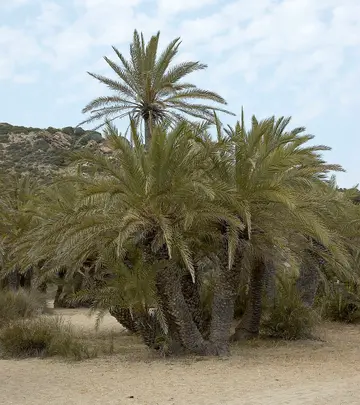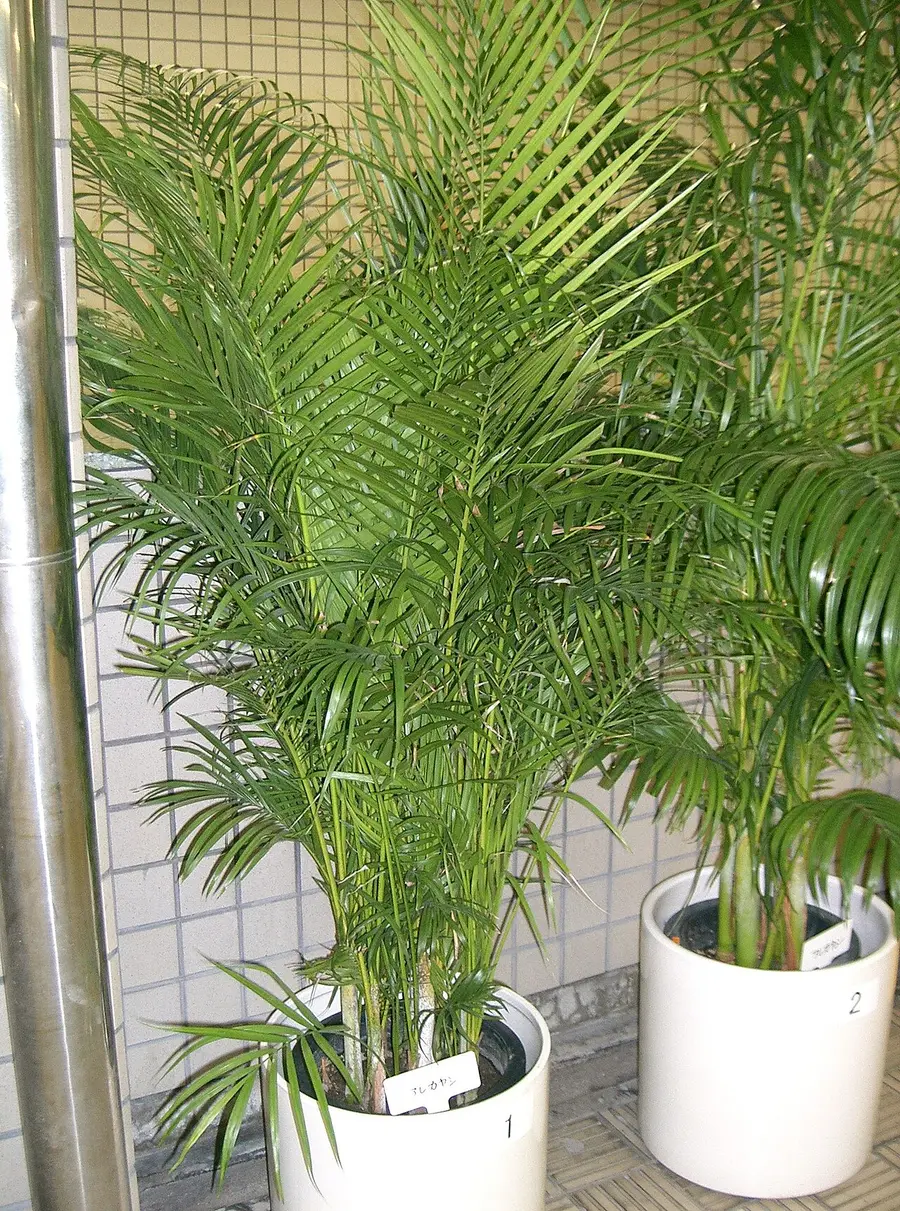
Description
Form
palm, perennial, evergreen
Height: Indoors 1.5–2.5 m; 6–12 m in the wild
Flowering
No reliable data in the sources.
Habitat
Leaves
Arching, feather-shaped leaves; leaf stalks and stems are yellowish green.
Flowers
Yellow flower clusters in the wild; it does not flower indoors.
Classification
- KingdomPlantae
- PhylumTracheophyta
- ClassLiliopsida
- OrderArecales
- FamilyArecaceae
- GenusChrysalidocarpus
- SpeciesChrysalidocarpus lutescens
Native range
According to POWO it is native to Madagascar. It is one of the most common ornamental palms in the tropics.
IUCN Red List status: Near threatened (NT).
Care
Light
Bright, indirect light.
Water
When the top 2–3 cm of soil are dry; no water in the saucer.
Soil
Free-draining, humus-rich mix.
Temperature
18–27 °C.
Leaf tips brown in dry air; sensitive to hard water.
Culture and history
The name
Long sold as Dypsis lutescens, it is now placed again in the genus Chrysalidocarpus, whose name means "golden fruit".
Toxicity
ASPCA lists the areca palm as non-toxic to cats, dogs and horses.
In an emergency call your local poison centre; for pets, contact a vet straight away. See also: plants and pets.
Look-alikes
- Parlour palm: Smaller and more slender, with dark green stems; happier in low light. Compare side by side →
Questions
Is the areca palm toxic to cats?
No. ASPCA lists it as non-toxic to cats, dogs and horses.
Areca palm: how do you care for it?
Light: Bright, indirect light. Water: When the top 2–3 cm of soil are dry; no water in the saucer. Soil: Free-draining, humus-rich mix. Temperature: 18–27 °C. Leaf tips brown in dry air; sensitive to hard water.
Areca palm: what is its scientific name?
Chrysalidocarpus lutescens H.Wendl., in the genus Chrysalidocarpus and the family Arecaceae.
Sources
- Wikipedia: Dypsis lutescens
- World Flora Online
- Plants of the World Online (Kew) · native range (WCVP)
- GBIF · classification
- Wikidata
- Wikipedia
- ASPCA Animal Poison Control: Areca Palm (Dypsis lutescens)
Checked: 2026-11-16. Spotted a mistake? Tell us.