Description
Form
palm, perennial, evergreen
Height: Indoors 1–2 m
Flower colour
Yellow
Flowering
No reliable data in the sources.
Habitat
Leaves
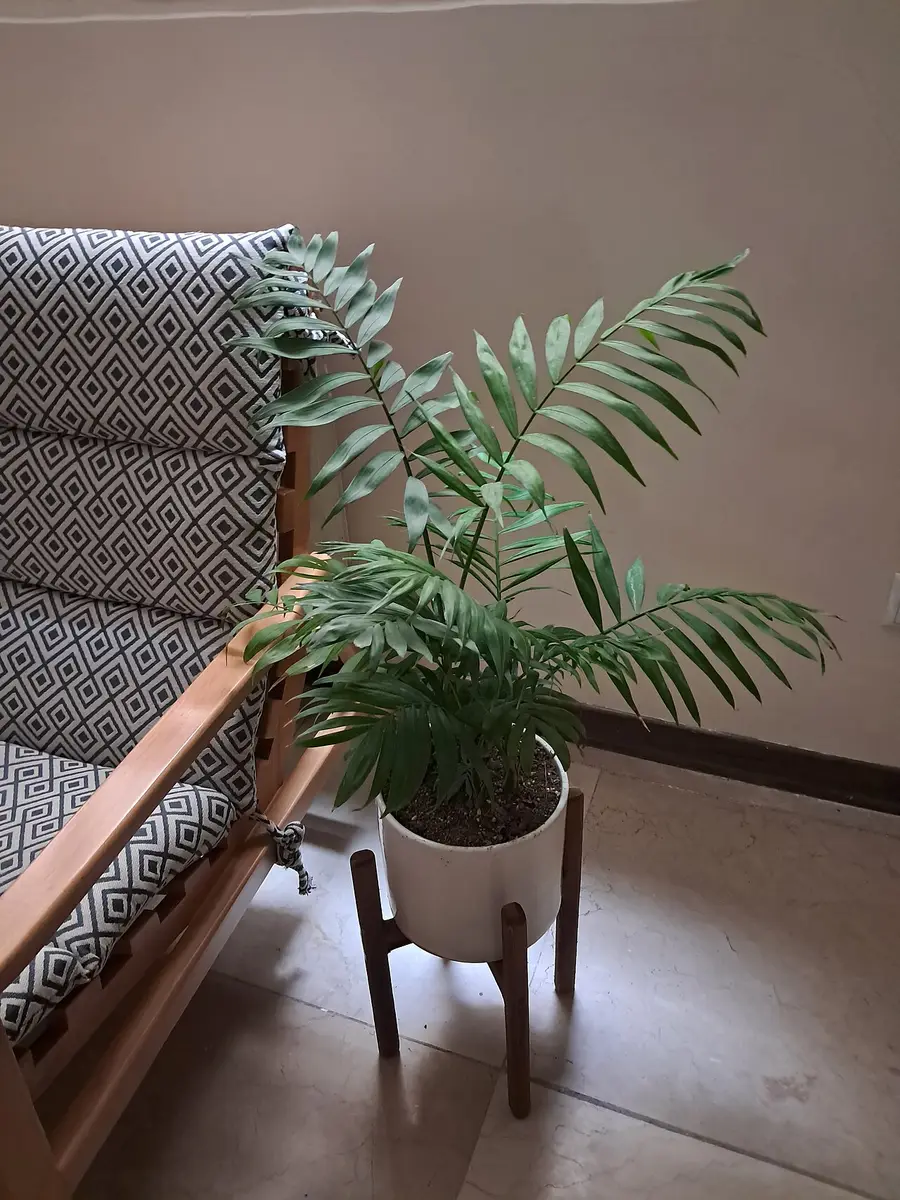
Feather-shaped leaves of narrow, light to dark green leaflets.
Flowers
On mature plants, stalks of small yellow ball-like flowers appear among the leaves.
Fruit and seeds
Small black berries.
Classification
- KingdomPlantae
- PhylumTracheophyta
- ClassLiliopsida
- OrderArecales
- FamilyArecaceae
- GenusChamaedorea
- SpeciesChamaedorea elegans
Native range
According to POWO it is native to southern and eastern Mexico, Guatemala, Belize and Honduras, in the shade of rainforest.
Care
Light
Low to medium indirect light; direct sun scorches the leaves.
Water
When the top 2–3 cm of soil are dry; no water in the saucer.
Soil
Free-draining, humus-rich mix.
Temperature
16–27 °C.
Pots on sale usually hold many seedlings together, which is why they look bushy.
Toxicity
ASPCA lists the parlour palm as non-toxic to cats and dogs.
In an emergency call your local poison centre; for pets, contact a vet straight away. See also: plants and pets.
Look-alikes
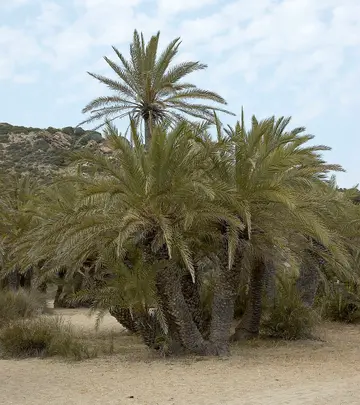
- Sago palm (Cycas revoluta): Not a true palm, with stiff, dark leaves; it is highly toxic to pets.
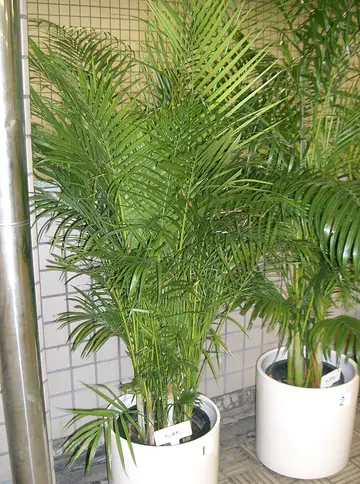
- Areca palm: Larger, with clusters of yellowish stems and arching fronds.
Questions
Is the parlour palm safe for cats and dogs?
Yes. ASPCA lists it as non-toxic to cats and dogs. The look-alike sago palm, however, is highly toxic.
Parlour palm: how do you care for it?
Light: Low to medium indirect light; direct sun scorches the leaves. Water: When the top 2–3 cm of soil are dry; no water in the saucer. Soil: Free-draining, humus-rich mix. Temperature: 16–27 °C. Pots on sale usually hold many seedlings together, which is why they look bushy.
Parlour palm: is it toxic to cats and dogs?
Non-toxic to cats and dogs. Non-toxic.
Parlour palm: what is its scientific name?
Chamaedorea elegans Mart., in the genus Chamaedorea and the family Arecaceae.
Sources
- Wikipedia: Chamaedorea elegans
- World Flora Online
- Plants of the World Online (Kew) · native range (WCVP)
- GBIF · classification
- Wikidata
- ASPCA Animal Poison Control: Parlor Palm (Chamaedorea elegans)
Checked: 2026-11-16. Spotted a mistake? Tell us.