Telling them apart
Areca palm vs Parlour palm
Areca palm (Chrysalidocarpus lutescens) and Parlour palm (Chamaedorea elegans) look similar enough to be confused. Both belong to the same family, Arecaceae (palm family).
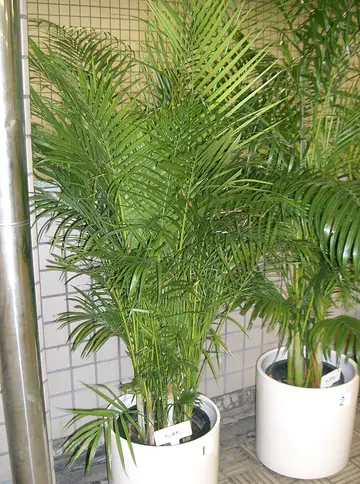
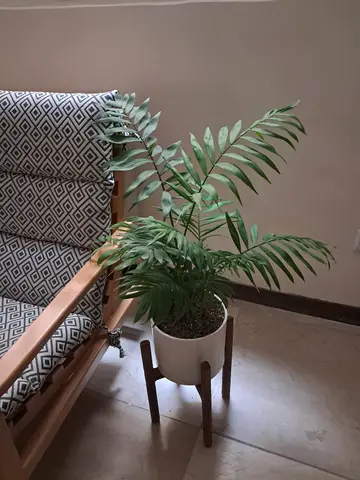
How to tell them apart
- Parlour palm: Smaller and more slender, with dark green stems; happier in low light.
Side by side
| Areca palm | Parlour palm | |
|---|---|---|
| Scientific name | Chrysalidocarpus lutescens | Chamaedorea elegans |
| Family | Arecaceae (palm family) | Arecaceae (palm family) |
| Form | palm, perennial, evergreen | palm, perennial, evergreen |
| Height | Indoors 1.5–2.5 m; 6–12 m in the wild | Indoors 1–2 m |
| Flower colour | — | Yellow |
| Origin | Madagascar | Southern Mexico to Honduras |
| Toxicity | Cats: non-toxic · Dogs: non-toxic | Cats: non-toxic · Dogs: non-toxic |
| Flowering | — | — |
| Leaves | Arching, feather-shaped leaves; leaf stalks and stems are yellowish green. | Feather-shaped leaves of narrow, light to dark green leaflets. |
| Flowers | Yellow flower clusters in the wild; it does not flower indoors. | On mature plants, stalks of small yellow ball-like flowers appear among the leaves. |
| Fruit and seeds | — | Small black berries. |
All pairs: look-alike plants · Full pages: Areca palm, Parlour palm