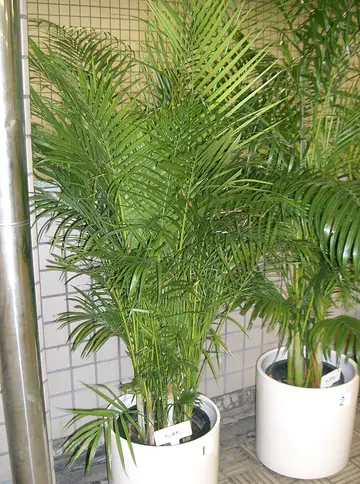
Description
Form
palm, perennial, evergreen
Height: Up to 30 m
Flowering
No reliable data in the sources.
Habitat
Leaves
Pinnate leaves 4–6 m long with leaflets 60–90 cm long; old leaves break away cleanly, leaving a smooth trunk.
Flowers
Male and female flowers grow in the same inflorescence, the female flower much larger than the male. Each inflorescence develops inside a sheathing spathe.
Fruit and seeds
Botanically a drupe: a fibrous husk around a hard shell holding white flesh and coconut water. It takes 11 months from the opening of the female flowers to harvest.
Classification
- KingdomPlantae
- PhylumTracheophyta
- ClassLiliopsida
- OrderArecales
- FamilyArecaceae
- GenusCocos
- SpeciesCocos nucifera
Native range
According to POWO it is native to the Philippines, Maluku, New Guinea, Queensland and western Pacific islands (Solomon Islands, Vanuatu, Samoa, Tonga); it is now grown on tropical coasts everywhere.
Culture and history
Fruit per tree
According to Wikipedia a tall coconut palm on fertile soil produces about 80 fruits a year. Tall varieties start fruiting at 6–10 years and live for 60–100 years.
Look-alikes
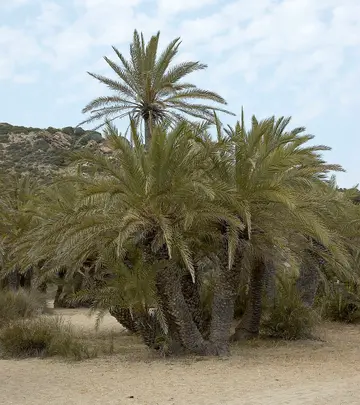
- Date palm (Phoenix dactylifera): Also a single-trunked palm with pinnate leaves, but its trunk is covered in old leaf bases and its fruits are small, sweet dates in bunches. Compare side by side →
Questions
Is a coconut really a nut?
No. Botanically it is a drupe: a fibrous husk, a hard shell, and inside the seed's white flesh and water.
Coconut palm: what is its scientific name?
Cocos nucifera L., in the genus Cocos and the family Arecaceae.
Sources
- Wikipedia: Coconut
- World Flora Online
- Plants of the World Online (Kew) · native range (WCVP)
- GBIF · classification
- Wikidata
- Wikipedia
Checked: 2026-11-22. Spotted a mistake? Tell us.