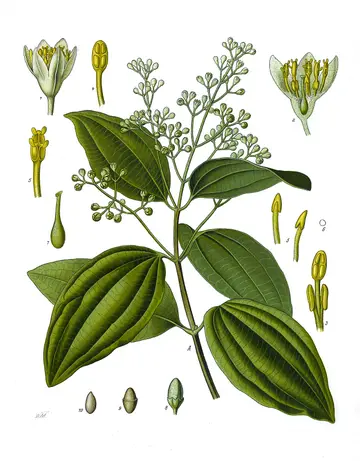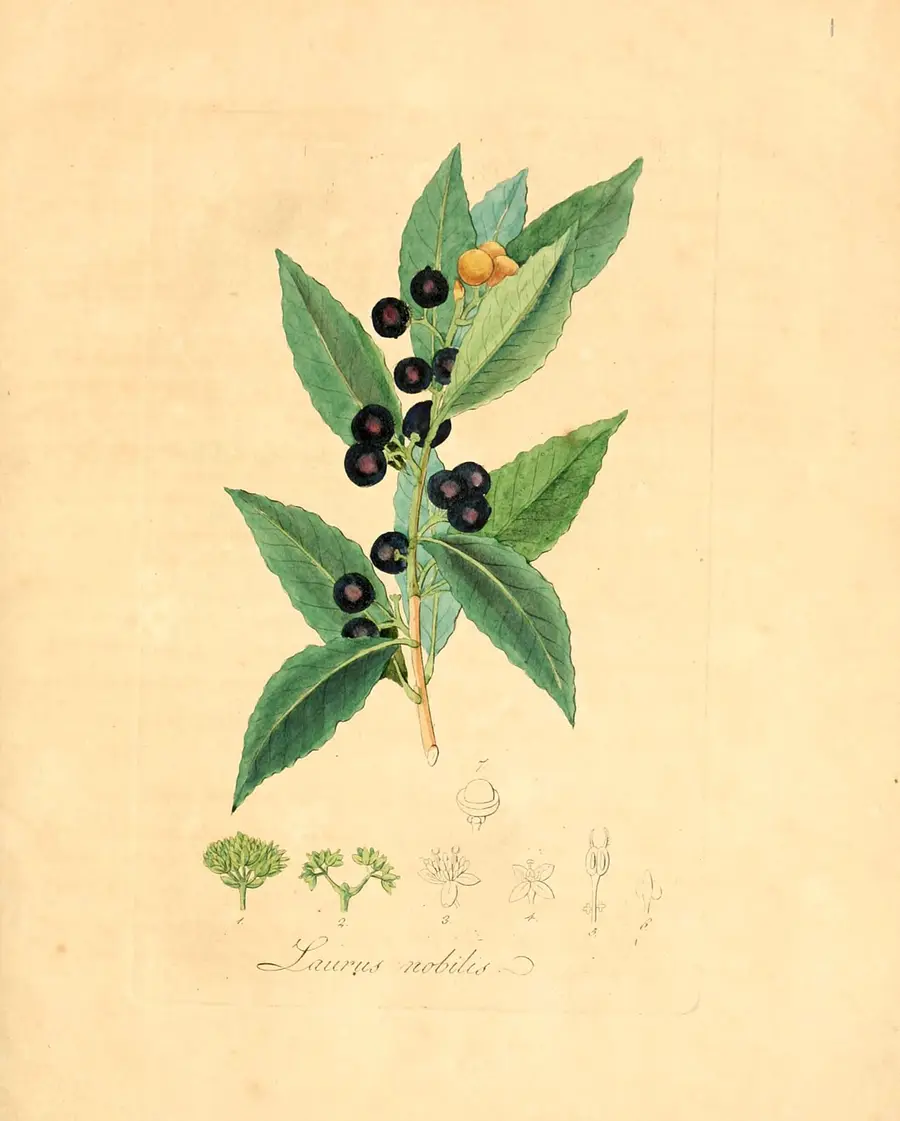
Description
Form
tree or shrub, perennial, evergreen
Height: As a shrub 2–5 m; as a tree 10–18 m
Flower colour
YellowGreen
Flowering
March–April
Habitat
Leaves
Alternate, lance-shaped, leathery, glossy leaves 6–12 cm long with slightly wavy edges, strongly and pleasantly scented when crushed.
Flowers
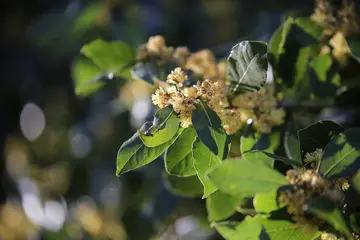
Small, yellowish-green flowers in clusters in the leaf axils; male and female flowers on separate trees.
Fruit and seeds
A small, glossy black berry with a single seed; only female trees fruit.
Classification
- KingdomPlantae
- PhylumTracheophyta
- ClassMagnoliopsida
- OrderLaurales
- FamilyLauraceae
- GenusLaurus
- SpeciesLaurus nobilis
Native range
According to POWO it is native to the Mediterranean Basin: Türkiye, Greece, the Balkans, Italy and its islands, France, North Africa, Cyprus, Lebanon–Syria and Palestine, in humid valleys, coastal woodland and maquis.
IUCN Red List status: Least concern (LC).
Growing conditions
Light
Sun or partial shade.
Water
Moderate; drought tolerant once established.
Soil
Any well-drained soil.
Temperature
Tolerates light frost.
Takes clipping well and is often grown as a hedge or topiary.
Culture and history
The victor's crown
In ancient Greece the laurel was sacred to Apollo, and winners of the Pythian Games received laurel wreaths; in Rome it became a symbol of victory. The words "laureate" and "baccalaureate" come from it.
The oracle of Delphi
Ancient sources say the Pythia, Apollo's priestess at Delphi, chewed or burned laurel leaves before prophesying.
Toxicity
ASPCA lists bay laurel as toxic to cats, dogs and horses. The toxic principles are eugenol and other essential oils; signs are vomiting and diarrhoea, and many whole leaves can block the gut.
In an emergency call your local poison centre; for pets, contact a vet straight away. See also: plants and pets.
Look-alikes
- Cherry laurel (Prunus laurocerasus): Its leaves resemble bay but are larger and glossier; they contain cyanogenic glycosides and are poisonous.
- Oleander: Narrow, leathery leaves in whorls of three; every part is highly poisonous. Compare side by side →
Questions
How do you tell bay laurel from cherry laurel?
Bay leaves are smaller, matt to slightly glossy and smell aromatic when crushed; cherry laurel leaves are larger and very glossy, smell of almonds and are poisonous.
Bay laurel: when does it flower?
In spring: March–April. Months are for temperate northern-hemisphere climates and shift with altitude and weather.
Bay laurel: how do you grow it?
Light: Sun or partial shade. Water: Moderate; drought tolerant once established. Soil: Any well-drained soil. Temperature: Tolerates light frost. Takes clipping well and is often grown as a hedge or topiary.
Bay laurel: is it toxic to cats and dogs?
Toxic to cats and dogs. Essential oils; vomiting, diarrhoea.
Bay laurel: what is its scientific name?
Laurus nobilis L., in the genus Laurus and the family Lauraceae.
Sources
- Wikipedia: Laurus nobilis
- World Flora Online
- Plants of the World Online (Kew) · native range (WCVP)
- GBIF · classification
- Wikidata
- ASPCA Animal Poison Control: Bay Laurel (Laurus nobilis)
Checked: 2026-11-16. Spotted a mistake? Tell us.