Description
Form
herb, annual
Height: 30–60 cm
Flower colour
WhitePurple
Flowering
July–September
Habitat
Leaves
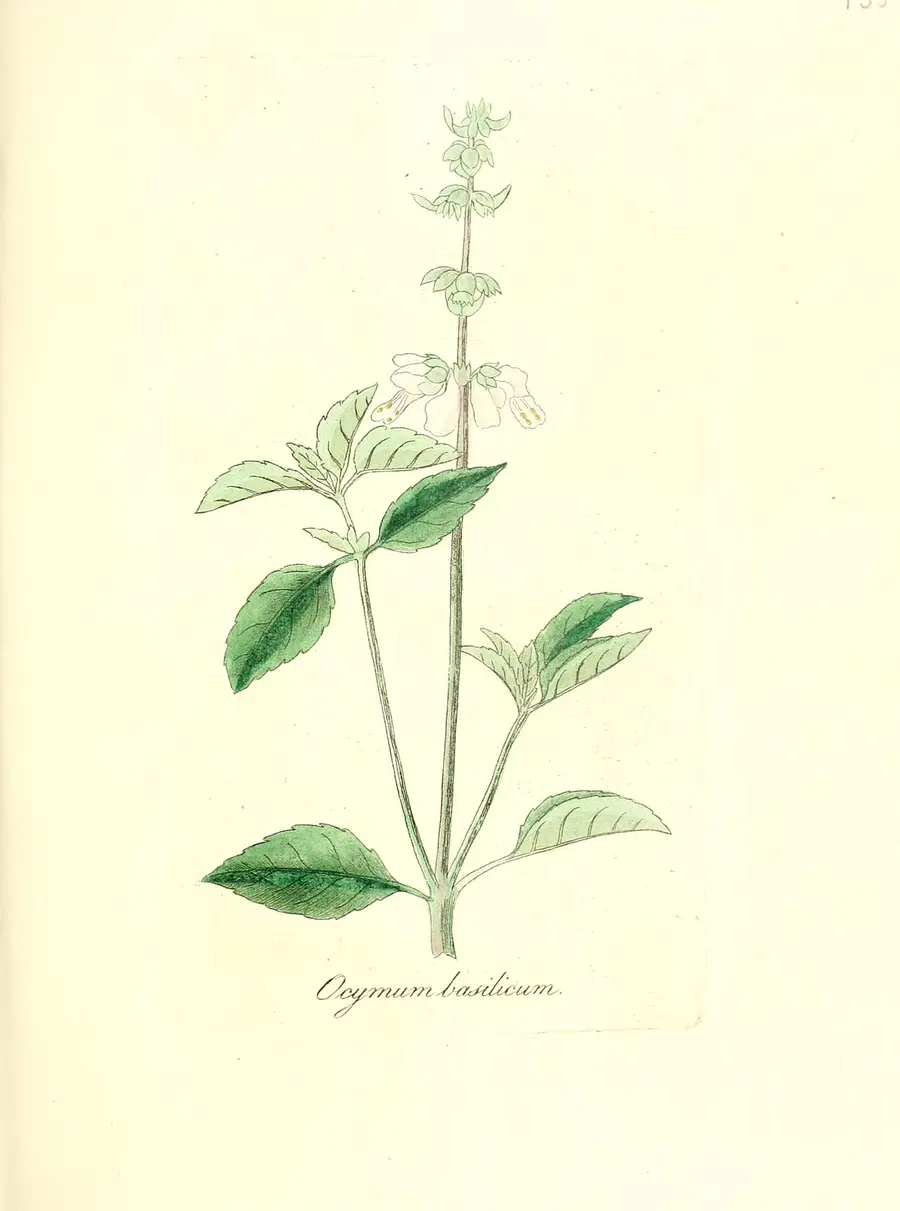
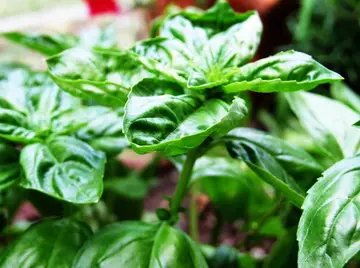
Opposite, oval, soft and glossy leaves with a strong scent.
Flowers
Small white or purplish flowers in whorls on spikes at the stem tips.
Fruit and seeds
Tiny nutlets that become gelatinous when wet.
Classification
- KingdomPlantae
- PhylumTracheophyta
- ClassMagnoliopsida
- OrderLamiales
- FamilyLamiaceae
- GenusOcimum
- SpeciesOcimum basilicum
Native range
According to POWO it is native to tropical and subtropical regions from India and Sri Lanka through Southeast Asia and southern China to New Guinea and northern Australia. It is grown worldwide as a culinary herb.
Growing conditions
Light
Full sun or a very bright window.
Water
Keep evenly moist.
Soil
Rich, well-drained soil.
Temperature
Very frost tender; damaged below 10 °C and does not survive frost.
Pinch out flower buds to keep the plant leafy.
Toxicity
ASPCA lists basil as non-toxic to cats and dogs.
In an emergency call your local poison centre; for pets, contact a vet straight away. See also: plants and pets.
Look-alikes
- Spearmint: Also an aromatic herb of the mint family, but perennial and spreading, with toothed, wrinkled leaves and a minty smell. Compare side by side →
Questions
Is basil safe for cats and dogs?
Yes. ASPCA lists basil as non-toxic to cats and dogs.
Basil: when does it flower?
In summer and autumn: July–September. Months are for temperate northern-hemisphere climates and shift with altitude and weather.
Basil: how do you grow it?
Light: Full sun or a very bright window. Water: Keep evenly moist. Soil: Rich, well-drained soil. Temperature: Very frost tender; damaged below 10 °C and does not survive frost.
Basil: when and how do you prune it?
Pinch out flower buds to keep the plant leafy.
Basil: is it toxic to cats and dogs?
Non-toxic to cats and dogs. Non-toxic.
Basil: what is its scientific name?
Ocimum basilicum L., in the genus Ocimum and the family Lamiaceae.
Sources
- ASPCA Animal Poison Control: Basil
- Wikipedia: Basil
- World Flora Online
- Plants of the World Online (Kew) · native range (WCVP)
- GBIF · classification
- Wikidata
Checked: 2026-11-16. Spotted a mistake? Tell us.