Telling them apart
Bay laurel vs Oleander
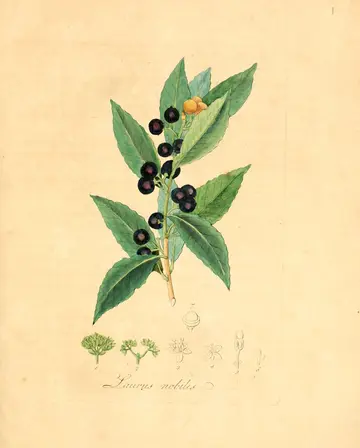
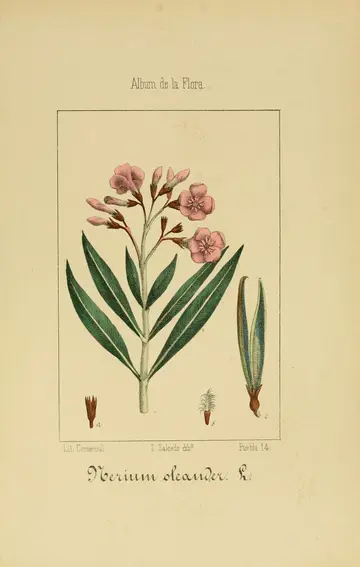
Bay laurel (Laurus nobilis) and Oleander (Nerium oleander) look similar enough to be confused. They belong to different families: Lauraceae (laurel family) and Apocynaceae (dogbane family).
CautionOleander is poisonous to people. Never pick or eat a wild plant unless you are certain of its identity. If poisoning is suspected, call your local poison centre or emergency number.
How to tell them apart
- Oleander: Narrow, leathery leaves in whorls of three; every part is highly poisonous.
- Bay laurel: Also has leathery, lance-shaped leaves, but they are alternate and smell pleasantly when crushed; oleander leaves are in threes and have no scent.
Side by side
| Bay laurel | Oleander | |
|---|---|---|
| Scientific name | Laurus nobilis | Nerium oleander |
| Family | Lauraceae (laurel family) | Apocynaceae (dogbane family) |
| Form | tree or shrub, perennial, evergreen | shrub, perennial, evergreen |
| Height | As a shrub 2–5 m; as a tree 10–18 m | 2–5 m |
| Flower colour | Yellow, Green | Pink, White, Red |
| Origin | Mediterranean Basin | Mediterranean to South Asia |
| Toxicity | Cats: toxic · Dogs: toxic | People: toxic · Cats: toxic · Dogs: toxic |
| Flowering | ||
| Leaves | Alternate, lance-shaped, leathery, glossy leaves 6–12 cm long with slightly wavy edges, strongly and pleasantly scented when crushed. | Narrow, leathery, dark green leaves, usually in whorls of three. |
| Flowers | Small, yellowish-green flowers in clusters in the leaf axils; male and female flowers on separate trees. | Clusters of five-petalled pink, white, red or yellow flowers at the branch tips; double forms exist. |
| Fruit and seeds | A small, glossy black berry with a single seed; only female trees fruit. | A long, slender, two-part capsule releasing hairy seeds. |
All pairs: look-alike plants · Full pages: Bay laurel, Oleander