Description
Form
herbaceous, perennial, evergreen
Height: 30–60 cm
Flower colour
OrangeRedPinkYellowWhite
Flowering
April–October
Habitat
Leaves
Long, deeply lobed leaves in a basal rosette, hairy underneath.
Flowers
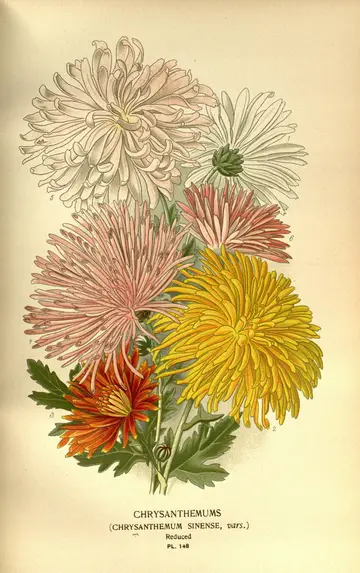
A single flower head 7–12 cm across on a long, leafless, hairy stalk. The wild form is orange-red; cultivars come in yellow, pink, white, red and orange.
Fruit and seeds
Small, hairy, dry fruits.
Classification
- KingdomPlantae
- PhylumTracheophyta
- ClassMagnoliopsida
- OrderAsterales
- FamilyAsteraceae
- GenusGerbera
- SpeciesGerbera jamesonii
Native range
According to POWO it is native only to north-eastern South Africa (Mpumalanga, Limpopo) and Eswatini. Garden and florist gerberas were bred by crossing this species with others.
Care
Light
Plenty of light, ideally a few hours of direct sun.
Water
When the top of the soil is dry, without wetting the centre of the rosette.
Soil
Free-draining, slightly acid soil.
Temperature
Not frost hardy; 15–25 °C is ideal.
If the crown (centre of the rosette) is buried it rots; plant it so the crown sits at the surface.
Culture and history
The name
The genus is named after the German physician and naturalist Traugott Gerber. The species name honours Robert Jameson, who collected the plant near Barberton in the late 19th century.
Toxicity
ASPCA lists the Barberton daisy (Gerbera jamesonii) as non-toxic to cats, dogs and horses.
In an emergency call your local poison centre; for pets, contact a vet straight away. See also: plants and pets.
Look-alikes
- Treasure flower: Smaller, short-stalked flowers that close in the evening and in cloudy weather. Compare side by side →
- German chamomile: Much smaller flowers, only white and yellow, with finely divided leaves. Compare side by side →
Questions
Are gerberas toxic to cats and dogs?
No. ASPCA lists the Barberton daisy as non-toxic to cats, dogs and horses.
How do I keep a potted gerbera going?
In a bright spot, watered when the top of the soil is dry and without wetting the centre of the rosette, it can live for years. Never bury the crown.
Barberton daisy: when does it flower?
In spring and summer and autumn: April–October. Months are for temperate northern-hemisphere climates and shift with altitude and weather.
Barberton daisy: how do you care for it?
Light: Plenty of light, ideally a few hours of direct sun. Water: When the top of the soil is dry, without wetting the centre of the rosette. Soil: Free-draining, slightly acid soil. Temperature: Not frost hardy; 15–25 °C is ideal. If the crown (centre of the rosette) is buried it rots; plant it so the crown sits at the surface.
Barberton daisy: what is its scientific name?
Gerbera jamesonii Bolus ex Hook.f., in the genus Gerbera and the family Asteraceae.
Sources
- Wikipedia: Gerbera jamesonii
- World Flora Online
- Plants of the World Online (Kew) · native range (WCVP)
- GBIF · classification
- Wikidata
- ASPCA Animal Poison Control: Gerber Daisy (Gerbera jamesonii)
Checked: 2026-11-17. Spotted a mistake? Tell us.