Description
Form
succulent, perennial, evergreen
Height: 60–100 cm
Flower colour
Yellow
Flowering
No reliable data in the sources.
Leaves
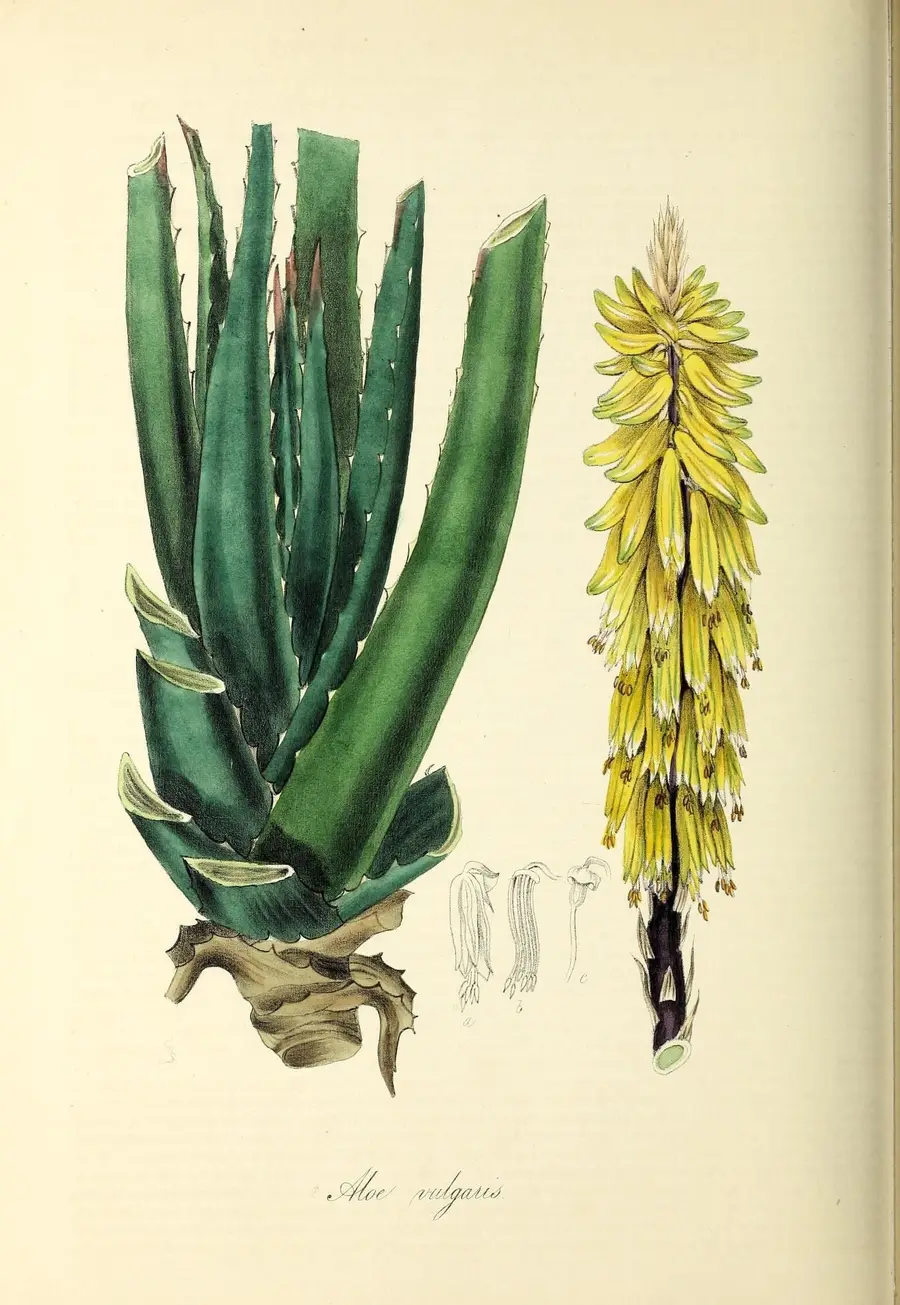
Thick, fleshy, lance-shaped leaves in a rosette, grey-green with small teeth along the edges.
Flowers
Tubular yellow flowers hang from the tip of a stalk 60–90 cm tall rising from the centre of the rosette; houseplants rarely flower.
Fruit and seeds
A small capsule.
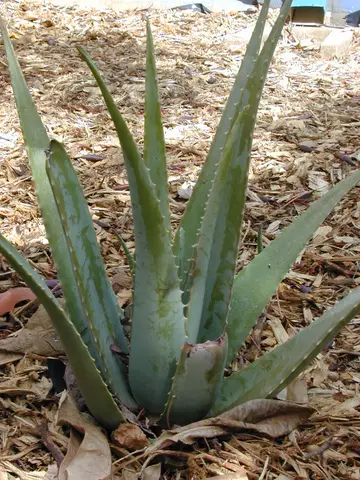
Classification
- KingdomPlantae
- PhylumTracheophyta
- ClassLiliopsida
- OrderAsparagales
- FamilyAsphodelaceae
- GenusAloe
- SpeciesAloe vera
Native range
POWO gives its native range as Oman, but because the plant has been cultivated since ancient times its true origin is debated. It is widely grown and naturalised in warm, dry parts of the Mediterranean, Africa, Asia and the Americas.
Care
Light
Bright light, some direct sun.
Water
Water only when the soil is completely dry; very little in winter.
Soil
Cactus and succulent mix.
Temperature
13–27 °C; not frost hardy.
Overwatering is the most common cause of death.
Toxicity
ASPCA lists aloe as toxic to cats, dogs and horses. The toxic principles are saponins and anthraquinones; signs are vomiting (not in horses), lethargy and diarrhoea. ASPCA notes that the gel itself is considered edible.
In an emergency call your local poison centre; for pets, contact a vet straight away. See also: plants and pets.
Look-alikes
- Agave: Much larger, with stiff leaves ending in a sharp spine and no gel inside. Compare side by side →
- Snake plant (Dracaena trifasciata): Also has thick, fleshy, sword-shaped leaves, but they rise stiffly from an underground rhizome instead of forming a rosette, carry pale grey-green crossbands on dark green, and have no teeth on the edges. Aloe vera leaves are grey-green with small white teeth along the edges. Compare side by side →
Questions
Is aloe vera toxic to cats and dogs?
Yes. ASPCA lists aloe as toxic to cats, dogs and horses because of its saponins and anthraquinones.
Aloe vera: how do you care for it?
Light: Bright light, some direct sun. Water: Water only when the soil is completely dry; very little in winter. Soil: Cactus and succulent mix. Temperature: 13–27 °C; not frost hardy. Overwatering is the most common cause of death.
Aloe vera: what is its scientific name?
Aloe vera (L.) Burm.f., in the genus Aloe and the family Asphodelaceae.
Sources
- ASPCA Animal Poison Control: Aloe
- Wikipedia: Aloe vera
- World Flora Online
- Plants of the World Online (Kew) · native range (WCVP)
- GBIF · classification
- Wikidata
- POWO: Aloe vera native range (WCVP, GBIF 206597037)
Checked: 2026-11-16. Spotted a mistake? Tell us.