Description
Form
succulent, perennial, evergreen
Height: Rosette 1–2 m; flowering stalk 5–8 m
Flower colour
Yellow
Flowering
June–August
Leaves
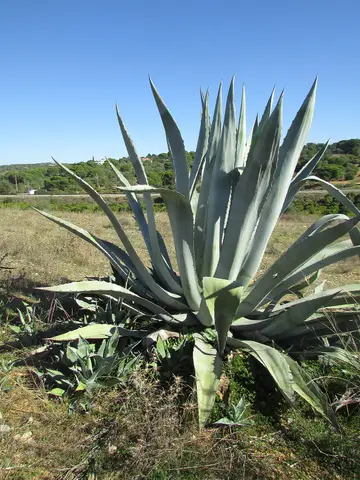
Thick leaves 1–2 m long, grey-blue or edged with yellow; the margins carry hooked teeth and each leaf ends in a very hard, sharp spine.
Flowers
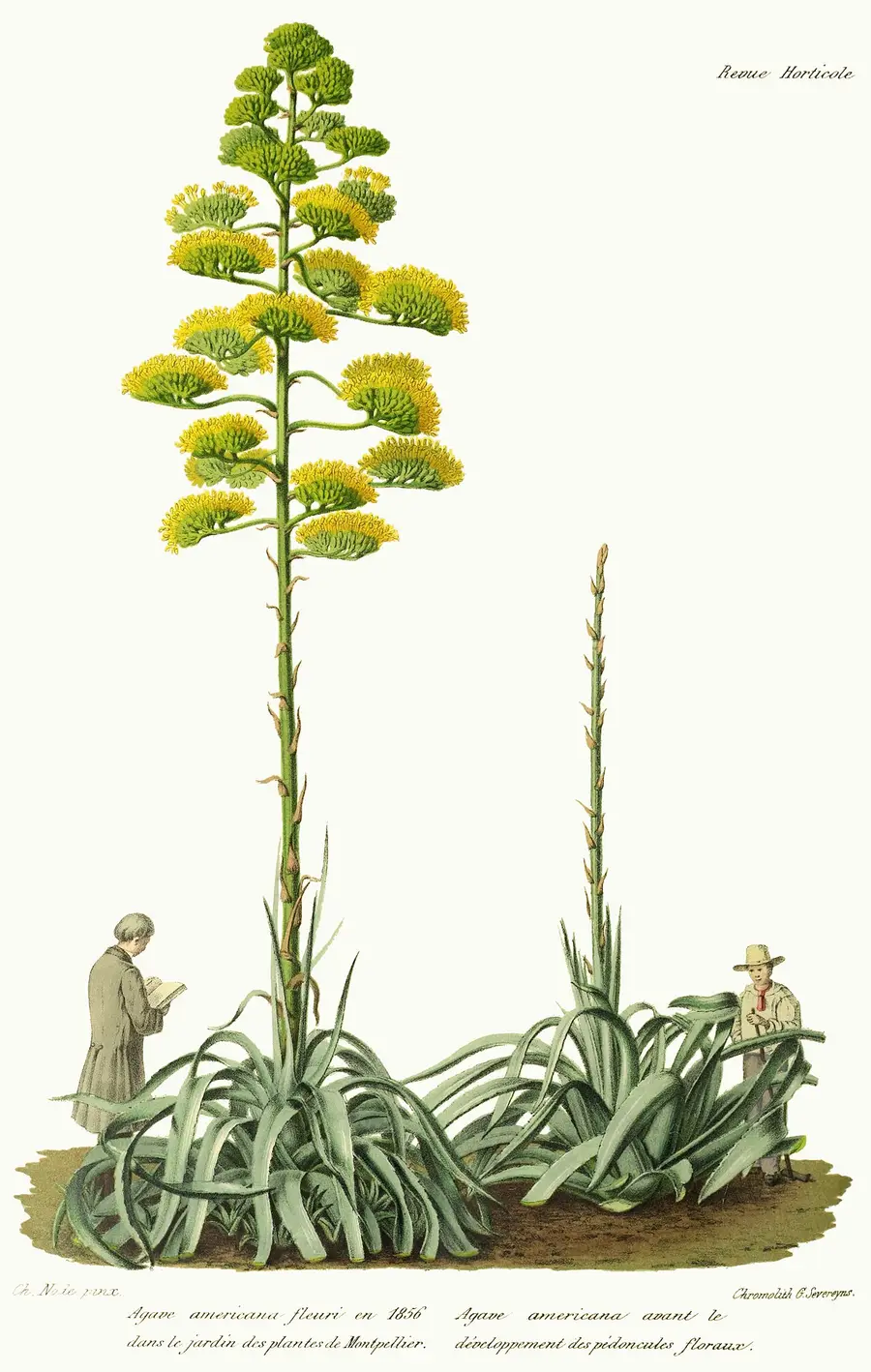
When the plant is 10–30 years old, a giant, tree-like branched stalk rises from the centre of the rosette, with clusters of yellow flowers at the branch tips.
Fruit and seeds
Capsules; the plant can also produce small plantlets on the flowering stalk.
Classification
- KingdomPlantae
- PhylumTracheophyta
- ClassLiliopsida
- OrderAsparagales
- FamilyAsparagaceae
- GenusAgave
- SpeciesAgave americana
Native range
According to POWO it is native to most of Mexico and to Arizona and Texas in the United States. It has been taken to warm regions around the world and has naturalised along Mediterranean coasts.
IUCN Red List status: Least concern (LC).
Growing conditions
Light
Full sun.
Water
Very drought tolerant.
Soil
Free-draining, stony soil.
Temperature
Tolerates light frost.
The leaf-tip spines can cause injuries; plant it away from paths and children's play areas.
Culture and history
The "century" plant
Its English name comes from the belief that it waits a hundred years to flower. In reality it usually takes 10–30 years.
Toxicity
The leaf sap contains calcium oxalate crystals and saponins and can cause an itchy rash and skin irritation. The spines at the leaf tips can cause deep wounds.
In an emergency call your local poison centre; for pets, contact a vet straight away. See also: plants and pets.
Look-alikes
- Aloe vera: Much smaller, with soft, gel-filled leaves and no hard tip spine. Agave belongs to a different family. Compare side by side →
Questions
Does the century plant die after flowering?
Yes. It flowers once in its life and the main rosette then dies. Offsets from the base live on.
Century plant: when does it flower?
In summer: June–August. Months are for temperate northern-hemisphere climates and shift with altitude and weather.
Century plant: how do you grow it?
Light: Full sun. Water: Very drought tolerant. Soil: Free-draining, stony soil. Temperature: Tolerates light frost. The leaf-tip spines can cause injuries; plant it away from paths and children's play areas.
Century plant: what is its scientific name?
Agave americana L., in the genus Agave and the family Asparagaceae.
Sources
- Wikipedia: Agave americana
- World Flora Online
- Plants of the World Online (Kew) · native range (WCVP)
- GBIF · classification
- Wikidata
Checked: 2026-11-16. Spotted a mistake? Tell us.