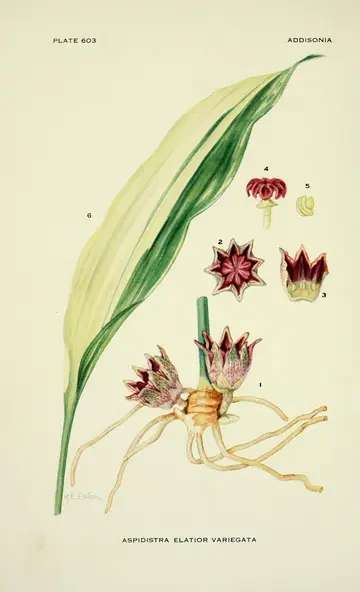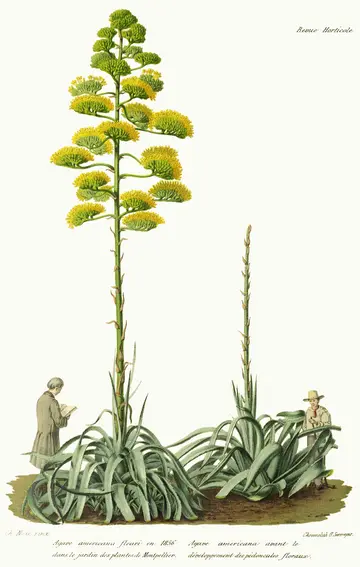
Description
Form
succulent herb, perennial, evergreen
Height: 50–120 cm (leaf length)
Flower colour
WhiteGreen
Flowering
No reliable data in the sources.
Habitat
Leaves
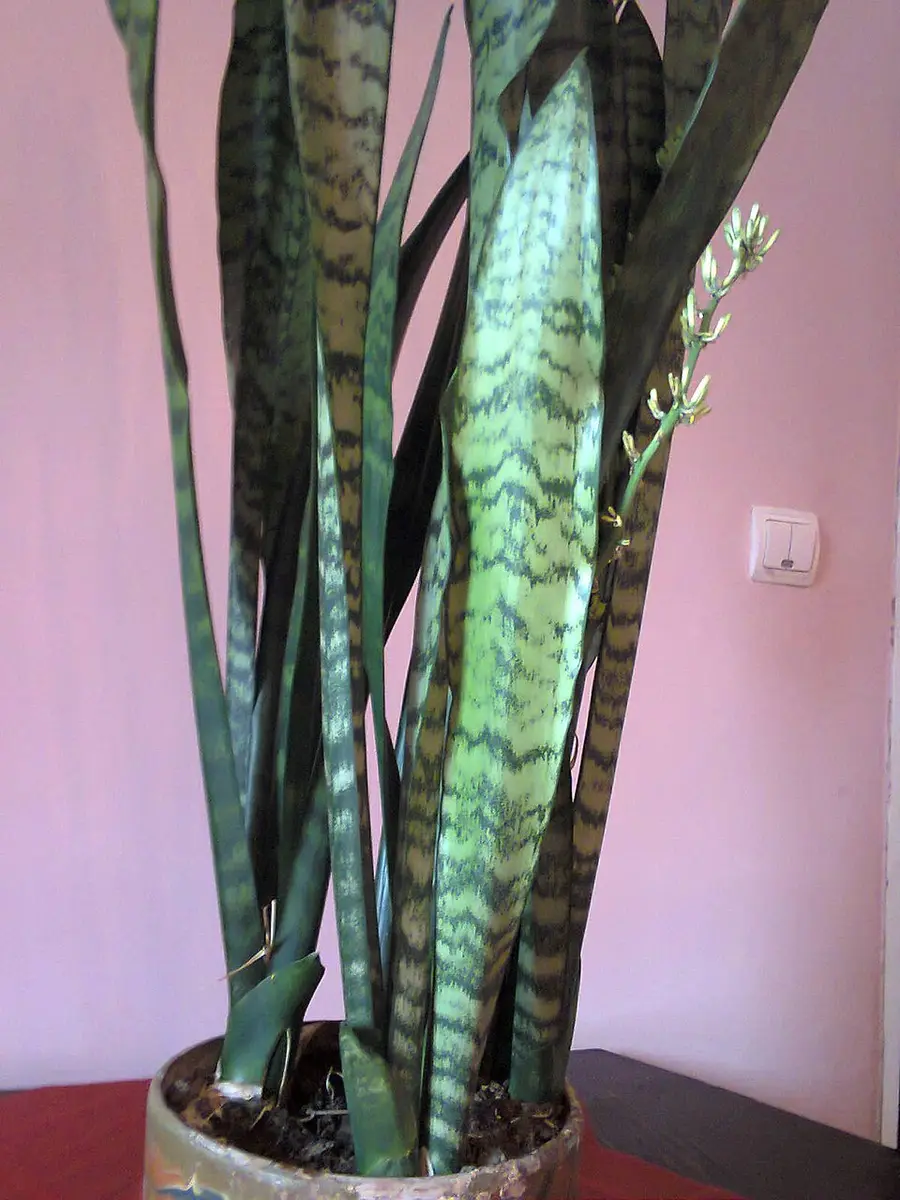
Stiff, sword-shaped, upright leaves with dark green and grey-green cross bands; some cultivars have yellow margins.
Flowers
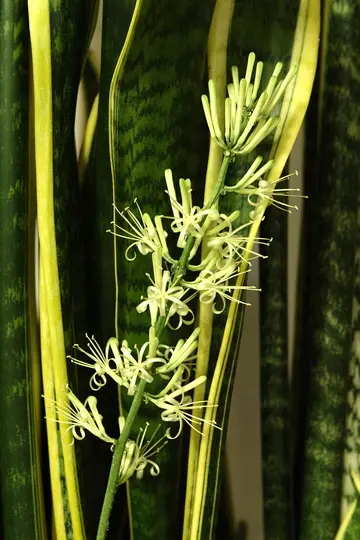
Fragrant, greenish-white tubular flowers on a slender stalk; occasional indoors.
Fruit and seeds
Small orange berries.
Classification
- KingdomPlantae
- PhylumTracheophyta
- ClassLiliopsida
- OrderAsparagales
- FamilyAsparagaceae
- GenusDracaena
- SpeciesDracaena trifasciata
Native range
According to POWO it is native to Nigeria, Cameroon, Gabon, Equatorial Guinea, the Central African Republic, both Congos and Tanzania, on rocky, dry ground. It has escaped from gardens in many tropical regions.
Care
Light
Tolerates low light; grows best in bright, indirect light.
Water
Very little: only when the soil is completely dry, every 2–3 weeks in summer and about once a month in winter. Overwatering is the most common cause of death.
Soil
Free-draining cactus or succulent mix.
Temperature
15–29 °C; damaged below 10 °C.
Rot from overwatering is by far the most common problem.
Toxicity
ASPCA lists it as toxic to cats and dogs. The toxic principles are saponins; signs include nausea, vomiting and diarrhoea.
In an emergency call your local poison centre; for pets, contact a vet straight away. See also: plants and pets.
Look-alikes
- ZZ plant: Equally tough, but its leaves are made of many glossy leaflets on a thick stalk. Compare side by side →
Questions
Is the snake plant toxic to cats?
Yes. ASPCA lists it as toxic to cats and dogs; it contains saponins that cause vomiting and diarrhoea.
Why is Sansevieria now called Dracaena?
DNA studies showed that Sansevieria sits within Dracaena, so botanists merged the two genera in 2017.
Snake plant: how do you care for it?
Light: Tolerates low light; grows best in bright, indirect light. Water: Very little: only when the soil is completely dry, every 2–3 weeks in summer and about once a month in winter. Overwatering is the most common cause of death. Soil: Free-draining cactus or succulent mix. Temperature: 15–29 °C; damaged below 10 °C. Rot from overwatering is by far the most common problem.
Snake plant: what is its scientific name?
Dracaena trifasciata (Prain) Mabb., in the genus Dracaena and the family Asparagaceae.
Sources
- ASPCA Animal Poison Control: Snake plant
- Wikipedia: Dracaena trifasciata
- World Flora Online
- Plants of the World Online (Kew) · native range (WCVP)
- GBIF · classification
- Wikidata
Checked: 2026-11-16. Spotted a mistake? Tell us.