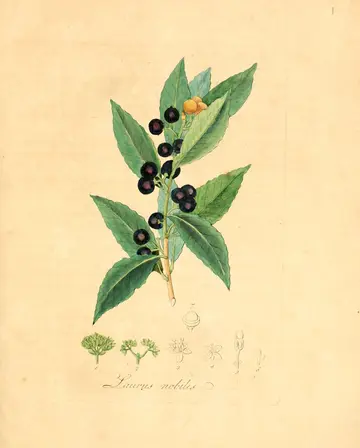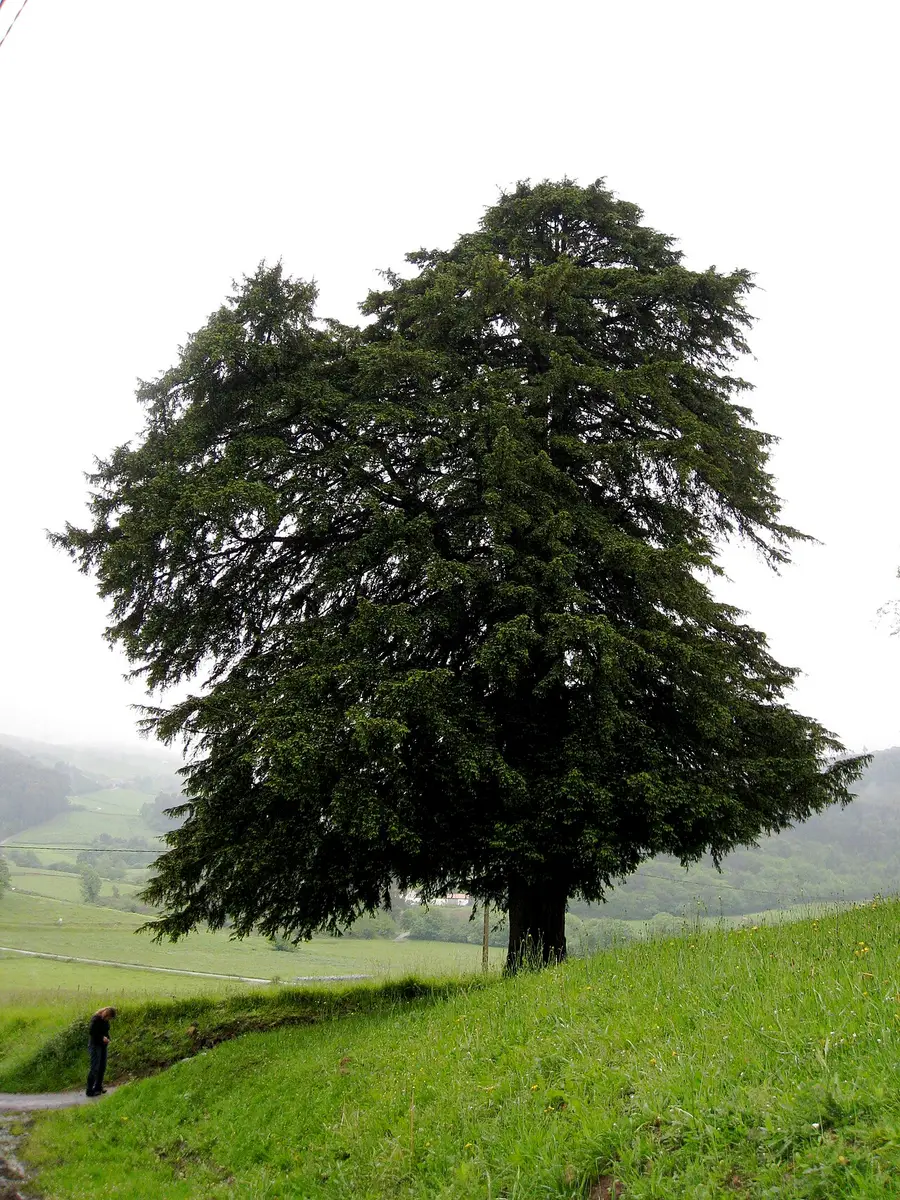
Description
Form
tree, perennial, evergreen
Height: 10–20 m
Flowering
No reliable data in the sources.
Habitat
Leaves
Flat needles 1–4 cm long, dark green above and paler below, arranged in two rows along the shoot.
Flowers
Yews do not flower. Male and female trees are separate.
Fruit and seeds
On female trees a single seed is surrounded by a red, fleshy cup (aril). The aril is not toxic, but the seed inside is highly poisonous.
Classification
- KingdomPlantae
- PhylumTracheophyta
- ClassPinopsida
- OrderPinales
- FamilyTaxaceae
- GenusTaxus
- SpeciesTaxus baccata
Native range
According to POWO it is native to most of Europe, North Africa (Algeria, Morocco), the Azores, Türkiye, the Caucasus and northern Iran.
IUCN Red List status: Least concern (LC).
Culture and history
Longevity and archery
Some yews in Europe are estimated to be well over a thousand years old. Its tough, flexible wood was used for medieval English longbows.
Toxicity
Every part except the red aril, especially the leaves and seeds, contains taxine alkaloids. ASPCA notes that it can cause sudden death from heart failure; early signs in dogs include muscle tremors, difficulty breathing and seizures. It is particularly dangerous to horses and cattle; never leave hedge clippings where animals can reach them.
In an emergency call your local poison centre; for pets, contact a vet straight away. See also: plants and pets.
Look-alikes
- Firs: Their needles are also flat, but have two distinct white bands underneath, and they bear upright cones; yews have no cones. Compare side by side →
- Cilician fir (Abies cilicica): Its needles are flat too, but have two clear white bands underneath, and its large, cylindrical cones stand upright on the branches. Yew needles are pale green underneath, and instead of cones it bears single seeds in a red, fleshy cup; the seed is very poisonous. Compare side by side →
Questions
Is the red yew berry poisonous?
The red fleshy part (aril) is not, but the seed inside it is highly poisonous, as are the leaves. Do not eat any part of a yew.
English yew: what is its scientific name?
Taxus baccata L., in the genus Taxus and the family Taxaceae.
Sources
- Wikipedia: Taxus baccata
- World Flora Online
- Plants of the World Online (Kew) · native range (WCVP)
- GBIF · classification
- Wikidata
- ASPCA Animal Poison Control: Yew (Taxus)
Checked: 2026-11-16. Spotted a mistake? Tell us.