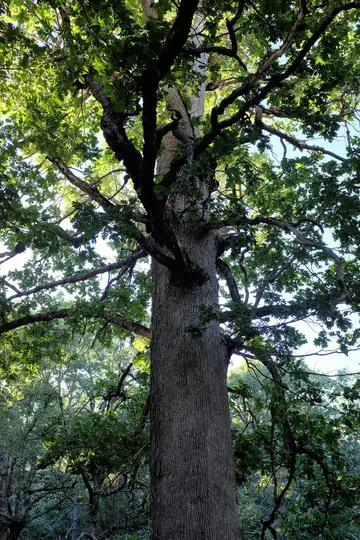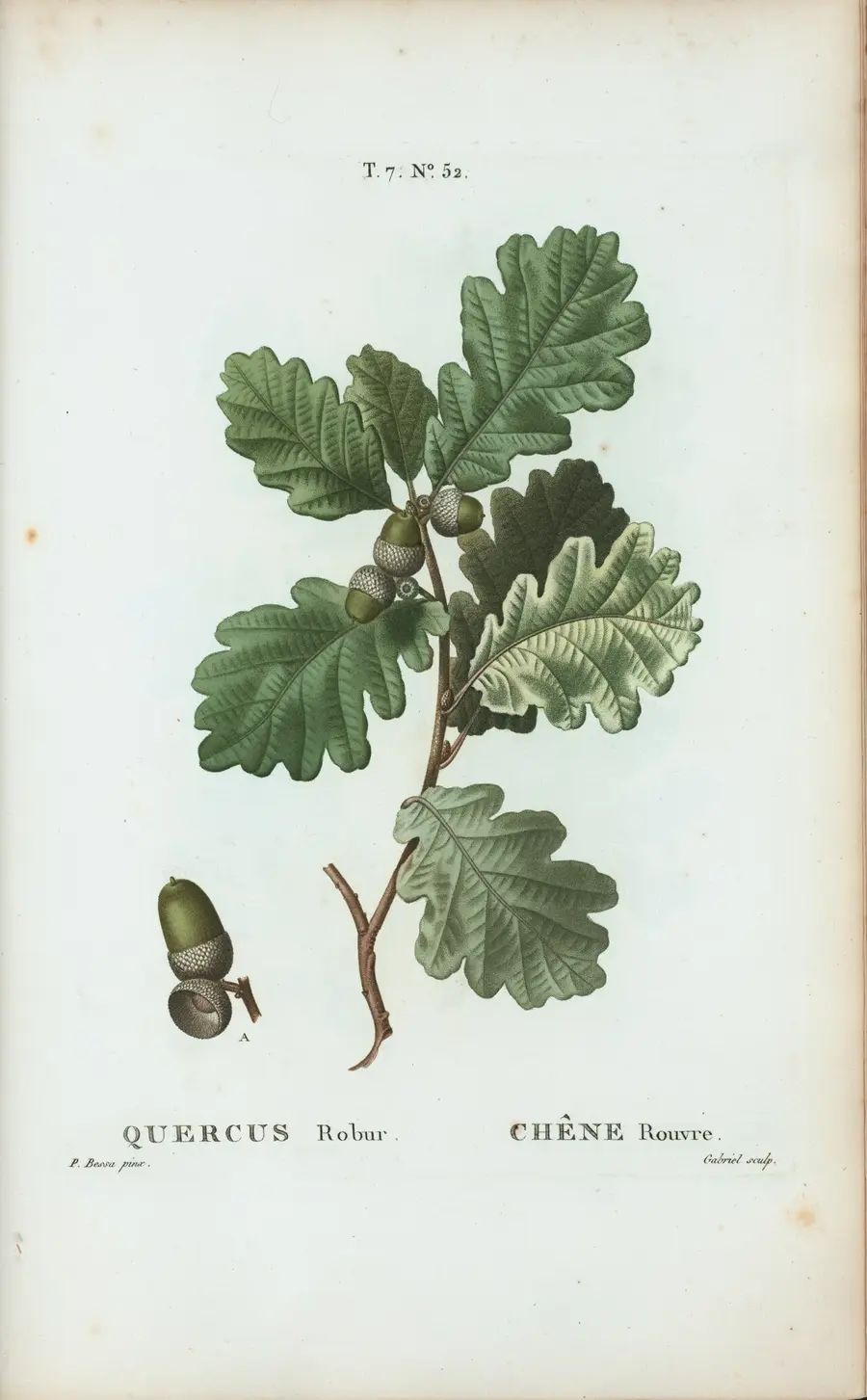
Description
Form
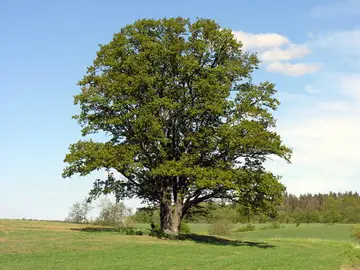
tree, perennial, deciduous
Height: 20–40 m
Flower colour
Green
Flowering
April–May
Leaves
Leaves mostly 10–12 cm, irregularly and roundly lobed, with a very short stalk and small "ear-lobes" at the base.
Flowers
Male flowers in hanging, yellowish-green catkins; female flowers small and inconspicuous. They open with the leaves and are wind-pollinated.
Fruit and seeds
Acorns on a long stalk of 4–8 cm, singly or a few together. A short leaf stalk and a long acorn stalk separate it from the sessile oak.
Classification
- KingdomPlantae
- PhylumTracheophyta
- ClassMagnoliopsida
- OrderFagales
- FamilyFagaceae
- GenusQuercus
- SpeciesQuercus robur
Native range
According to POWO it is native to most of Europe (from Spain and Britain to European Russia), the Balkans, the Caucasus and Türkiye. It has been introduced to parts of North America and South Africa.
IUCN Red List status: Least concern (LC).
Culture and history
Longevity
Some English oaks in Europe are estimated to be 800–1,000 years old. The oak stands for strength and endurance in many European cultures, and its wood was used for centuries in shipbuilding and wine barrels.
Toxicity
ASPCA lists oaks (Quercus species) as toxic to horses. The toxic principle is gallotannin; signs include abdominal pain, constipation followed by diarrhoea, weakness and urinary changes. Acorns can also block the gut.
In an emergency call your local poison centre; for pets, contact a vet straight away. See also: plants and pets.
Look-alikes
- Sessile oak (Quercus petraea): Its leaf stalks are long and its acorns stalkless: the opposite of the English oak.
- Kasnak oak: A large mountain oak endemic to Türkiye, with bigger leaves that are hairy underneath. Compare side by side →
Questions
How do you tell English oak from sessile oak?
English oak has long-stalked acorns and very short leaf stalks; sessile oak is the reverse.
English oak: when does it flower?
In spring: April–May. Months are for temperate northern-hemisphere climates and shift with altitude and weather.
English oak: what is its scientific name?
Quercus robur L., in the genus Quercus and the family Fagaceae.
Sources
- Wikipedia: Quercus robur
- World Flora Online
- Plants of the World Online (Kew) · native range (WCVP)
- GBIF · classification
- Wikidata
- ASPCA Animal Poison Control: Oak (Quercus)
Checked: 2026-11-16. Spotted a mistake? Tell us.