Description
Form
tree, perennial, deciduous
Height: 25–30 m
Flower colour
Yellow
Flowering
February–March
Habitat
Leaves
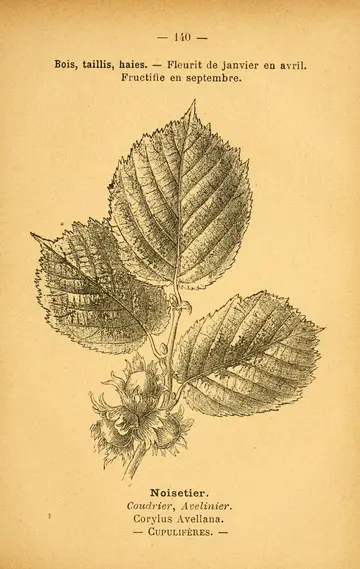
Broadly egg-shaped leaves with double-toothed, shallowly lobed edges and a heart-shaped base.
Flowers
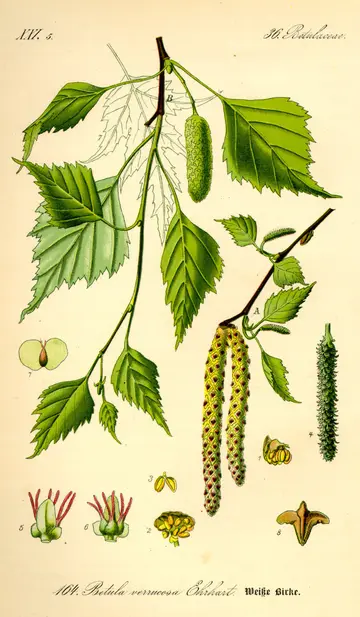
In late winter, before the leaves: yellow male catkins and tiny, bud-like female flowers with red tips.
Fruit and seeds
Nuts smaller than garden hazelnuts, each wrapped in a deeply cut, fringed, thick husk, ripening in clusters.
Classification
- KingdomPlantae
- PhylumTracheophyta
- ClassMagnoliopsida
- OrderFagales
- FamilyBetulaceae
- GenusCorylus
- SpeciesCorylus colurna
Native range
According to POWO it is native to Albania, Bulgaria, Greece, Romania, the north-western Balkans, Türkiye (Anatolia and Thrace), the Caucasus and Iran.
IUCN Red List status: Least concern (LC).
Growing conditions
Light
Full sun or part shade.
Water
Moderate; drought tolerant once established.
Soil
Not fussy.
Temperature
Cold-hardy.
Tolerant of urban conditions, so it is planted as a street tree.
Culture and history
Valuable wood
According to Turkish Wikipedia its hard, finely figured wood is valued for furniture, and it was taken to Europe for that reason.
Look-alikes
- Hazel: A multi-stemmed shrub only a few metres tall; the husk around its nuts is thin and less divided. Compare side by side →
Questions
What is the difference between Turkish hazel and garden hazel?
Turkish hazel is a single-trunked tree reaching 25–30 metres, with nuts wrapped in thick, fringed husks. Garden hazel (Corylus avellana) is a multi-stemmed shrub.
Turkish hazel: when does it flower?
In winter and spring: February–March. Months are for temperate northern-hemisphere climates and shift with altitude and weather.
Turkish hazel: how do you grow it?
Light: Full sun or part shade. Water: Moderate; drought tolerant once established. Soil: Not fussy. Temperature: Cold-hardy. Tolerant of urban conditions, so it is planted as a street tree.
Turkish hazel: what is its scientific name?
Corylus colurna L., in the genus Corylus and the family Betulaceae.
Sources
- Wikipedia: Corylus colurna
- World Flora Online
- Plants of the World Online (Kew) · native range (WCVP)
- GBIF · classification
- Wikidata
Checked: 2026-11-17. Spotted a mistake? Tell us.