Description
Form
tree, perennial, deciduous
Height: 15–25 m
Flower colour
Green
Flowering
April–May
Habitat
Leaves
Alternate, double-toothed leaves 4–9 cm long; prominent parallel veins give them a corrugated look. The buds are short (at most 1 cm) and pressed against the twig.
Flowers
Male and female catkins in spring, wind-pollinated.
Fruit and seeds
Small nutlets each sitting at the base of a three-lobed, leaf-like wing, in hanging clusters.
Classification
- KingdomPlantae
- PhylumTracheophyta
- ClassMagnoliopsida
- OrderFagales
- FamilyBetulaceae
- GenusCarpinus
- SpeciesCarpinus betulus
Native range
According to POWO it is native from northern Spain and southern Britain to southern Sweden, central and eastern Europe, the Balkans, Ukraine, the Caucasus, Türkiye and northern Iran.
IUCN Red List status: Least concern (LC).
Growing conditions
Light
Sun or part shade.
Water
Moderate.
Soil
Not fussy.
Temperature
Hardy.
Takes clipping very well; as a hedge it keeps its dead leaves through winter.
Culture and history
The yoke tree
According to Wikipedia it was once called "yoke elm" in English; its very hard wood was used for yokes, chopping blocks and cogwheels.
Look-alikes
- Oriental beech: Also has a smooth grey trunk, but its leaves are smooth-edged and its buds long, pointed and angled away from the twig. Compare side by side →
- Field elm: Its leaves are double-toothed too, but with a clearly lopsided base, and its fruit has a round wing. Compare side by side →
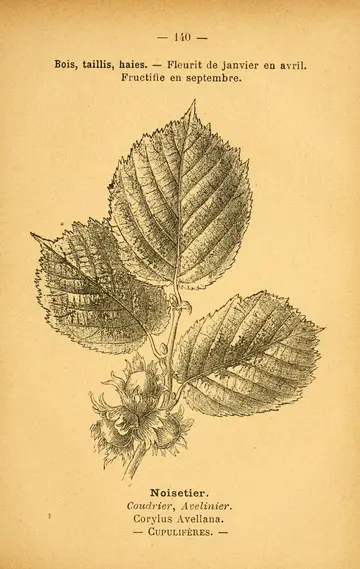
- Common hazel (Corylus avellana): Its leaves are also double-toothed and pointed, but rounder and softly hairy. It is usually a many-stemmed shrub, and its fruit is a hard-shelled hazelnut in a fringed husk rather than the hornbeam's small winged nutlets. Compare side by side →
Questions
How do I tell hornbeam from beech?
Hornbeam leaves are toothed and corrugated and its buds short and pressed to the twig. Beech leaves are smooth-edged and its buds long and pointed.
European hornbeam: when does it flower?
In spring: April–May. Months are for temperate northern-hemisphere climates and shift with altitude and weather.
European hornbeam: how do you grow it?
Light: Sun or part shade. Water: Moderate. Soil: Not fussy. Temperature: Hardy. Takes clipping very well; as a hedge it keeps its dead leaves through winter.
European hornbeam: what is its scientific name?
Carpinus betulus L., in the genus Carpinus and the family Betulaceae.
Sources
- Wikipedia: Carpinus betulus
- World Flora Online
- Plants of the World Online (Kew) · native range (WCVP)
- GBIF · classification
- Wikidata
Checked: 2026-11-17. Spotted a mistake? Tell us.