Description
Form
shrub, perennial, deciduous
Height: 3–8 m
Flower colour
YellowRed
Flowering
January–March
Habitat
Leaves
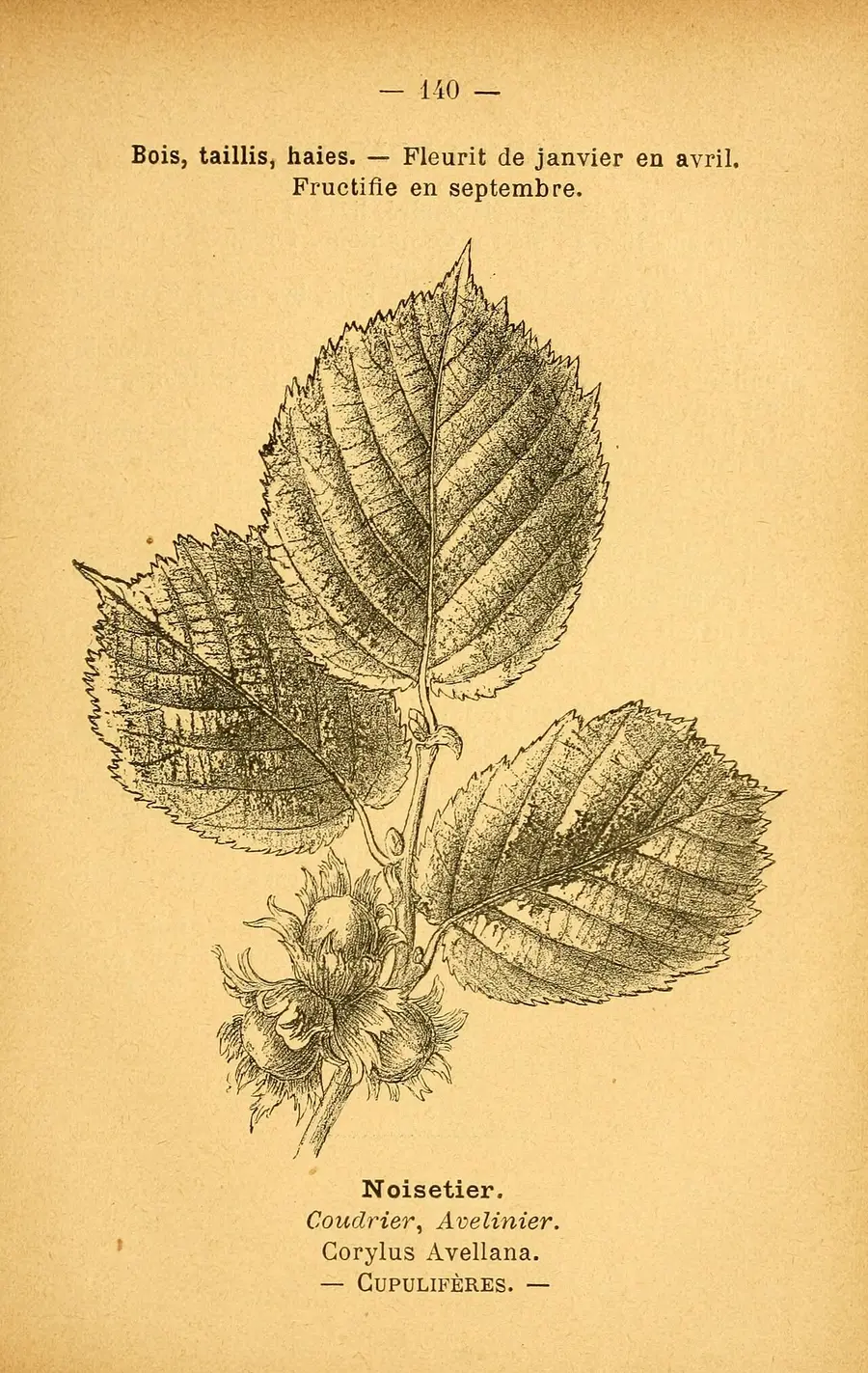
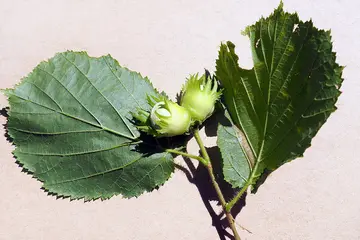
Round, pointed, double-toothed, softly hairy leaves.
Flowers
Male flowers are yellow hanging catkins at the end of winter, shedding clouds of pollen. Female flowers are tiny and bud-like, showing only their red stigmas.
Fruit and seeds
A hard-shelled nut in a leafy, fringed husk, usually two to four together.
Classification
- KingdomPlantae
- PhylumTracheophyta
- ClassMagnoliopsida
- OrderFagales
- FamilyBetulaceae
- GenusCorylus
- SpeciesCorylus avellana
Native range
According to POWO it is native to most of Europe, Türkiye and the Caucasus, growing in woodland and along forest edges.
IUCN Red List status: Least concern (LC).
Growing conditions
Light
Sun or partial shade.
Water
Moderate; likes a humid climate.
Soil
Deep, moist, fertile soil.
Temperature
Hardy.
Most varieties are self-sterile, so several are planted together.
Culture and history
The Black Sea "ocak"
On the Black Sea coast, hazels are grown in clumps called "ocak", in which the stems from one base are left together; on steep slopes they also hold the soil.
Toxicity
Hazelnuts can cause severe allergic reactions in people with tree-nut allergies, and hazel pollen shed in late winter is a common allergen.
In an emergency call your local poison centre; for pets, contact a vet straight away. See also: plants and pets.
Look-alikes
- Turkish hazel (Corylus colurna): A single-trunked tree that can exceed 20 m, with a deeply fringed husk around the nut. Compare side by side →
Questions
How much of the world's hazelnuts come from Türkiye?
More than half, mostly from the provinces along Türkiye's Black Sea coast.
Common hazel: when does it flower?
In winter and spring: January–March. Months are for temperate northern-hemisphere climates and shift with altitude and weather.
Common hazel: how do you grow it?
Light: Sun or partial shade. Water: Moderate; likes a humid climate. Soil: Deep, moist, fertile soil. Temperature: Hardy. Most varieties are self-sterile, so several are planted together.
Common hazel: what is its scientific name?
Corylus avellana L., in the genus Corylus and the family Betulaceae.
Sources
- Wikipedia: Corylus avellana
- World Flora Online
- Plants of the World Online (Kew) · native range (WCVP)
- GBIF · classification
- Wikidata
Checked: 2026-11-16. Spotted a mistake? Tell us.