Description
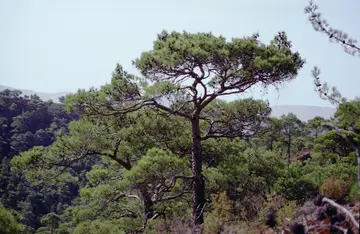
Form
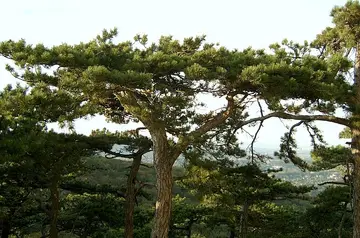
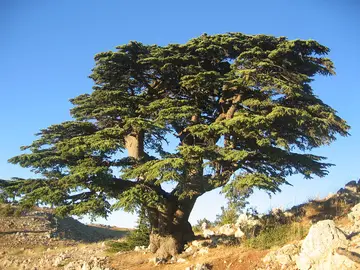
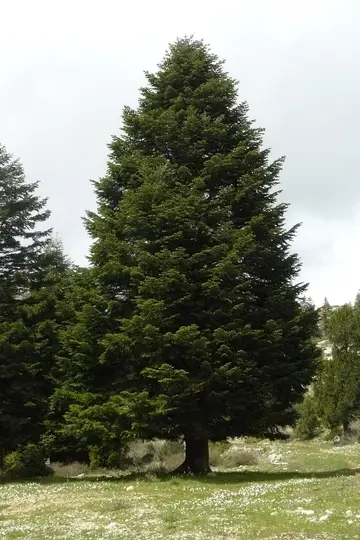
tree, perennial, evergreen
Height: 20–35 m
Flowering
No reliable data in the sources.
Habitat
Leaves
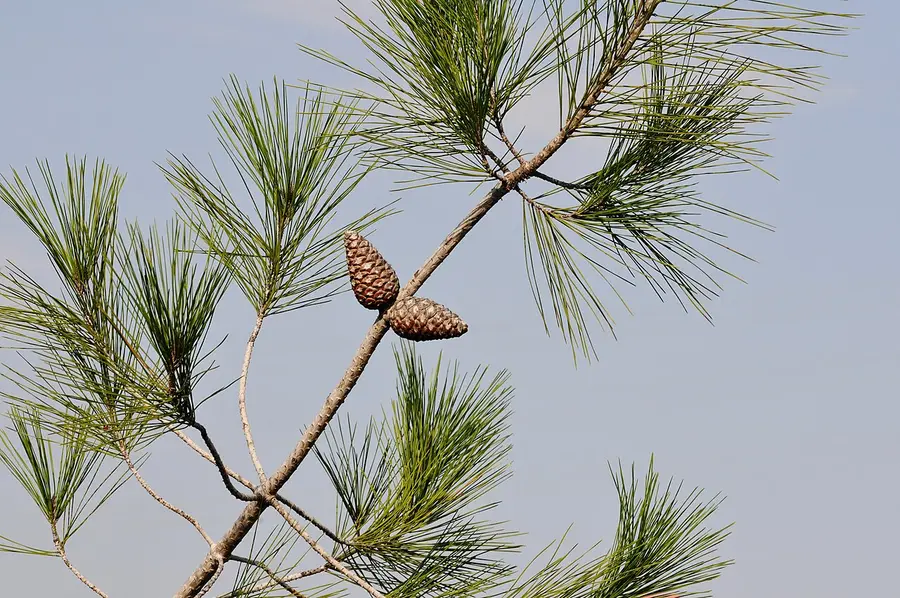
Needles in pairs, 10–18 cm long, slender and light green.
Flowers
Pines do not flower; in spring the male cones shed yellow pollen.
Fruit and seeds
Cones 5–10 cm long, almost stalkless and pointing forwards; they can stay closed on the branch for years and open after fire.
Classification
- KingdomPlantae
- PhylumTracheophyta
- ClassPinopsida
- OrderPinales
- FamilyPinaceae
- GenusPinus
- SpeciesPinus brutia
Native range
According to POWO it is native to the eastern Mediterranean: Türkiye, Greece, Crete and the Aegean islands, Cyprus, Bulgaria, Lebanon–Syria, Iraq, Iran, Crimea and the Caucasus. Most of its range lies in Türkiye.
IUCN Red List status: Least concern (LC).
Culture and history
Pine honey
A scale insect, Marchalina hellenica, living on the branches leaves a sugary secretion that honeybees collect to make pine honey; Muğla is the centre of its production in Türkiye.
Fire
Turkish pine forests naturally burn in the Mediterranean climate; the species recolonises burnt ground quickly thanks to cones that open after fire.
Look-alikes
- Aleppo pine (Pinus halepensis): A very similar western Mediterranean species; its cones bend back on a long stalk and its needles are shorter.
- Black pine: Grows higher in the mountains; its needles are stiffer and darker, its bark grey-black. Compare side by side →
Questions
What is pine honey?
A honey made by bees from the sugary secretion of a scale insect living on Turkish pines; Muğla in southwestern Türkiye is its main source.
Turkish pine: what is its scientific name?
Pinus brutia Ten., in the genus Pinus and the family Pinaceae.
Sources
- Wikipedia: Pinus brutia
- World Flora Online
- Plants of the World Online (Kew) · native range (WCVP)
- GBIF · classification
- Wikidata
Checked: 2026-11-16. Spotted a mistake? Tell us.