Description
Form
herbaceous, annual
Height: 1–3 m (climbing varieties); bush varieties shorter
Flower colour
Yellow
Flowering
No reliable data in the sources.
Leaves
Compound, hairy, toothed leaves with a sharp, distinctive smell when crushed.
Flowers
Yellow, star-shaped flowers in clusters, mostly self-pollinating.
Fruit and seeds
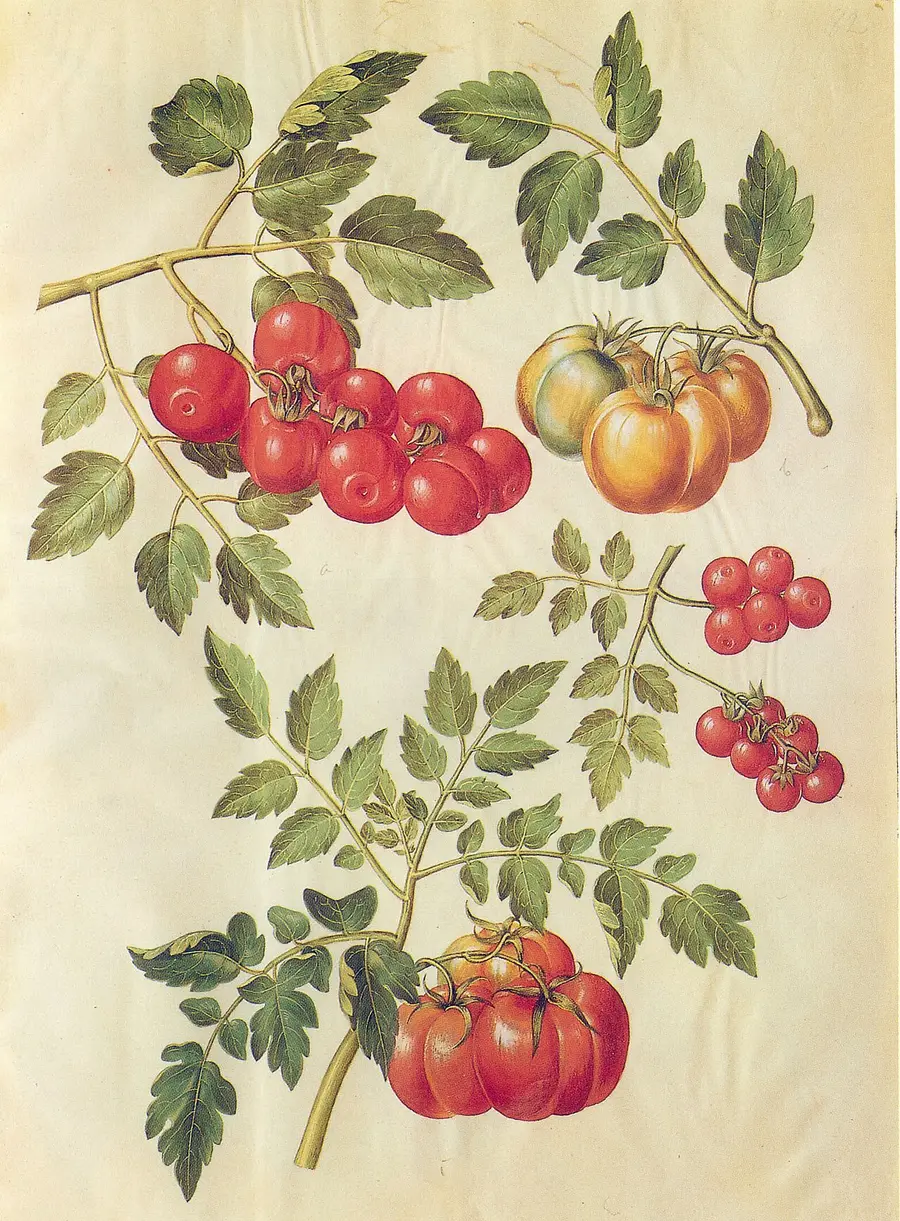
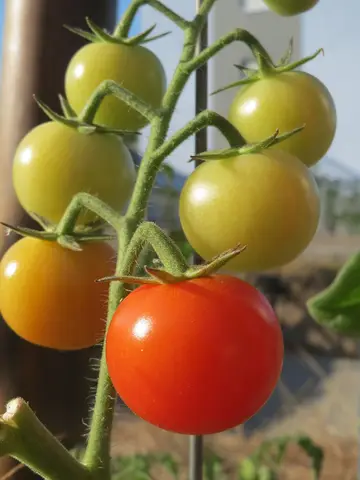
Botanically a berry. Lycopene gives it its red colour; other carotenoids dominate in yellow and orange varieties.
Classification
- KingdomPlantae
- PhylumTracheophyta
- ClassMagnoliopsida
- OrderSolanales
- FamilySolanaceae
- GenusSolanum
- SpeciesSolanum lycopersicum
Native range
POWO treats the cultivated tomato as native only to Peru and introduced everywhere else. The plant comes from western South America; it may have been domesticated there, in Mexico or in Central America, and was grown in southern Mexico by 500 BC.
Growing conditions
Light
Full sun.
Water
Regular, even watering; irregular watering causes split fruit and blossom-end rot.
Soil
Free-draining, fertile soil rich in organic matter.
Temperature
Not frost hardy; plant out after the last frost.
Climbing varieties are tied to supports.
Culture and history
First an ornamental
The Spanish brought the tomato to Europe in the 16th century. Because it resembled its poisonous nightshade relatives it was long thought poisonous and grown as a garden ornamental before entering the kitchen.
Toxicity
ASPCA lists the tomato plant as toxic to cats, dogs and horses. Solanine in the leaves and stems can cause drooling, loss of appetite, severe stomach upset, weakness, dilated pupils and a slow heart rate. According to ASPCA the ripe fruit is not toxic.
In an emergency call your local poison centre; for pets, contact a vet straight away. See also: plants and pets.
Look-alikes
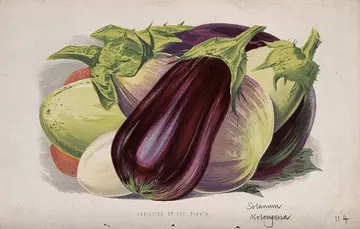
- Potato: Same genus, with white or purplish flowers; its small, green, tomato-like fruits are poisonous. Compare side by side →
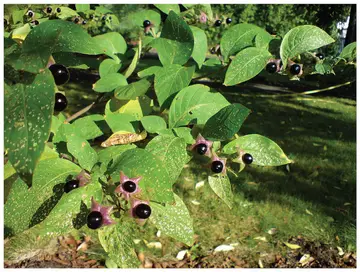
- Deadly nightshade: A highly poisonous relative with shiny black berries. Compare side by side →
Questions
Is a tomato a fruit or a vegetable?
Botanically a fruit (a berry): it develops from a flower and carries seeds. In the kitchen it is used as a vegetable.
Are tomato leaves poisonous?
The leaves and stems contain solanine; ASPCA lists the plant as toxic to cats, dogs and horses but not the ripe fruit.
Tomato: how do you grow it?
Light: Full sun. Water: Regular, even watering; irregular watering causes split fruit and blossom-end rot. Soil: Free-draining, fertile soil rich in organic matter. Temperature: Not frost hardy; plant out after the last frost. Climbing varieties are tied to supports.
Tomato: what is its scientific name?
Solanum lycopersicum L., in the genus Solanum and the family Solanaceae.
Sources
- Wikipedia: Tomato
- World Flora Online
- Plants of the World Online (Kew) · native range (WCVP)
- GBIF · classification
- Wikidata
- ASPCA Animal Poison Control: Tomato Plant
Checked: 2026-11-16. Spotted a mistake? Tell us.