Telling them apart
Deadly nightshade vs Tomato
Deadly nightshade (Atropa bella-donna) and Tomato (Solanum lycopersicum) look similar enough to be confused. Both belong to the same family, Solanaceae (nightshade family).
CautionDeadly nightshade is poisonous to people. Never pick or eat a wild plant unless you are certain of its identity. If poisoning is suspected, call your local poison centre or emergency number.
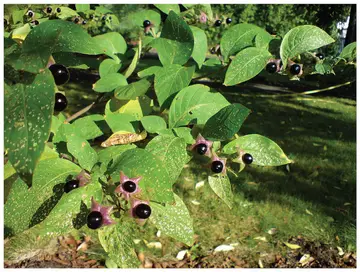
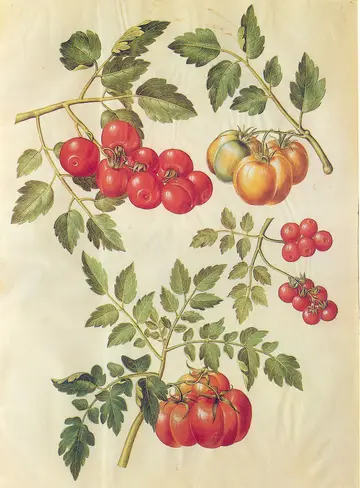
How to tell them apart
- Deadly nightshade: A highly poisonous relative with shiny black berries.
Side by side
| Deadly nightshade | Tomato | |
|---|---|---|
| Scientific name | Atropa bella-donna | Solanum lycopersicum |
| Family | Solanaceae (nightshade family) | Solanaceae (nightshade family) |
| Form | herb, perennial | herbaceous, annual |
| Height | 0.5–1.5 m | 1–3 m (climbing varieties); bush varieties shorter |
| Flower colour | Purple, Brown | Yellow |
| Origin | Europe, North Africa and western Asia | Western South America |
| Toxicity | People: toxic · Cats: toxic · Dogs: toxic | Cats: toxic · Dogs: toxic |
| Flowering | — | |
| Leaves | Large, oval, smooth-edged, soft leaves. | Compound, hairy, toothed leaves with a sharp, distinctive smell when crushed. |
| Flowers | Single, nodding, bell-shaped purple-brown flowers in the leaf axils. | Yellow, star-shaped flowers in clusters, mostly self-pollinating. |
| Fruit and seeds | A glossy black berry the size of a cherry, sitting on a star-shaped green calyx. | Botanically a berry. Lycopene gives it its red colour; other carotenoids dominate in yellow and orange varieties. |
All pairs: look-alike plants · Full pages: Deadly nightshade, Tomato