Description
Form
herb, annual
Height: 1–3 m
Flower colour
Yellow
Flowering
June–August
Leaves
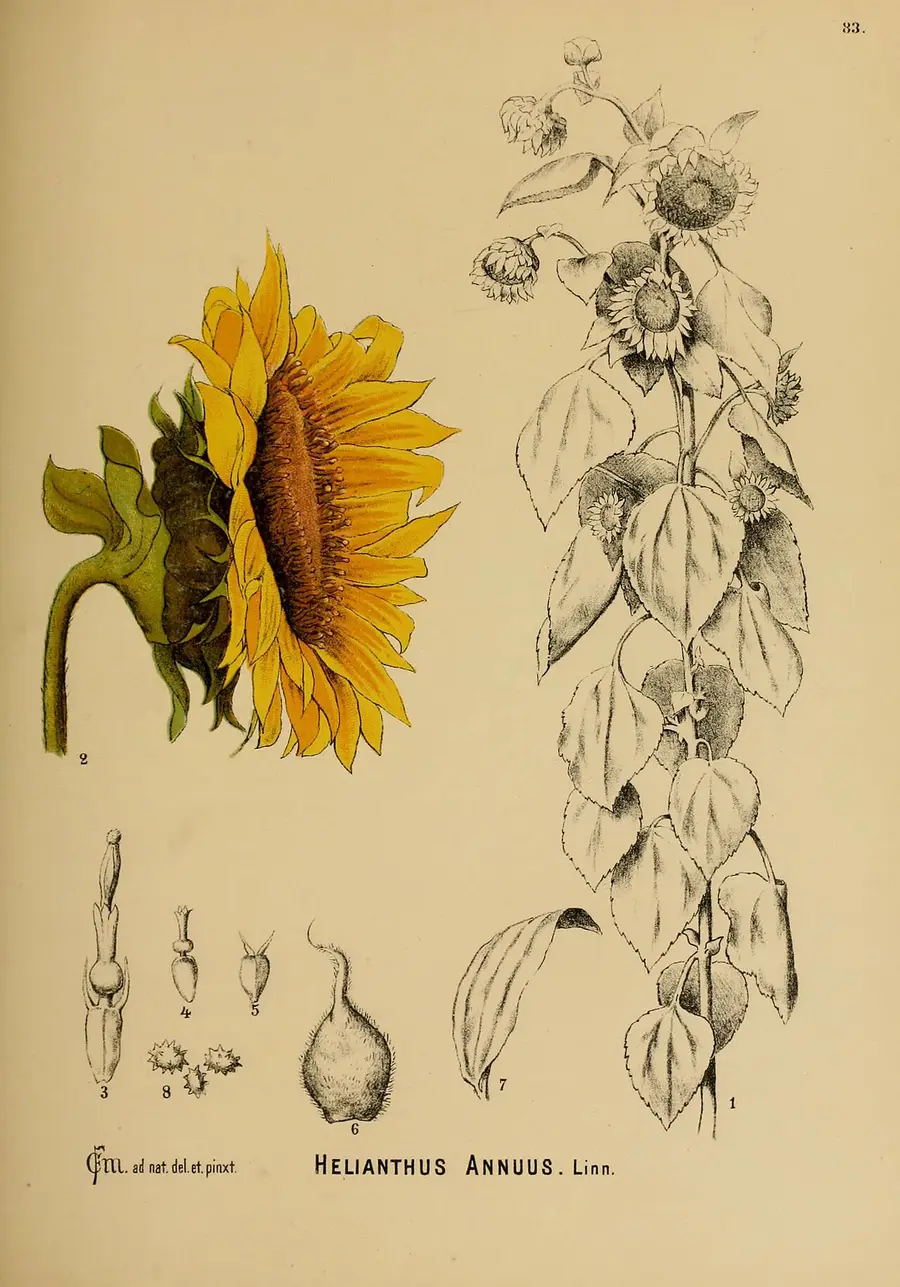
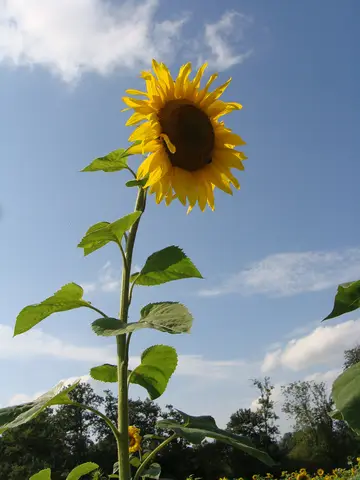
Large, rough, heart-shaped leaves on long stalks.
Flowers
A head up to 30 cm across: yellow ray florets around a brown disc of many small florets arranged in interlocking spirals.
Fruit and seeds
Achenes (sunflower "seeds") packed in the disc.
Classification
- KingdomPlantae
- PhylumTracheophyta
- ClassMagnoliopsida
- OrderAsterales
- FamilyAsteraceae
- GenusHelianthus
- SpeciesHelianthus annuus
Native range
According to POWO the wild sunflower is native to western North America and Mexico. The crop was domesticated in North America; the oldest fully domesticated remains, from the United States, date to around 2300 BC. Russia and Ukraine are now the largest producers.
IUCN Red List status: Least concern (LC).
Growing conditions
Light
Full sun.
Water
Moderate; deep roots cope with dry spells.
Soil
Any well-drained soil.
Temperature
Sow after the last frost.
Tall varieties may need staking in windy spots.
Culture and history
Following the sun
Young sunflower heads turn to follow the sun during the day; mature heads usually stop moving and face east.
Questions
Do sunflowers really follow the sun?
Young plants do, turning their buds from east to west each day. Mature flower heads usually stay facing east.
Sunflower: when does it flower?
In summer: June–August. Months are for temperate northern-hemisphere climates and shift with altitude and weather.
Sunflower: how do you grow it?
Light: Full sun. Water: Moderate; deep roots cope with dry spells. Soil: Any well-drained soil. Temperature: Sow after the last frost. Tall varieties may need staking in windy spots.
Sunflower: what is its scientific name?
Helianthus annuus L., in the genus Helianthus and the family Asteraceae.
Read more on OkButWhy
Sources
- Wikipedia: Helianthus annuus
- World Flora Online
- Plants of the World Online (Kew) · native range (WCVP)
- GBIF · classification
- Wikidata
- Wikipedia
Checked: 2026-11-16. Spotted a mistake? Tell us.