Description
Form
tree, perennial, deciduous
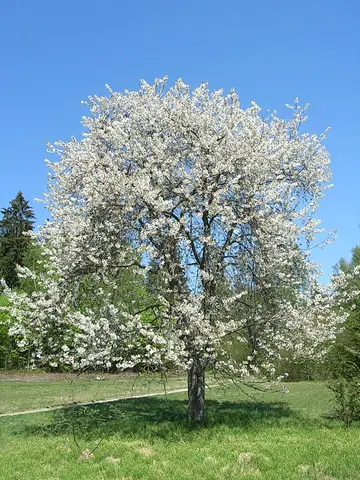
Height: 5–25 m (shorter in cultivation)
Flower colour
White
Flowering
March–April
Habitat
Leaves
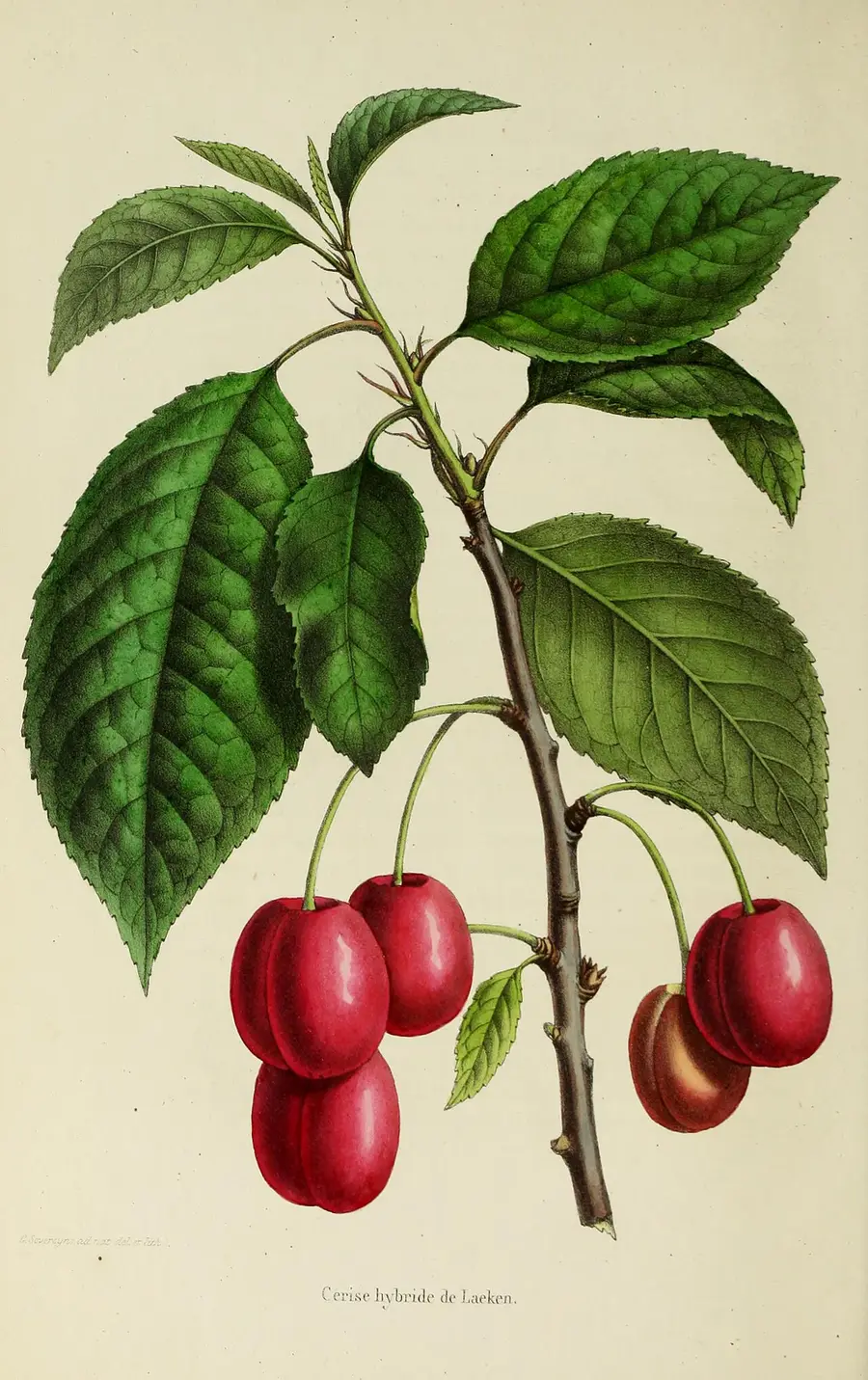
Oval, pointed, toothed leaves 7–14 cm long, with two to five small red nectar glands at the top of the leaf stalk.
Flowers
White five-petalled flowers 2.5–3.5 cm across, in clusters of two to six on long stalks, opening with the leaves; pollinated by bees.
Fruit and seeds
A fleshy stone fruit with a single stone, from dark red to yellow in cultivated varieties.
Classification
- KingdomPlantae
- PhylumTracheophyta
- ClassMagnoliopsida
- OrderRosales
- FamilyRosaceae
- GenusPrunus
- SpeciesPrunus avium
Native range
According to POWO it is native to most of Europe, North Africa, Türkiye, the Caucasus and Iran, east to Afghanistan. The wild form grows in forests and along forest edges.
IUCN Red List status: Least concern (LC).
Growing conditions
Light
Full sun.
Water
Moderate; heavy rain as the fruit ripens makes it split.
Soil
Deep, well-drained soil; dislikes wet ground.
Temperature
Needs winter chill; late frosts damage the blossom.
Culture and history
Cherries and Giresun
According to the Roman writer Pliny, the general Lucullus brought cherries to Rome from Pontus on the Black Sea after 74 BC. But cherry trees grew in Italy before Lucullus; what he brought was most likely a cultivated variety. The Latin "cerasus" and the Turkish "kiraz" are thought to be linked to the ancient city of Kerasus, near today's Giresun.
Toxicity
ASPCA lists the genus Prunus as toxic to cats, dogs and horses: the stems, leaves and stones contain cyanogenic glycosides, and wilting leaves are the most dangerous. Signs include brick-red mucous membranes, dilated pupils, difficulty breathing, panting and shock. The ripe flesh of the fruit is not considered dangerous; the stones should not be swallowed.
In an emergency call your local poison centre; for pets, contact a vet straight away. See also: plants and pets.
Look-alikes
- Sour cherry: A smaller, shrubbier tree with smaller, stiffer leaves and sour fruit. Compare side by side →
Questions
Which country produces the most cherries?
Türkiye is the world's largest sweet cherry producer.
Sweet cherry: when does it flower?
In spring: March–April. Months are for temperate northern-hemisphere climates and shift with altitude and weather.
Sweet cherry: how do you grow it?
Light: Full sun. Water: Moderate; heavy rain as the fruit ripens makes it split. Soil: Deep, well-drained soil; dislikes wet ground. Temperature: Needs winter chill; late frosts damage the blossom.
Sweet cherry: is it toxic to cats and dogs?
Toxic to cats and dogs. Stones, leaves, stems: cyanogenic glycosides.
Sweet cherry: what is its scientific name?
Prunus avium (L.) L., in the genus Prunus and the family Rosaceae.
Sources
- Wikipedia: Prunus avium
- World Flora Online
- Plants of the World Online (Kew) · native range (WCVP)
- GBIF · classification
- Wikidata
- ASPCA Animal Poison Control: Cherry (Prunus)
- Wikipedia: Cherry
Checked: 2026-11-16. Spotted a mistake? Tell us.