Description
Form
herb, perennial, evergreen
Height: 20–30 cm
Flower colour
WhitePurple
Flowering
No reliable data in the sources.
Habitat
Leaves
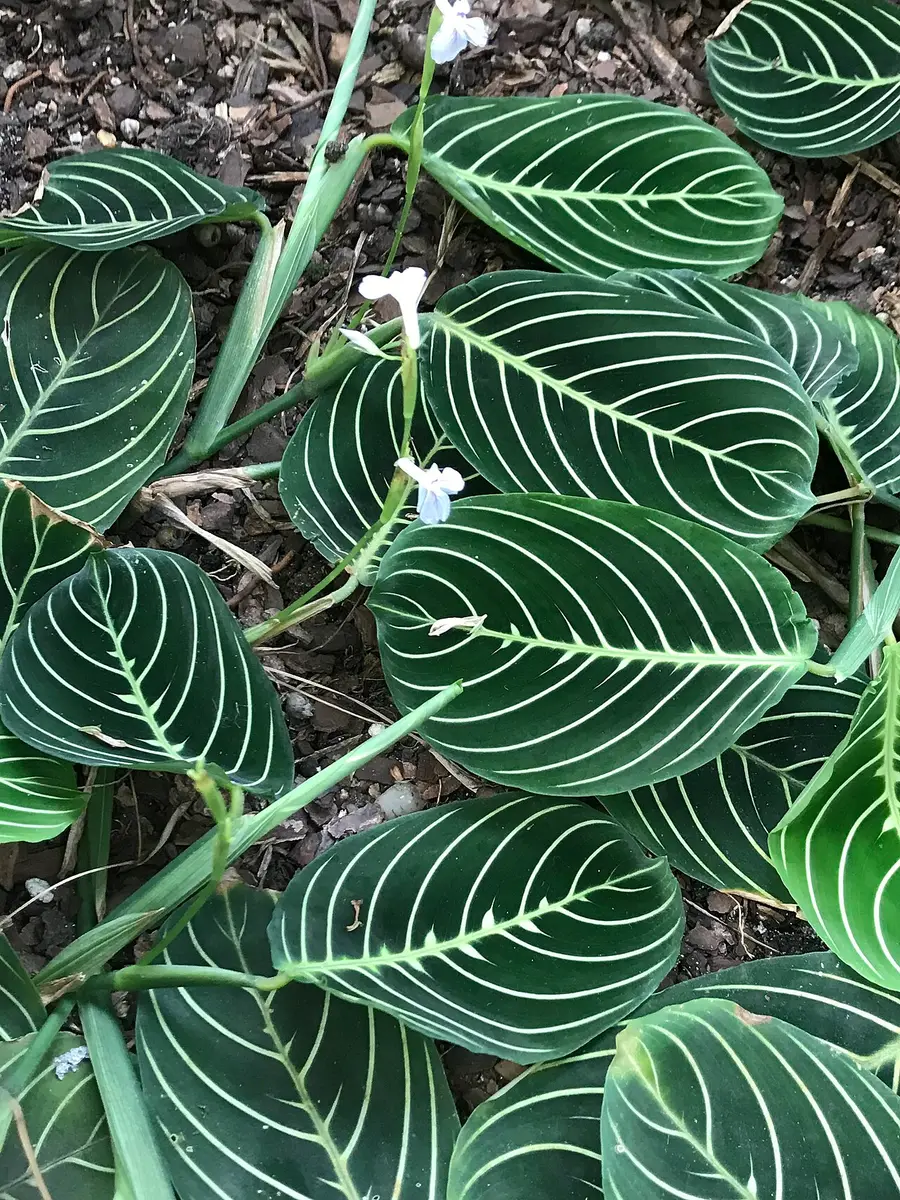
Oval leaves 10–15 cm long, dark green with pale green blotches or red veins depending on the variety. A small joint (pulvinus) at the base of each leaf raises it at night.
Flowers
Small white or pale purple flowers; rare indoors.
Classification
- KingdomPlantae
- PhylumTracheophyta
- ClassLiliopsida
- OrderZingiberales
- FamilyMarantaceae
- GenusMaranta
- SpeciesMaranta leuconeura
Native range
According to POWO it is native to northeastern, southeastern and west-central Brazil, on the floor of tropical forests.
Care
Light
Medium, indirect light; direct sun fades the leaves.
Water
Keep lightly moist; use rested water.
Soil
Humus-rich, free-draining mix.
Temperature
18–27 °C.
Likes humid air; looks good trailing from a hanging pot.
Culture and history
Why it "prays"
Swellings at the leaf bases change their water pressure through the day, lowering the leaves in daylight and raising them at night (nyctinasty).
Toxicity
ASPCA's "prayer plant" entry refers to a different species (Calathea insignis) and lists it as non-toxic; the related genus Calathea is also non-toxic. There is no separate ASPCA entry for Maranta.
In an emergency call your local poison centre; for pets, contact a vet straight away. See also: plants and pets.
Look-alikes
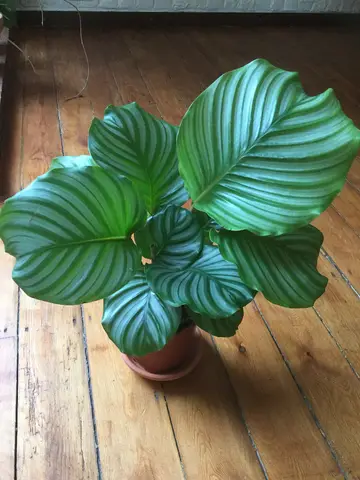
- Calathea orbifolia: A larger relative with big, round, striped leaves. Compare side by side →
Questions
Why does the prayer plant close its leaves at night?
A joint at the base of each leaf changes its water pressure and lifts the leaves in the evening; this daily movement is called nyctinasty.
Prayer plant: how do you care for it?
Light: Medium, indirect light; direct sun fades the leaves. Water: Keep lightly moist; use rested water. Soil: Humus-rich, free-draining mix. Temperature: 18–27 °C. Likes humid air; looks good trailing from a hanging pot.
Prayer plant: what is its scientific name?
Maranta leuconeura É.Morren, in the genus Maranta and the family Marantaceae.
Sources
- Wikipedia: Maranta leuconeura
- World Flora Online
- Plants of the World Online (Kew) · native range (WCVP)
- GBIF · classification
- Wikidata
Checked: 2026-11-16. Spotted a mistake? Tell us.