Description
Form
herb, perennial, evergreen
Height: 60–90 cm
Flower colour
White
Flowering
No reliable data in the sources.
Habitat
Leaves
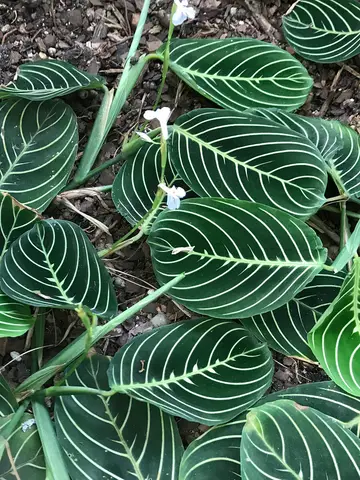
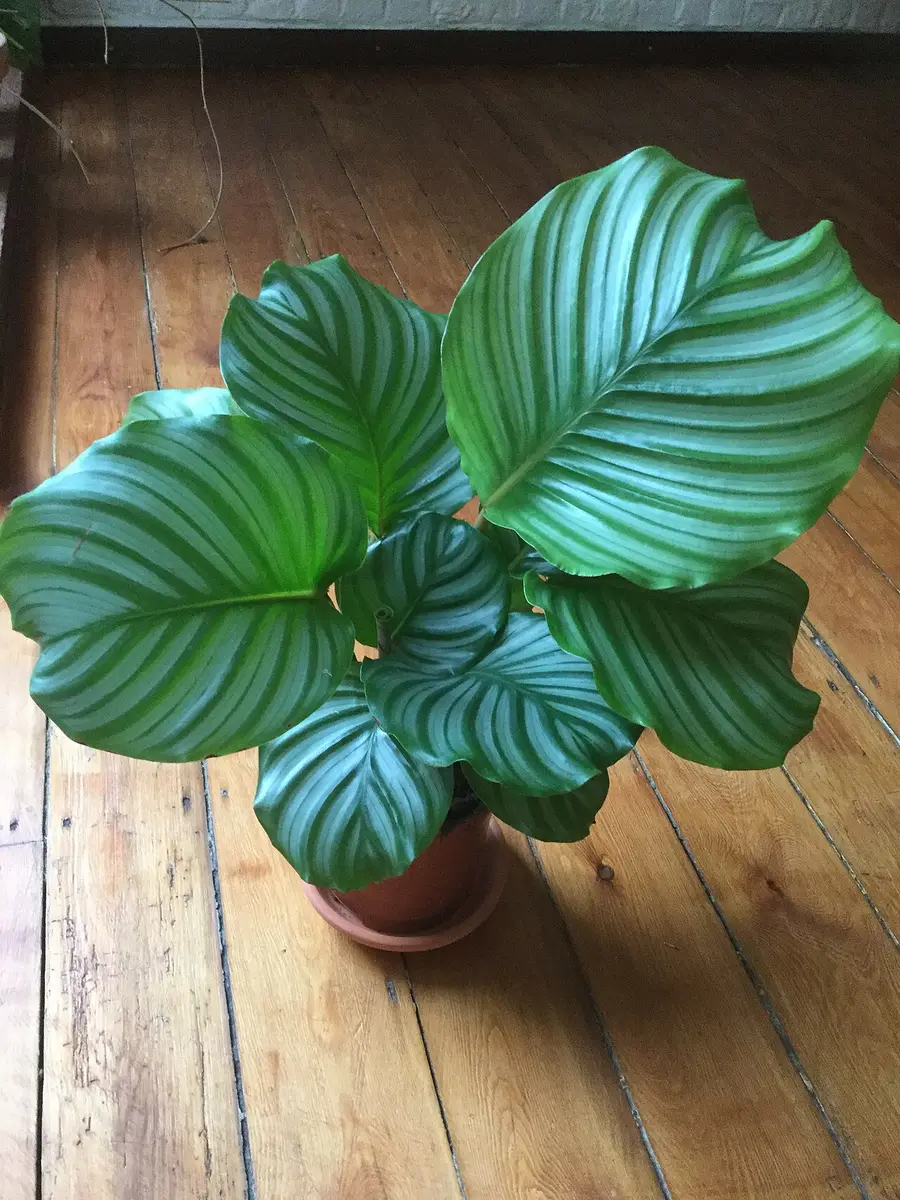
Rounded leaves 20–30 cm across, pale green with bold silvery-green bands.
Flowers
Small whitish flowers, rarely indoors.
Classification
- KingdomPlantae
- PhylumTracheophyta
- ClassLiliopsida
- OrderZingiberales
- FamilyMarantaceae
- GenusGoeppertia
- SpeciesGoeppertia orbifolia
Native range
According to POWO it is native to northeastern and southeastern Brazil, on the shady floor of humid forests.
Care
Light
Medium, indirect light; direct sun bleaches the pattern and burns the leaves.
Water
Keep evenly moist; sensitive to lime and chlorine, so rested or filtered water is best.
Soil
Humus-rich, airy, free-draining mix.
Temperature
18–27 °C.
Needs high humidity; leaf edges turn brown in dry air.
Culture and history
The name
Calathea comes from the Greek kalathos, a basket; some species' leaves were used for weaving. DNA studies moved most calatheas, including this one, to Goeppertia.
Toxicity
ASPCA lists the genus Calathea as non-toxic to cats, dogs and horses.
In an emergency call your local poison centre; for pets, contact a vet straight away. See also: plants and pets.
Look-alikes
- Prayer plant: A smaller relative that also folds its leaves up at night, with oval, blotched or red-veined leaves. Compare side by side →
Questions
Why do Calathea leaves curl and go brown?
Usually dry air, hard tap water or letting the soil dry out; it needs steady moisture and high humidity.
Is Calathea safe for cats?
Yes. ASPCA lists Calathea as non-toxic to cats, dogs and horses.
Calathea orbifolia: how do you care for it?
Light: Medium, indirect light; direct sun bleaches the pattern and burns the leaves. Water: Keep evenly moist; sensitive to lime and chlorine, so rested or filtered water is best. Soil: Humus-rich, airy, free-draining mix. Temperature: 18–27 °C. Needs high humidity; leaf edges turn brown in dry air.
Calathea orbifolia: is it toxic to cats and dogs?
Non-toxic to cats and dogs. Non-toxic.
Calathea orbifolia: what is its scientific name?
Goeppertia orbifolia (Linden) Borchs. & S.Suárez, in the genus Goeppertia and the family Marantaceae.
Sources
- Wikipedia: Goeppertia orbifolia
- World Flora Online
- Plants of the World Online (Kew) · native range (WCVP)
- GBIF · classification
- Wikidata
- ASPCA Animal Poison Control: Calathea
Checked: 2026-11-16. Spotted a mistake? Tell us.