Description
Form
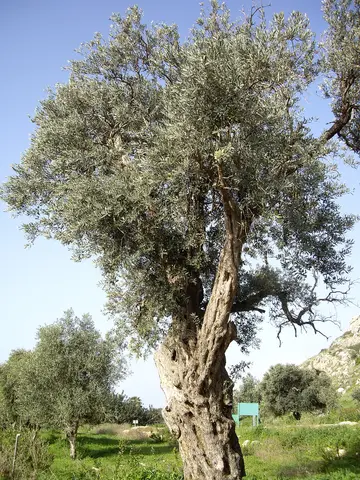
tree, perennial, evergreen
Height: 8–15 m
Flower colour
White
Flowering
April–June
Leaves
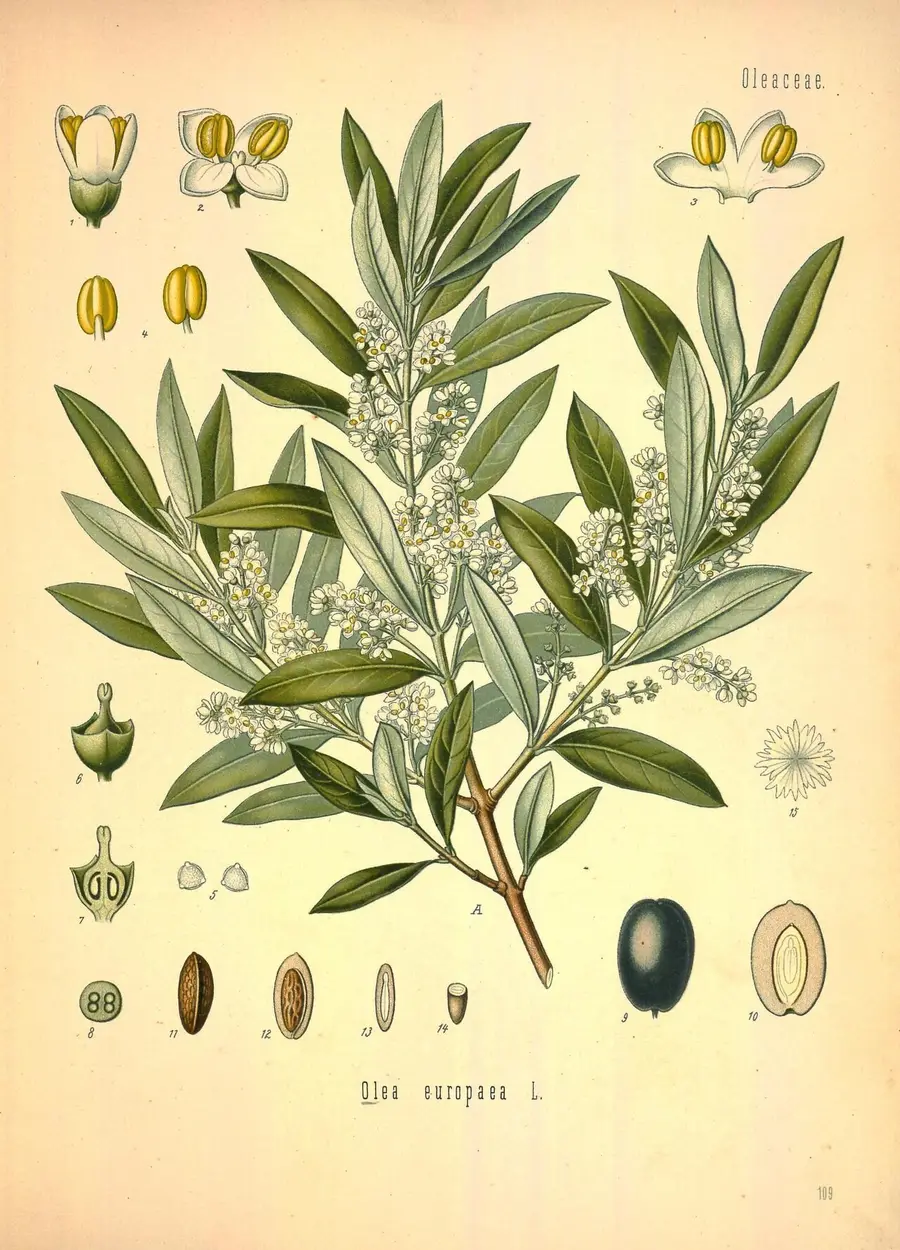
Narrow, leathery leaves, dark grey-green above and silvery below.
Flowers
Small, creamy white, fragrant flowers in short clusters in spring.
Fruit and seeds
An oval drupe, green turning purple-black, with a hard stone; inedible straight from the tree because of its bitterness.
Classification
- KingdomPlantae
- PhylumTracheophyta
- ClassMagnoliopsida
- OrderLamiales
- FamilyOleaceae
- GenusOlea
- SpeciesOlea europaea
Native range
The species has several subspecies spread from the Mediterranean to Africa and Asia. The cultivated olive belongs to subsp. europaea, which according to POWO is native to the Mediterranean Basin, including Türkiye, Greece, Italy, Spain, Portugal, North Africa and the eastern Mediterranean coast.
Growing conditions
Light
Full sun.
Water
Very drought tolerant once established.
Soil
Poor, stony, well-drained soil is fine.
Temperature
Tolerates light frost; damaged by long hard freezes.
Grows very slowly and can live for centuries.
Culture and history
A symbol of peace
The olive branch has stood for peace since antiquity; in Greek myth the olive was Athena's gift to the city of Athens.
Look-alikes
- Russian olive (Elaeagnus angustifolia): Also has silvery leaves, but it is a deciduous small tree with fragrant yellow flowers and mealy fruit; not related. Compare side by side →
Questions
How old can an olive tree get?
Olive trees are extremely long-lived; several trees around the Mediterranean are estimated to be over a thousand years old.
Olive: when does it flower?
In spring and summer: April–June. Months are for temperate northern-hemisphere climates and shift with altitude and weather.
Olive: how do you grow it?
Light: Full sun. Water: Very drought tolerant once established. Soil: Poor, stony, well-drained soil is fine. Temperature: Tolerates light frost; damaged by long hard freezes. Grows very slowly and can live for centuries.
Olive: what is its scientific name?
Olea europaea L., in the genus Olea and the family Oleaceae.
Sources
- Wikipedia: Olive
- World Flora Online
- Plants of the World Online (Kew) · native range (WCVP)
- GBIF · classification
- Wikidata
- Wikipedia
Checked: 2026-11-16. Spotted a mistake? Tell us.