Description
Form
shrub, perennial, deciduous
Height: 2–7 m; garden varieties mostly 4–5 m
Flower colour
PurpleWhitePink
Flowering
April–May
Habitat
Leaves
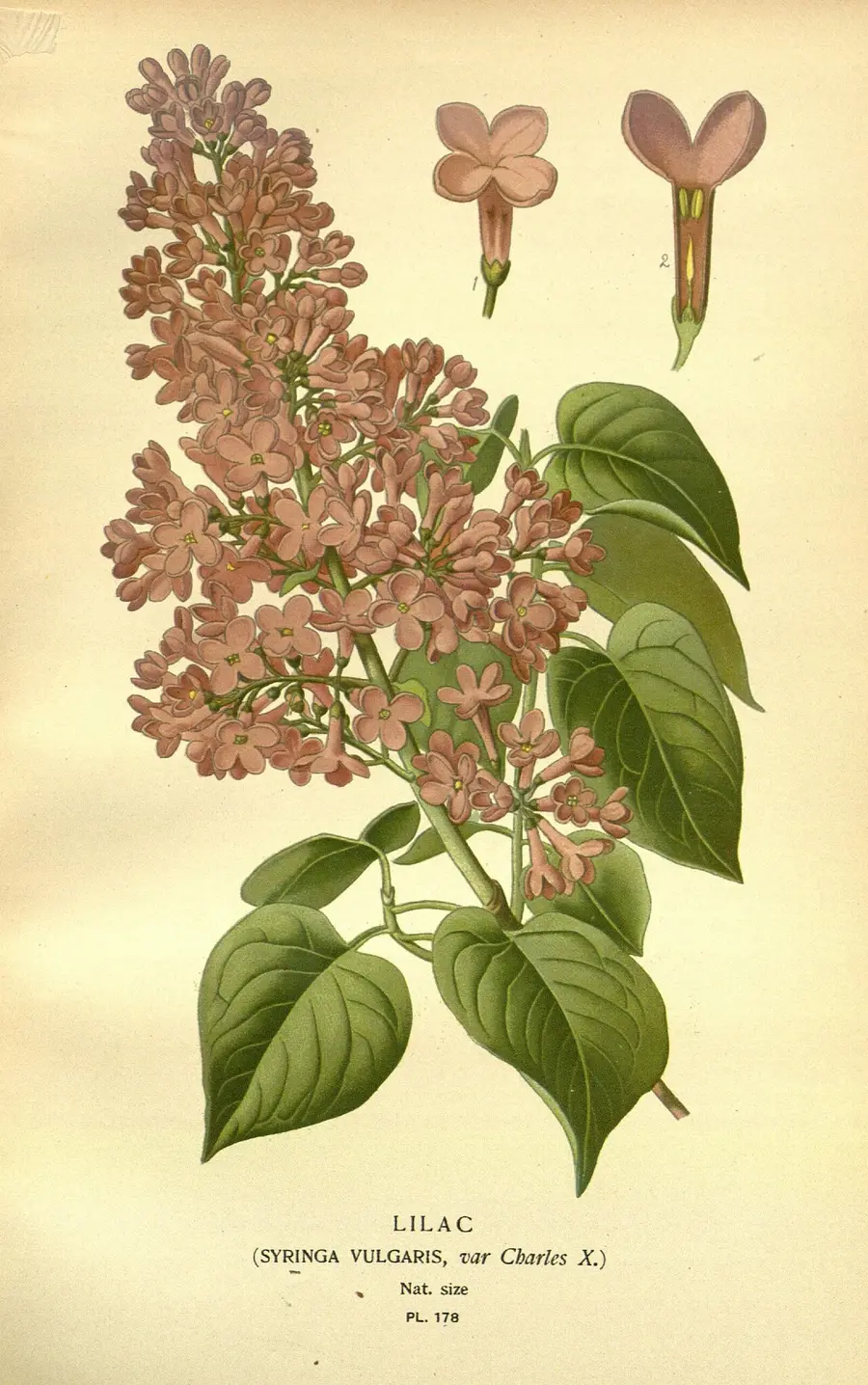
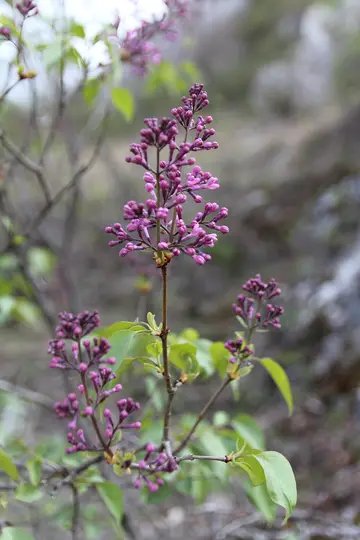
Opposite (sometimes in whorls of three), oval to heart-shaped, pointed, smooth-edged, hairless leaves 4–12 cm long.
Flowers
Small flowers with a 6–10 mm tube and a four-lobed mouth 5–8 mm wide, in dense pyramidal clusters 8–18 cm long at the shoot tips. Usually lilac-purple, sometimes white; very fragrant.
Fruit and seeds
A dry, brown, smooth capsule 1–2 cm long that splits in two to release two winged seeds.
Classification
- KingdomPlantae
- PhylumTracheophyta
- ClassMagnoliopsida
- OrderLamiales
- FamilyOleaceae
- GenusSyringa
- SpeciesSyringa vulgaris
Native range
According to POWO its native range is Bulgaria, Romania, Greece and the western Balkans (Serbia, North Macedonia), where it grows on rocky hills. It has been taken to many parts of Europe, Asia and North America and is naturalised in places.
IUCN Red List status: Least concern (LC).
Growing conditions
Light
Full sun.
Water
Moderate; fairly drought tolerant.
Soil
Free-draining, limy or neutral soil.
Temperature
Very hardy; needs a cold winter to flower well.
Prune right after flowering, as next year's flower buds form in summer. It tends to flower heavily one year and lightly the next; removing spent clusters before they set seed helps.
Culture and history
From Istanbul to Vienna
Lilac passed from Ottoman gardens to northern European ones in the late 16th century; Ogier Ghiselin de Busbecq, the Holy Roman Emperor's ambassador to the Ottomans, is thought to have given lilac cuttings to the botanist Carolus Clusius around 1562. "Lilac" and Turkish "leylak" are thought to come from Persian "lilak", meaning bluish.
A state flower
Taken to North America in the 18th century, the lilac is now the state flower of New Hampshire.
Look-alikes
- Butterfly bush (Buddleja davidii): Its flower clusters resemble lilac but are longer and drooping, and appear in late summer.
Questions
When should lilac be pruned?
Right after flowering. Next year's flower buds form in summer, so autumn or winter pruning reduces flowering.
Common lilac: how do you grow it?
Light: Full sun. Water: Moderate; fairly drought tolerant. Soil: Free-draining, limy or neutral soil. Temperature: Very hardy; needs a cold winter to flower well. It tends to flower heavily one year and lightly the next; removing spent clusters before they set seed helps.
Common lilac: what is its scientific name?
Syringa vulgaris L., in the genus Syringa and the family Oleaceae.
Sources
- Wikipedia: Syringa vulgaris
- World Flora Online
- Plants of the World Online (Kew) · native range (WCVP)
- GBIF · classification
- Wikidata
Checked: 2026-11-16. Spotted a mistake? Tell us.