Description
Form
herbaceous, biennial
Height: Leaves 30–50 cm; flower stalk up to 1 m
Flower colour
White
Flowering
No reliable data in the sources.
Leaves
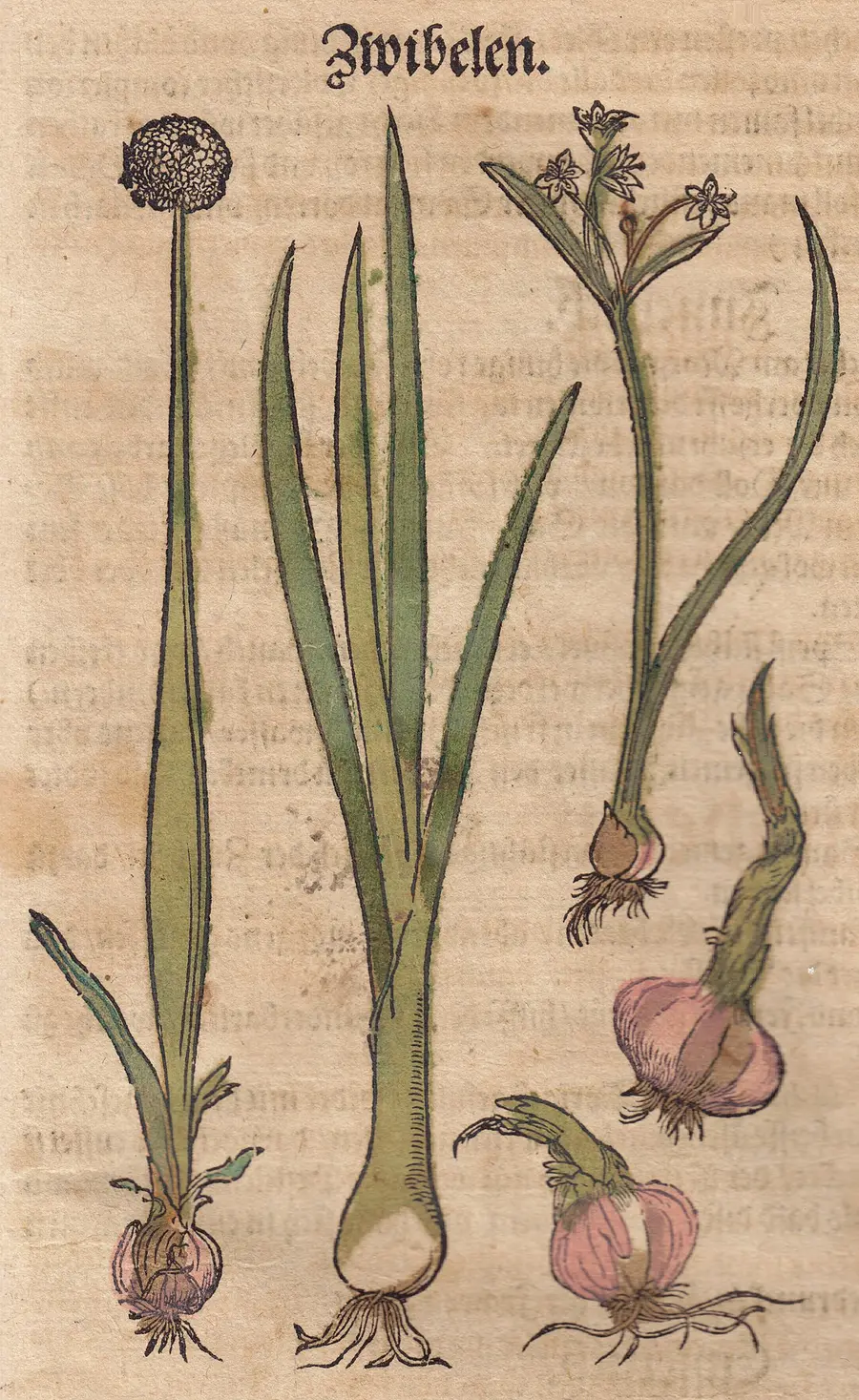
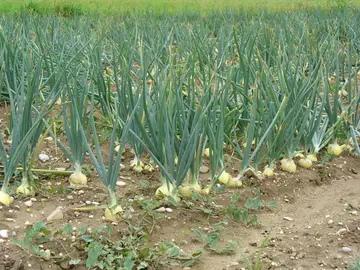
Tubular, hollow, bluish-green leaves.
Flowers
In the second year, a tall hollow stalk carries a ball-shaped umbel of hundreds of small white-greenish flowers.
Fruit and seeds
A small capsule with black seeds.
Classification
- KingdomPlantae
- PhylumTracheophyta
- ClassLiliopsida
- OrderAsparagales
- FamilyAmaryllidaceae
- GenusAllium
- SpeciesAllium cepa
Native range
The cultivated onion is not known in the wild. POWO lists only Turkmenistan as native range and treats it as introduced elsewhere. Its ancestor is thought to be among the wild onions of Central Asia.
Growing conditions
Light
Full sun.
Water
Moderate; stop watering before harvest.
Soil
Loose, free-draining soil.
Temperature
Tolerates cool weather. Bulbing depends on day length, so varieties are chosen by latitude.
Culture and history
Why onions make you cry
When an onion is cut, enzymes from broken cells turn sulphur compounds into a volatile gas (syn-propanethial-S-oxide) that stimulates nerve endings in the eye.
Toxicity
ASPCA lists onion as toxic to cats, dogs and horses. It contains N-propyl disulfide, which can destroy red blood cells (haemolytic anaemia). Signs include vomiting, blood in the urine, weakness, a fast heart rate and panting. Cooked and dried forms are dangerous too.
In an emergency call your local poison centre; for pets, contact a vet straight away. See also: plants and pets.
Look-alikes
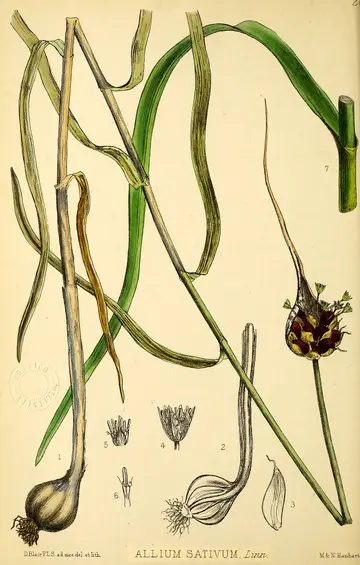
- Garlic: Same genus; its leaves are flat and its bulb divides into cloves. Compare side by side →
Questions
Are onions toxic to cats and dogs?
Yes. ASPCA lists onion as toxic to cats, dogs and horses; it can destroy red blood cells. Cooked onion is dangerous too.
Why do onions make your eyes water?
A sulphur-containing gas released from cut cells stimulates nerve endings in the eye.
Onion: what is its scientific name?
Allium cepa L., in the genus Allium and the family Amaryllidaceae.
Sources
- Wikipedia: Onion
- World Flora Online
- Plants of the World Online (Kew) · native range (WCVP)
- GBIF · classification
- Wikidata
- ASPCA Animal Poison Control: Onion
Checked: 2026-11-16. Spotted a mistake? Tell us.