Telling them apart
Olive vs Russian olive
Olive (Olea europaea) and Russian olive (Elaeagnus angustifolia) look similar enough to be confused. They belong to different families: Oleaceae (olive family) and Elaeagnaceae (oleaster family).
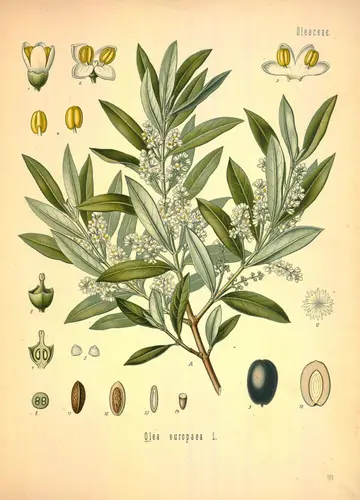
Image wanted. A licensed image will be added when found.
How to tell them apart
- Russian olive: Also has silvery leaves, but it is a deciduous small tree with fragrant yellow flowers and mealy fruit; not related.
- Olive: Similar silvery leaves, but they are opposite, the tree has no thorns, and its fruit is a black, oily olive.
Side by side
| Olive | Russian olive | |
|---|---|---|
| Scientific name | Olea europaea | Elaeagnus angustifolia |
| Family | Oleaceae (olive family) | Elaeagnaceae (oleaster family) |
| Form | tree, perennial, evergreen | tree, perennial, deciduous |
| Height | 8–15 m | 7–11 m |
| Flower colour | White | Yellow |
| Origin | Mediterranean Basin | Western and Central Asia |
| Toxicity | — | Cats: non-toxic · Dogs: non-toxic |
| Flowering | ||
| Leaves | Narrow, leathery leaves, dark grey-green above and silvery below. | Alternate, narrowly lance-shaped, smooth-edged leaves 4–9 cm long, covered in silvery scales, especially beneath. Branches can carry thorns 2–7 cm long. |
| Flowers | Small, creamy white, fragrant flowers in short clusters in spring. | Very fragrant flowers about 1 cm long in clusters of one to three, four-parted, silvery outside and creamy yellow inside. |
| Fruit and seeds | An oval drupe, green turning purple-black, with a hard stone; inedible straight from the tree because of its bitterness. | A cherry-like, one-stoned fruit 1–1.7 cm long, orange-red with silvery scales; its flesh is dry, mealy and sweet. |
All pairs: look-alike plants · Full pages: Olive, Russian olive