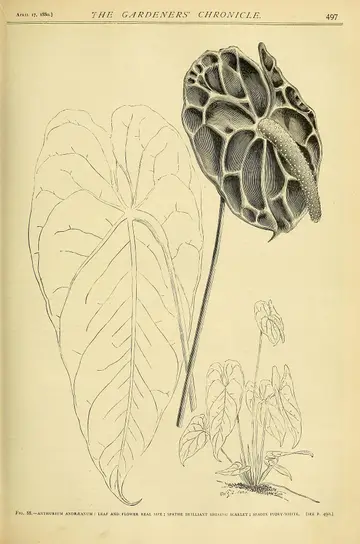
Description
Form
climber, perennial, evergreen
Height: Indoors 1–3 m; climbs up to 20 m in the wild
Flower colour
White
Flowering
No reliable data in the sources.
Habitat
Leaves
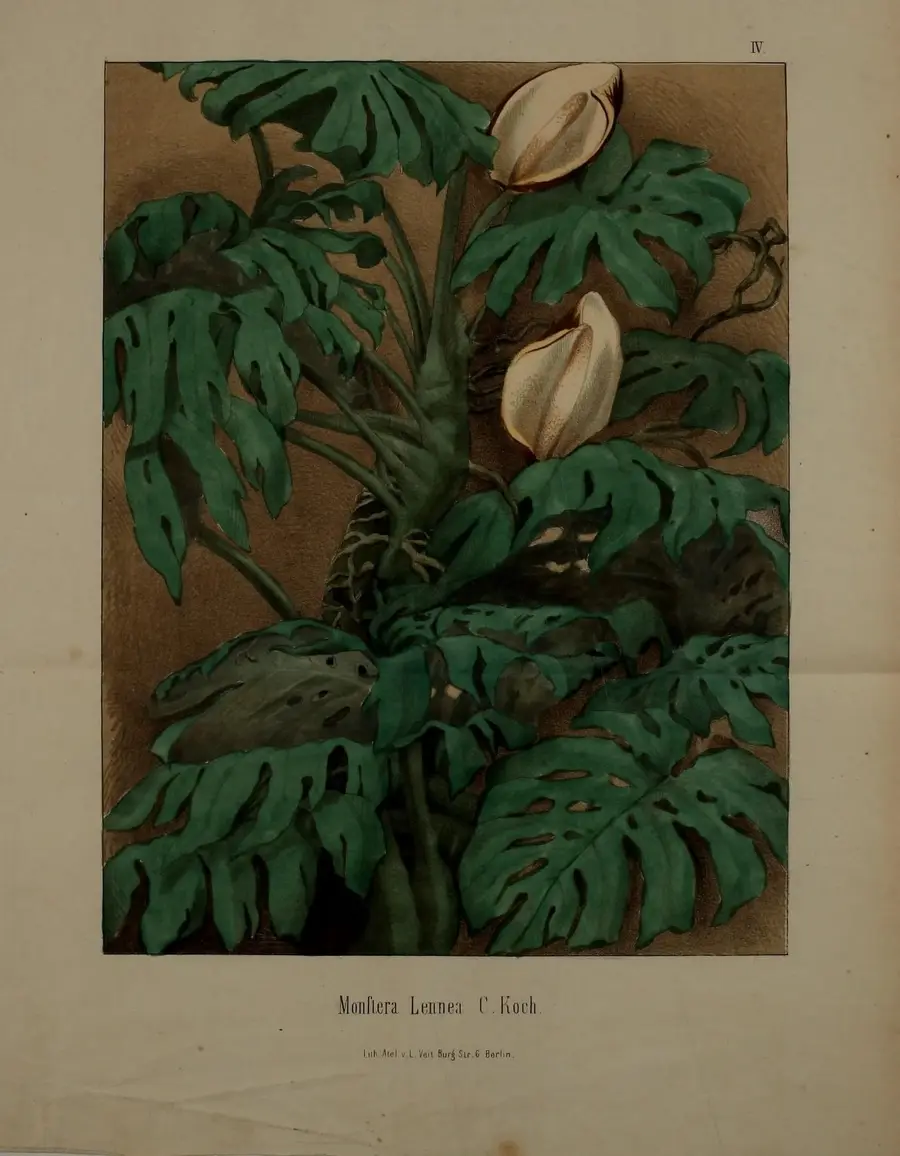
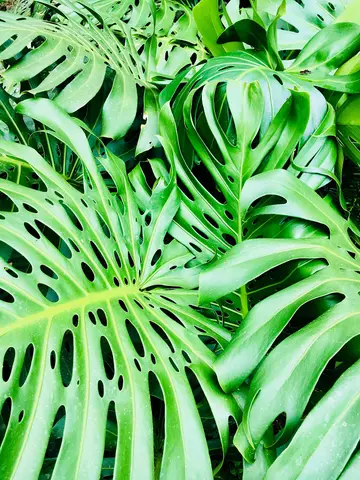
Large, glossy, heart-shaped leaves; young leaves are entire, mature ones develop deep splits and holes (fenestrations) and can reach 90 cm. Brown aerial roots grow from the stem.
Flowers
A cream spathe around a thick spadix; rare indoors.
Fruit and seeds
A long, cone-like fruit that ripens slowly over about a year.
Classification
- KingdomPlantae
- PhylumTracheophyta
- ClassLiliopsida
- OrderAlismatales
- FamilyAraceae
- GenusMonstera
- SpeciesMonstera deliciosa
Native range
According to POWO it is native to the humid tropical forests of southern Mexico and Guatemala, where it climbs tree trunks in lowland and lower montane forest. It has been introduced and locally naturalised in many tropical regions.
Care
Light
Bright, indirect light; leaves stay small and unsplit in shade.
Water
Water thoroughly when the top 2.5–5 cm (1–2 in) of compost is dry and let the excess drain; never leave it standing in water. Water less often in winter.
Soil
Airy, chunky aroid mix.
Temperature
18–30 °C; growth stops below 12 °C; dislikes cold draughts.
A moss pole or support encourages larger, more divided leaves.
Toxicity
ASPCA lists it as toxic to cats and dogs. Insoluble calcium oxalate crystals cause burning of the mouth, drooling, vomiting and difficulty swallowing. The sap can irritate skin.
In an emergency call your local poison centre; for pets, contact a vet straight away. See also: plants and pets.
Look-alikes
- Heartleaf philodendron: A smaller relative with entire, heart-shaped leaves that never split. Compare side by side →
Questions
Why are my monstera leaves not splitting?
Young plants and plants in low light produce entire leaves. Bright, indirect light and a support to climb help mature, split leaves to form.
Is monstera toxic to cats?
Yes. ASPCA lists it as toxic to cats and dogs because of calcium oxalate crystals.
Monstera: how do you care for it?
Light: Bright, indirect light; leaves stay small and unsplit in shade. Water: Water thoroughly when the top 2.5–5 cm (1–2 in) of compost is dry and let the excess drain; never leave it standing in water. Water less often in winter. Soil: Airy, chunky aroid mix. Temperature: 18–30 °C; growth stops below 12 °C; dislikes cold draughts.
Monstera: how do you propagate it?
A moss pole or support encourages larger, more divided leaves.
Monstera: what is its scientific name?
Monstera deliciosa Liebm., in the genus Monstera and the family Araceae.
Sources
- ASPCA Animal Poison Control: Cutleaf philodendron (Monstera deliciosa)
- Wikipedia: Monstera deliciosa
- Penn State Extension: Monstera as a Houseplant
- University of Minnesota Extension: Monstera deliciosa
- RHS: How to grow Swiss cheese plants
- World Flora Online
- Plants of the World Online (Kew) · native range (WCVP)
- GBIF · classification
- Wikidata
Checked: 2026-11-16. Spotted a mistake? Tell us.