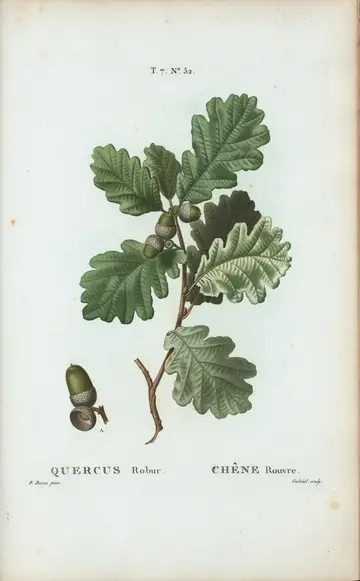
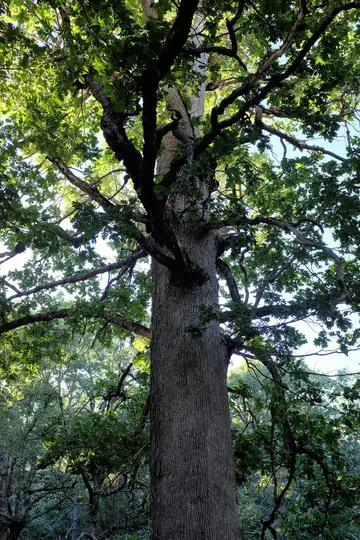
Description
Form
shrub or small tree, perennial, evergreen
Height: Usually under 2 m; 1–6 m as a tree
Flowering
No reliable data in the sources.
Habitat
Leaves
Hard, leathery leaves, hairless on both sides, with spiny-toothed edges.
Flowers
Male flowers open in early summer on hairless catkins 3–5 cm long.
Fruit and seeds
Almost stalkless acorns that take two years to ripen, about 2 cm long and 1.5 cm wide, half to two-thirds enclosed in a cup.
Classification
- KingdomPlantae
- PhylumTracheophyta
- ClassMagnoliopsida
- OrderFagales
- FamilyFagaceae
- GenusQuercus
- SpeciesQuercus coccifera
Native range
According to POWO it is native to Portugal, Spain, the Balearic Islands, France, Italy, Sardinia, Sicily, the Balkans, Greece, Crete, Türkiye, Cyprus, Lebanon-Syria and Palestine, and to North Africa from Morocco to Libya.
IUCN Red List status: Least concern (LC).
Culture and history
Crimson dye
According to Wikipedia it was the food plant of Kermes scale insects, from which the red dye crimson was obtained. Its name coccifera means "bearing the kermes insect".
The garrigue oak
According to Wikipedia it is called "chêne des garrigues" in French, and the word garrigue itself comes from the Catalan or Occitan name of this oak.
Toxicity
ASPCA lists oaks (Quercus species) as toxic to horses; the entry covers the whole genus. The toxic principle is gallotannin; signs are abdominal pain, constipation followed by diarrhoea, discoloured urine and jaundice, and acorns can block the digestive tract.
In an emergency call your local poison centre; for pets, contact a vet straight away. See also: plants and pets.
Look-alikes
- Holly (Ilex aquifolium): The source of its English name holly oak: both have leathery, spiny leaves. Holly bears red berries that stay on the branches in winter; kermes oak bears acorns. Compare side by side →
Questions
Why is it called kermes oak?
According to Wikipedia because it was the food plant of the Kermes scale insects from which the red dye crimson was made. Its Latin name coccifera means "bearing the kermes insect".
Kermes oak: what is its scientific name?
Quercus coccifera L., in the genus Quercus and the family Fagaceae.
Sources
- Wikipedia: Quercus coccifera
- ASPCA Animal Poison Control: Oak (Quercus species)
- Plants of the World Online (Kew) · native range (WCVP)
- GBIF · classification
- Wikidata
Checked: 2026-11-23. Spotted a mistake? Tell us.