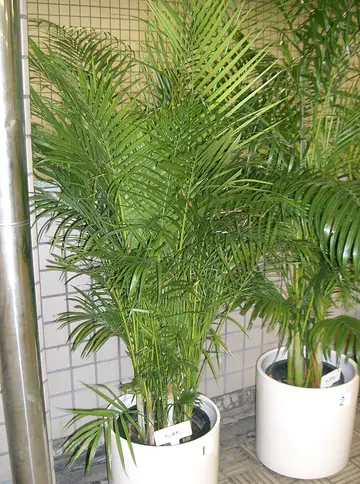
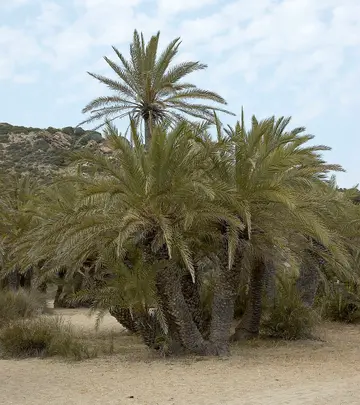
Description
Form
palm, perennial, evergreen
Height: Up to 10 m in the wild
Flowering
No reliable data in the sources.
Habitat
Leaves
Long, feather-like fronds that droop gracefully.
Fruit and seeds
The seeds take six years to mature.
Classification
- KingdomPlantae
- PhylumTracheophyta
- ClassLiliopsida
- OrderArecales
- FamilyArecaceae
- GenusHowea
- SpeciesHowea forsteriana
Native range
According to Wikipedia it is endemic to Lord Howe Island, Australia. Wild seed collected on the island is germinated and exported worldwide as an ornamental; the trade in seeds and seedlings is tightly regulated.
Culture and history
Palm courts
According to Wikipedia the palm courts of Edwardian hotels such as the Ritz in London and the Plaza in New York were filled with Kentia palms; at the time about 4 million seeds a year were harvested on the island.
Toxicity
ASPCA lists the Kentia palm as non-toxic to cats and dogs.
In an emergency call your local poison centre; for pets, contact a vet straight away. See also: plants and pets.
Questions
Is the Kentia palm safe for cats?
Yes. ASPCA lists the Kentia palm as non-toxic to cats and dogs.
Kentia palm: is it toxic to cats and dogs?
Non-toxic to cats and dogs. Non-toxic to pets (ASPCA).
Kentia palm: what is its scientific name?
Howea forsteriana (F.Muell.) Becc., in the genus Howea and the family Arecaceae.
Sources
- Wikipedia: Howea forsteriana
- ASPCA Animal Poison Control: Kentia Palm
- World Flora Online
- GBIF · classification
Checked: 2026-11-22. Spotted a mistake? Tell us.