Description
Form
shrub or small tree, perennial, evergreen
Flower colour
White
Flowering
May–September
Habitat
Leaves
Egg-shaped leaves 2.5–9 cm long that resemble orange leaves; the name aurantiifolia ("orange-leaved") refers to this.
Flowers
Yellowish-white flowers about 2.5 cm across with a light purple tinge on the margins.
Fruit and seeds
A small, round, very sour and fragrant citrus fruit.
Classification
- KingdomPlantae
- PhylumTracheophyta
- ClassMagnoliopsida
- OrderSapindales
- FamilyRutaceae
- GenusCitrus
- SpeciesCitrus × aurantiifolia
Native range
It has no native range: according to Wikipedia it is a natural hybrid of Citrus micrantha and Citrus medica. The name Key lime comes from the Florida Keys, where the fruit became naturalised. It is grown in tropical and subtropical regions.
Toxicity
ASPCA lists lime (Citrus aurantifolia) as toxic to cats, dogs and horses. The toxic principles are essential oils and psoralens; signs are vomiting, diarrhoea, depression and possible dermatitis. According to ASPCA the fruit itself is edible; the peel and the rest of the plant cause problems.
In an emergency call your local poison centre; for pets, contact a vet straight away. See also: plants and pets.
Look-alikes
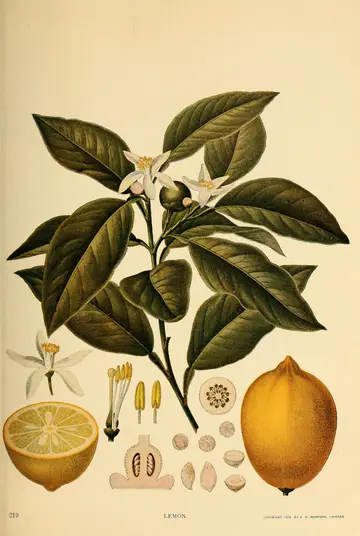
- Lemon (Citrus × limon): Also a sour citrus, but its fruit is oval, pointed at the tip and yellow, and its open flowers are white with purple-pink buds. Compare side by side →
Questions
Key lime: when does it flower?
In spring and summer and autumn: May–September. Months are for temperate northern-hemisphere climates and shift with altitude and weather.
Key lime: is it toxic to cats and dogs?
Toxic to cats and dogs. Essential oils, psoralens: vomiting, diarrhoea.
Key lime: what is its scientific name?
Citrus × aurantiifolia (Christm.) Swingle, in the genus Citrus and the family Rutaceae.
Sources
Checked: 2026-11-22. Spotted a mistake? Tell us.