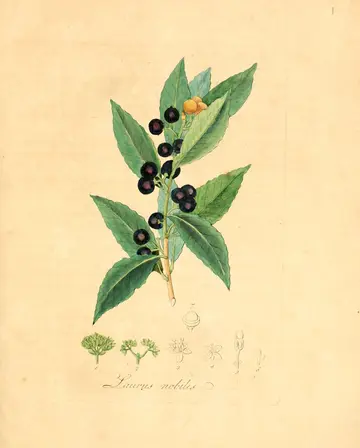
Description
Form
shrub or small tree, perennial, evergreen
Height: Usually 2–3 m; can exceed 15 m
Flower colour
White
Flowering
April–May
Habitat
Leaves
Glossy dark green, leathery leaves with wavy, stiffly spiny edges; may be spineless on the upper branches of old trees.
Flowers
Small, white, four-petalled, fragrant flowers in spring; male and female plants are separate.
Fruit and seeds
Glossy red, small berries on female plants only, staying on the branches through winter.
Classification
- KingdomPlantae
- PhylumTracheophyta
- ClassMagnoliopsida
- OrderAquifoliales
- FamilyAquifoliaceae
- GenusIlex
- SpeciesIlex aquifolium
Native range
According to POWO it is native from Britain, Ireland and Norway to Spain, Portugal, France, Italy, the Balkans, Greece and Romania, and to Morocco, Algeria and Tunisia.
IUCN Red List status: Least concern (LC).
Growing conditions
Light
Sun or shade.
Water
Moderate.
Soil
Moist, free-draining, slightly acid soil.
Temperature
Hardy.
A female plant needs a male nearby to bear berries. Slow-growing; can live 300 years.
Culture and history
The Christmas plant
According to Wikipedia European holly has long been associated with Christmas, and before that with the Roman festival of Saturnalia.
Toxicity
ASPCA's holly entry (scientific name Ilex opaca; English holly is among the names it covers) lists holly as toxic to cats, dogs and horses; the toxins are saponins. Signs are vomiting, diarrhoea and depression; the leaves and berries are of low toxicity. According to Wikipedia the berries can cause vomiting and diarrhoea in children.
In an emergency call your local poison centre; for pets, contact a vet straight away. See also: plants and pets.
Look-alikes
- Colchis holly (Ilex colchica): A native relative growing beneath eastern Black Sea forests; lower and more spreading.
- Oregon grape (Berberis aquifolium): Its leaves are spiny-edged too, but compound; its flowers are yellow and its berries blue-black.
Questions
Are holly berries poisonous?
Yes. They contain saponins and can cause vomiting and diarrhoea in children and pets.
European holly: when does it flower?
In spring: April–May. Months are for temperate northern-hemisphere climates and shift with altitude and weather.
European holly: how do you grow it?
Light: Sun or shade. Water: Moderate. Soil: Moist, free-draining, slightly acid soil. Temperature: Hardy. A female plant needs a male nearby to bear berries. Slow-growing; can live 300 years.
European holly: what is its scientific name?
Ilex aquifolium L., in the genus Ilex and the family Aquifoliaceae.
Sources
- Wikipedia: Ilex aquifolium
- ASPCA Animal Poison Control: Holly
- World Flora Online
- Plants of the World Online (Kew) · native range (WCVP)
- GBIF · classification
- Wikidata
Checked: 2026-11-17. Spotted a mistake? Tell us.