Description
Form
herbaceous (tuberous), perennial
Height: 70–120 cm
Flower colour
PinkPurpleRedYellowWhiteOrange
Flowering
July–October
Habitat
Leaves
Opposite leaves, simple or pinnately divided; leaflets 5–10 cm, egg-shaped.
Flowers
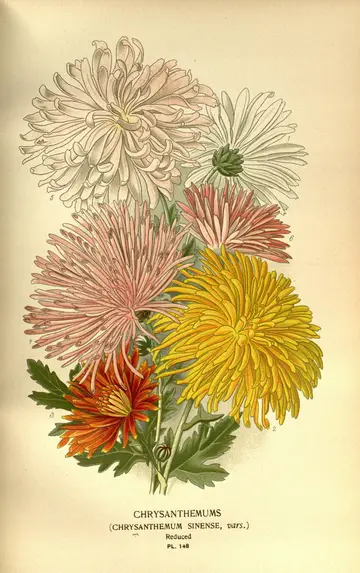
Two to eight flower heads 6–10 cm across on stalks 5–15 cm long, July to October. In the wild form the rays are pink to deep purple; cultivars come in almost every colour, with double, ball- and cactus-shaped heads.
Fruit and seeds
Small, flat dry fruits.
Classification
- KingdomPlantae
- PhylumTracheophyta
- ClassMagnoliopsida
- OrderAsterales
- FamilyAsteraceae
- GenusDahlia
- SpeciesDahlia pinnata
Native range
POWO gives central, south-western, north-eastern and Gulf Mexico as its native range. According to Wikipedia this species is in fact a dahlia that had already hybridised before reaching Europe, and its original wild form is presumed extinct.
Growing conditions
Light
Full sun.
Water
Regular.
Soil
Fertile, free-draining soil.
Temperature
Not frost hardy; in cold regions lift the tubers in autumn and keep them frost-free over winter.
Tall cultivars need staking.
Culture and history
Mexico's national flower
The dahlia is the national flower of Mexico.
Toxicity
ASPCA lists dahlias as toxic to cats, dogs and horses; the toxic principle is unknown. Signs are mild stomach upset and mild skin irritation.
In an emergency call your local poison centre; for pets, contact a vet straight away. See also: plants and pets.
Look-alikes
- Common zinnia: Also a Mexican summer flower with colourful heads, but annual, without tubers, and with undivided, rough leaves. Compare side by side →
- Chrysanthemum: Its flower heads can look similar, but its leaves are lobed and pungent and it flowers in late autumn. Compare side by side →
- Florist's chrysanthemum (Chrysanthemum × morifolium): Its flowers are also daisy-family heads, and cultivars can be double or pompom-shaped, but it flowers in October–November and its leaves are alternate, greyish-hairy and pungent when crushed. Dahlia flowers from July to October, has opposite leaves and grows from tubers. Compare side by side →
Questions
Can dahlia tubers stay in the ground over winter?
They are not frost hardy. In mild regions they can; in cold regions lift them in autumn and store them somewhere dry and frost-free.
Garden dahlia: when does it flower?
In summer and autumn: July–October. Months are for temperate northern-hemisphere climates and shift with altitude and weather.
Garden dahlia: how do you grow it?
Light: Full sun. Water: Regular. Soil: Fertile, free-draining soil. Temperature: Not frost hardy; in cold regions lift the tubers in autumn and keep them frost-free over winter. Tall cultivars need staking.
Garden dahlia: is it toxic to cats and dogs?
Mildly toxic / irritant to cats and dogs. Mild stomach upset and skin irritation.
Garden dahlia: what is its scientific name?
Dahlia pinnata Cav., in the genus Dahlia and the family Asteraceae.
Sources
- Wikipedia: Dahlia pinnata
- ASPCA Animal Poison Control: Dahlia
- World Flora Online
- Plants of the World Online (Kew) · native range (WCVP)
- GBIF · classification
- Wikidata
Checked: 2026-11-17. Spotted a mistake? Tell us.