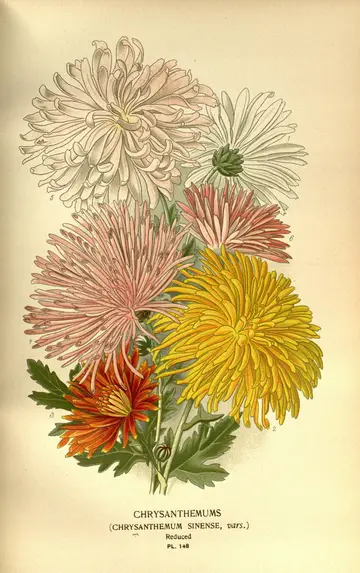
Description
Form
herbaceous, annual
Height: 30–100 cm
Flower colour
PinkRedOrangeYellowWhitePurple
Flowering
June–October
Habitat
Leaves
Opposite, stalkless, lance- or egg-shaped leaves with rough hairs.
Flowers
Single or double flower heads 3–12 cm across at the branch tips, in almost every colour except green and blue.
Fruit and seeds
Small, flat, dry fruits.
Classification
- KingdomPlantae
- PhylumTracheophyta
- ClassMagnoliopsida
- OrderAsterales
- FamilyAsteraceae
- GenusZinnia
- SpeciesZinnia elegans
Native range
According to POWO it is native to Mexico, Guatemala, Belize, Honduras, El Salvador and Nicaragua. It is grown as an ornamental worldwide.
Growing conditions
Light
Full sun.
Water
Moderate; water at the base without wetting the leaves.
Soil
Fertile, free-draining soil.
Temperature
Likes heat; not frost hardy.
Powdery mildew can appear on the leaves in humid, still places.
Culture and history
A flower in space
Zinnias grown in NASA's Veggie experiment on the International Space Station flowered in January 2016, among the first plants made to flower in space.
Toxicity
ASPCA lists zinnias (Zinnia species) as non-toxic to cats, dogs and horses.
In an emergency call your local poison centre; for pets, contact a vet straight away. See also: plants and pets.
Look-alikes
- Mexican marigold: Also has orange and yellow flowers all summer, but its leaves are feathery and pungent. Zinnia leaves are undivided and unscented. Compare side by side →
Questions
When are zinnias sown?
Sow them straight into the ground in late spring, after the last frosts; they flower in about two months.
Common zinnia: how do you grow it?
Light: Full sun. Water: Moderate; water at the base without wetting the leaves. Soil: Fertile, free-draining soil. Temperature: Likes heat; not frost hardy. Powdery mildew can appear on the leaves in humid, still places.
Common zinnia: is it toxic to cats and dogs?
Non-toxic to cats and dogs. Non-toxic to pets (ASPCA).
Common zinnia: what is its scientific name?
Zinnia elegans Jacq., in the genus Zinnia and the family Asteraceae.
Sources
- Wikipedia: Zinnia elegans
- World Flora Online
- Plants of the World Online (Kew) · native range (WCVP)
- GBIF · classification
- Wikidata
- ASPCA Animal Poison Control: Zinnia (Zinnia species)
Checked: 2026-11-17. Spotted a mistake? Tell us.