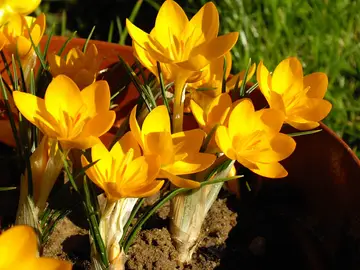
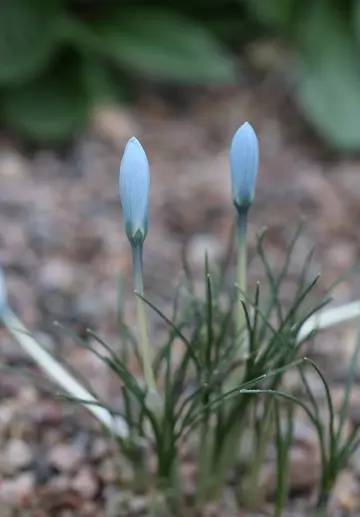
Description
Form
herbaceous (corm), perennial
Height: 60–150 cm
Flower colour
RedPinkWhiteYellowOrangePurple
Flowering
June–September
Habitat
Leaves
Long, upright, stiff, sword-shaped leaves; the name comes from the Latin gladiolus, "little sword".
Flowers
Funnel-shaped, six-parted flowers arranged on one side of a tall spike, opening in turn from the bottom up. Cultivars come in almost every colour.
Fruit and seeds
A three-chambered capsule; garden plants are usually propagated from their corms.
Classification
- KingdomPlantae
- PhylumTracheophyta
- ClassLiliopsida
- OrderAsparagales
- FamilyIridaceae
- GenusGladiolus
- SpeciesGladiolus × hortulanus
Native range
It does not grow wild; it is a group of hybrids created in gardens. Most of its wild Gladiolus ancestors are South African. A few Gladiolus species are native to the Mediterranean and Türkiye.
Growing conditions
Light
Full sun.
Water
Regular watering while growing.
Soil
Fertile, free-draining soil.
Temperature
Not cold hardy; in cold regions lift the corms in autumn and store them somewhere dry and cool over winter.
The tall spikes can blow over; they may need staking.
Culture and history
The gladiators' flower
The name Gladiolus comes from the Latin gladius, "sword", the same root as "gladiator".
Toxicity
ASPCA lists gladioli (Gladiolus species) as toxic to cats, dogs and horses; the toxin is concentrated in the corms. Signs are drooling, vomiting, diarrhoea and lethargy.
In an emergency call your local poison centre; for pets, contact a vet straight away. See also: plants and pets.
Look-alikes
- Field gladiolus (Gladiolus italicus): A wild relative that grows in Türkiye's fields; shorter and slighter, with pinkish-purple flowers in spring.
Questions
Can gladiolus corms stay in the ground over winter?
In coastal regions with mild winters they can. In cold regions lift them in autumn, store them dry and cool, and replant in spring.
Are gladioli toxic to cats and dogs?
Yes. ASPCA lists them as toxic to cats, dogs and horses; the toxin is mostly in the corms.
Garden gladiolus: when does it flower?
In summer and autumn: June–September. Months are for temperate northern-hemisphere climates and shift with altitude and weather.
Garden gladiolus: how do you grow it?
Light: Full sun. Water: Regular watering while growing. Soil: Fertile, free-draining soil. Temperature: Not cold hardy; in cold regions lift the corms in autumn and store them somewhere dry and cool over winter. The tall spikes can blow over; they may need staking.
Garden gladiolus: what is its scientific name?
Gladiolus × hortulanus L.H.Bailey, in the genus Gladiolus and the family Iridaceae.
Sources
- Wikipedia: Gladiolus
- World Flora Online
- GBIF · classification
- ASPCA Animal Poison Control: Gladiola (Gladiolus species)
Checked: 2026-11-17. Spotted a mistake? Tell us.