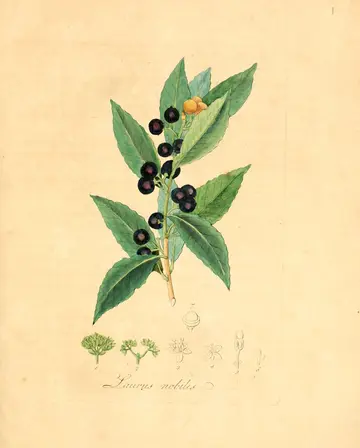
Description
Form
tree, perennial, deciduous
Height: 10–25 m
Flower colour
Green
Flowering
April–May
Leaves
Alternate, narrow, pointed leaves 5–15 cm long with sharp teeth; rough above and hairy below. They fade to pale yellow in autumn.
Flowers
Small, green, petal-less, wind-pollinated flowers, singly or in small clusters.
Fruit and seeds
A small, dark purple, short-stalked, one-stoned fruit about 1 cm across.
Classification
- KingdomPlantae
- PhylumTracheophyta
- ClassMagnoliopsida
- OrderRosales
- FamilyCannabaceae
- GenusCeltis
- SpeciesCeltis australis
Native range
According to POWO it is native from Portugal and Spain to France, Italy, the Mediterranean islands, the Balkans, Greece and Türkiye, Cyprus, the Levant, the Caucasus, Iran and North Africa.
IUCN Red List status: Least concern (LC).
Growing conditions
Light
Full sun; does not tolerate shade.
Water
Little; drought tolerant.
Soil
Light sandy or loamy soil, even poor soil.
Temperature
Loves a Mediterranean climate but tolerates cold.
Culture and history
The nettle tree
The English name "nettle tree" comes from its leaves, which look like nettle leaves; they do not sting.
Look-alikes
- Field elm: Its leaves are toothed with a lopsided base too, but its fruit is round with a papery wing. Compare side by side →
- Stinging nettle: Similar leaves, but a herb with stinging hairs. Compare side by side →
Questions
Why is the nettle tree so often planted in towns?
It tolerates drought, poor soil and city conditions and casts a broad, dense shade.
European nettle tree: when does it flower?
In spring: April–May. Months are for temperate northern-hemisphere climates and shift with altitude and weather.
European nettle tree: how do you grow it?
Light: Full sun; does not tolerate shade. Water: Little; drought tolerant. Soil: Light sandy or loamy soil, even poor soil. Temperature: Loves a Mediterranean climate but tolerates cold.
European nettle tree: what is its scientific name?
Celtis australis L., in the genus Celtis and the family Cannabaceae.
Sources
- Wikipedia: Celtis australis
- World Flora Online
- Plants of the World Online (Kew) · native range (WCVP)
- GBIF · classification
- Wikidata
Checked: 2026-11-17. Spotted a mistake? Tell us.