Telling them apart
European nettle tree vs Stinging nettle
European nettle tree (Celtis australis) and Stinging nettle (Urtica dioica) look similar enough to be confused. They belong to different families: Cannabaceae (hemp family) and Urticaceae (nettle family).
Image wanted. A licensed image will be added when found.
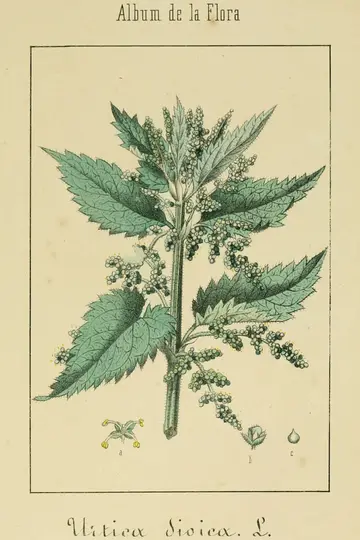
How to tell them apart
- Stinging nettle: Similar leaves, but a herb with stinging hairs.
Side by side
| European nettle tree | Stinging nettle | |
|---|---|---|
| Scientific name | Celtis australis | Urtica dioica |
| Family | Cannabaceae (hemp family) | Urticaceae (nettle family) |
| Form | tree, perennial, deciduous | herbaceous, perennial |
| Height | 10–25 m | 0.5–1.5 m |
| Flower colour | Green | Green |
| Origin | Southern Europe, North Africa and western Asia | Europe, North Africa and temperate Asia |
| Toxicity | — | People: mildly toxic / irritant |
| Flowering | ||
| Leaves | Alternate, narrow, pointed leaves 5–15 cm long with sharp teeth; rough above and hairy below. They fade to pale yellow in autumn. | Opposite, heart-shaped, coarsely toothed leaves. Leaves and stems are covered in fine hairs filled with a stinging fluid, which break at a touch. |
| Flowers | Small, green, petal-less, wind-pollinated flowers, singly or in small clusters. | Tiny greenish flowers in thread-like clusters hanging from the leaf axils. Male and female flowers are mostly on separate plants ("dioica" refers to this). |
| Fruit and seeds | A small, dark purple, short-stalked, one-stoned fruit about 1 cm across. | Very small, one-seeded dry fruits. |
All pairs: look-alike plants · Full pages: European nettle tree, Stinging nettle