Description
Form
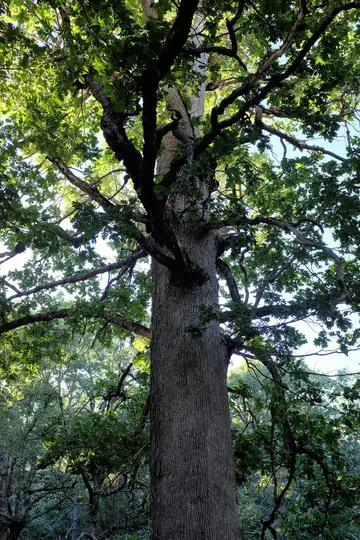
tree, perennial, deciduous
Height: 30–45 m
Flower colour
Green
Flowering
April–May
Habitat
Leaves
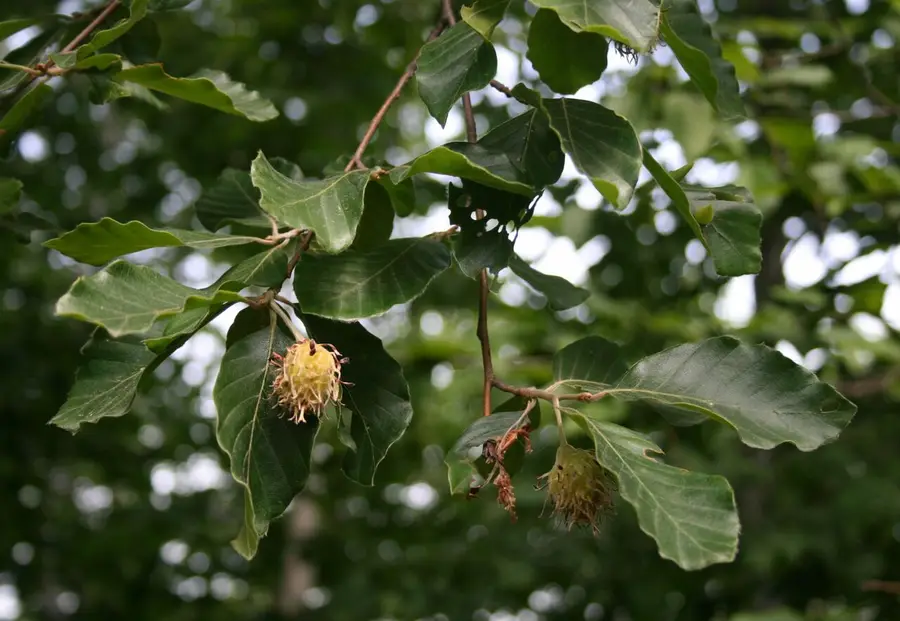
Oval leaves 7–15 cm, smooth-edged or slightly wavy, with 7–13 pairs of veins (6–7 in European beech).
Flowers
Male flowers in long-stalked, hanging catkins; female flowers in small pairs. They open soon after the leaves.
Fruit and seeds
Two or three triangular, glossy brown beechnuts in a bristly husk.
Classification
- KingdomPlantae
- PhylumTracheophyta
- ClassMagnoliopsida
- OrderFagales
- FamilyFagaceae
- GenusFagus
- SpeciesFagus orientalis
Native range
According to POWO its native range is Bulgaria (the Strandzha Mountains), northeastern Greece and Türkiye. Beeches of northeastern Türkiye and the Caucasus have recently been separated as Fagus hohenackeriana, and those of northern Iran as Fagus caspica.
IUCN Red List status: Least concern (LC).
Culture and history
Timber
Beech wood is hard, pale and easy to work; it is widely used for furniture, flooring and household goods.
Look-alikes
- European beech (Fagus sylvatica): A very close relative with slightly smaller leaves and fewer veins; some botanists treat oriental beech as its subspecies.
- Hornbeam (Carpinus betulus): Also has a smooth grey trunk, but its leaves are double-toothed with very prominent veins. Compare side by side →
Questions
How do you tell oriental beech from European beech?
Oriental beech leaves are slightly larger and longer, with 7–13 pairs of veins rather than 6–7.
Oriental beech: when does it flower?
In spring: April–May. Months are for temperate northern-hemisphere climates and shift with altitude and weather.
Oriental beech: what is its scientific name?
Fagus orientalis Lipsky, in the genus Fagus and the family Fagaceae.
Sources
- Wikipedia: Fagus orientalis
- World Flora Online
- Plants of the World Online (Kew) · native range (WCVP)
- GBIF · classification
- Wikidata
Checked: 2026-11-16. Spotted a mistake? Tell us.