Description
Form
subshrub, perennial, evergreen
Height: 30–100 cm
Flower colour
PurpleBlue
Flowering
June–August
Leaves
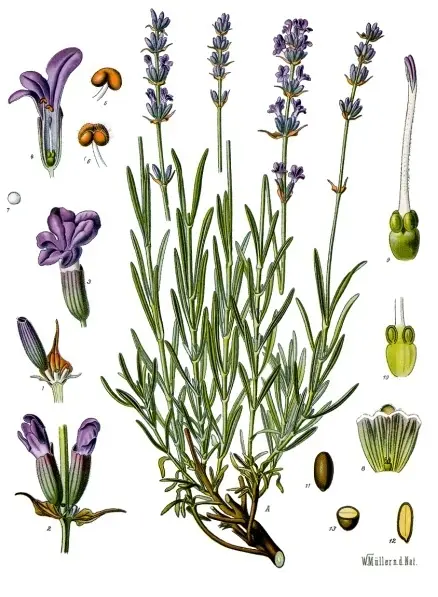
Narrow, grey-green, aromatic leaves with rolled edges.
Flowers
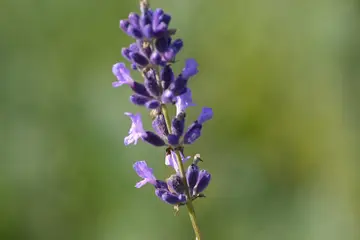
Dense spikes of small violet-blue flowers on long, leafless stalks in summer.
Fruit and seeds
Tiny nutlets.
Classification
- KingdomPlantae
- PhylumTracheophyta
- ClassMagnoliopsida
- OrderLamiales
- FamilyLamiaceae
- GenusLavandula
- SpeciesLavandula angustifolia
Native range
According to POWO it is native to Spain, France and Italy, where it grows on dry, limestone mountain slopes. It has been introduced to much of Europe, the eastern Mediterranean and North America.
IUCN Red List status: Least concern (LC).
Growing conditions
Light
Full sun.
Water
Low; overwatering kills it faster than drought.
Soil
Poor, well-drained, preferably alkaline soil.
Temperature
Hardy to frost.
Trim after flowering, without cutting into old wood, to keep it compact.
Toxicity
ASPCA lists Lavandula angustifolia as toxic to cats, dogs and horses. The toxic principles are linalool and linalyl acetate; signs include nausea, vomiting (not in horses) and loss of appetite. Lavender essential oil is especially risky for pets.
In an emergency call your local poison centre; for pets, contact a vet straight away. See also: plants and pets.
Look-alikes
- Rosemary: Another aromatic Mediterranean shrub; its needle-like leaves are dark green and glossy, and its pale blue flowers sit along the stems rather than on long stalks. Compare side by side →
Questions
Is lavender toxic to cats?
Yes. ASPCA lists English lavender as toxic to cats, dogs and horses; concentrated lavender oil is the main risk.
Is English lavender from England?
No. It is native to the mountains of Spain, France and Italy; the name refers to its popularity in English gardens.
English lavender: when does it flower?
In summer: June–August. Months are for temperate northern-hemisphere climates and shift with altitude and weather.
English lavender: how do you grow it?
Light: Full sun. Water: Low; overwatering kills it faster than drought. Soil: Poor, well-drained, preferably alkaline soil. Temperature: Hardy to frost.
English lavender: how do you propagate it?
Trim after flowering, without cutting into old wood, to keep it compact.
English lavender: what is its scientific name?
Lavandula angustifolia Mill., in the genus Lavandula and the family Lamiaceae.
Sources
- ASPCA Animal Poison Control: Lavender
- Wikipedia: Lavandula angustifolia
- World Flora Online
- Plants of the World Online (Kew) · native range (WCVP)
- GBIF · classification
- Wikidata
Checked: 2026-11-16. Spotted a mistake? Tell us.