Telling them apart
English oak vs Kasnak oak
English oak (Quercus robur) and Kasnak oak (Quercus vulcanica) look similar enough to be confused. Both belong to the same family, Fagaceae (beech family).
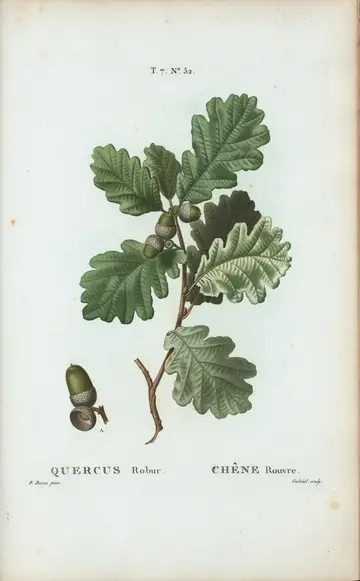
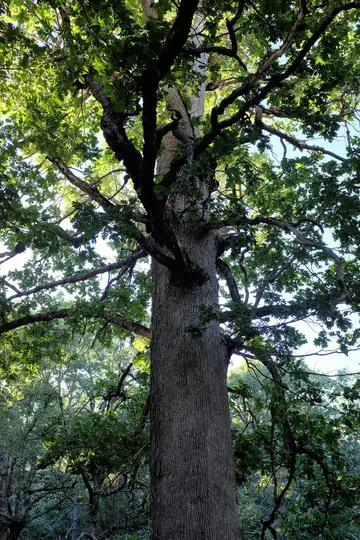
How to tell them apart
- Kasnak oak: A large mountain oak endemic to Türkiye, with bigger leaves that are hairy underneath.
- English oak: Has similar deeply lobed leaves; Kasnak oak leaves are larger and hairier underneath.
Side by side
| English oak | Kasnak oak | |
|---|---|---|
| Scientific name | Quercus robur | Quercus vulcanica |
| Family | Fagaceae (beech family) | Fagaceae (beech family) |
| Form | tree, perennial, deciduous | tree, perennial, deciduous |
| Height | 20–40 m | 25–33 m |
| Flower colour | Green | Green |
| Origin | Europe, the Caucasus and Anatolia | Mountains of southern and western Anatolia |
| Toxicity | — | — |
| Flowering | — | |
| Leaves | Leaves mostly 10–12 cm, irregularly and roundly lobed, with a very short stalk and small "ear-lobes" at the base. | Large, deeply lobed leaves of typical oak shape, hairy underneath. |
| Flowers | Male flowers in hanging, yellowish-green catkins; female flowers small and inconspicuous. They open with the leaves and are wind-pollinated. | Male flowers in hanging catkins, female flowers small and inconspicuous; wind-pollinated. |
| Fruit and seeds | Acorns on a long stalk of 4–8 cm, singly or a few together. A short leaf stalk and a long acorn stalk separate it from the sessile oak. | Acorns sitting in a cup. |
All pairs: look-alike plants · Full pages: English oak, Kasnak oak