Description
Form
herbaceous, annual
Height: 20–60 cm
Flower colour
WhitePinkPurple
Flowering
No reliable data in the sources.
Habitat
Leaves
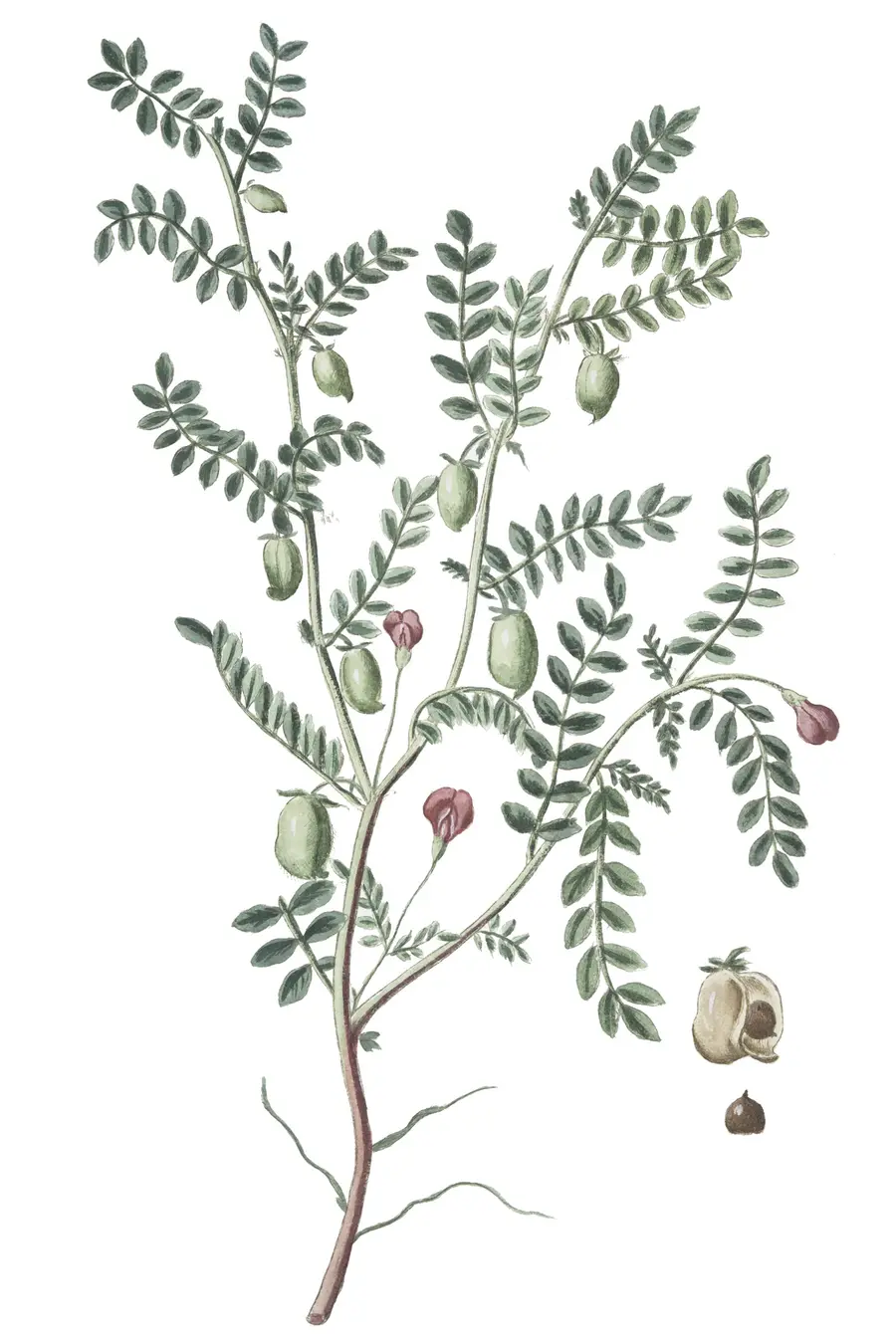
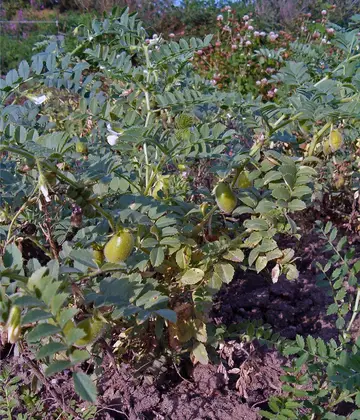
Pinnate leaves with many small, toothed leaflets; the plant is covered in glandular hairs.
Flowers
Small, pea-like flowers, white or pinkish-purple.
Fruit and seeds
A short, inflated pod holding one or two, sometimes three, seeds.
Classification
- KingdomPlantae
- PhylumTracheophyta
- ClassMagnoliopsida
- OrderFabales
- FamilyFabaceae
- GenusCicer
- SpeciesCicer arietinum
Native range
According to POWO its native range is Türkiye, Iraq and Iran; it is introduced everywhere else.
Growing conditions
Light
Full sun.
Water
Little; drought tolerant.
Soil
Free-draining soil; dislikes wet ground.
Temperature
Sown in the cool season, ripens in the hot, dry season.
Fixes nitrogen from the air through bacteria in its roots.
Culture and history
The ram's head
"Arietinum" means "of the ram" in Latin; Pliny wrote that the seed resembles a ram's head.
Look-alikes
- Lentil: A smaller plant with narrow leaflets, tiny flowers and flat pods with lens-shaped seeds. Compare side by side →
Questions
Is the chickpea native to Türkiye?
Yes. POWO gives its native range as Türkiye, Iraq and Iran, and its wild ancestor Cicer reticulatum grows in southeastern Anatolia.
When was the chickpea domesticated?
About 10,000 years ago in the Fertile Crescent, together with wheat, barley, pea and lentil.
Chickpea: how do you grow it?
Light: Full sun. Water: Little; drought tolerant. Soil: Free-draining soil; dislikes wet ground. Temperature: Sown in the cool season, ripens in the hot, dry season. Fixes nitrogen from the air through bacteria in its roots.
Chickpea: what is its scientific name?
Cicer arietinum L., in the genus Cicer and the family Fabaceae.
Sources
- Wikipedia: Chickpea
- World Flora Online
- Plants of the World Online (Kew) · native range (WCVP)
- GBIF · classification
- Wikidata
Checked: 2026-11-16. Spotted a mistake? Tell us.