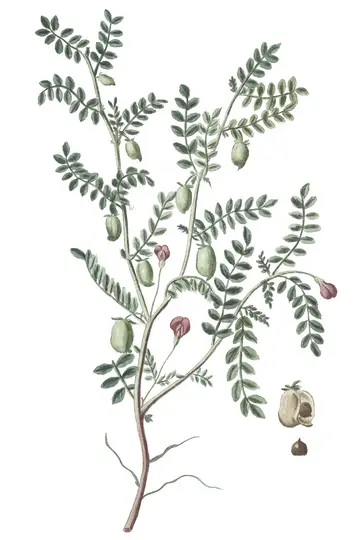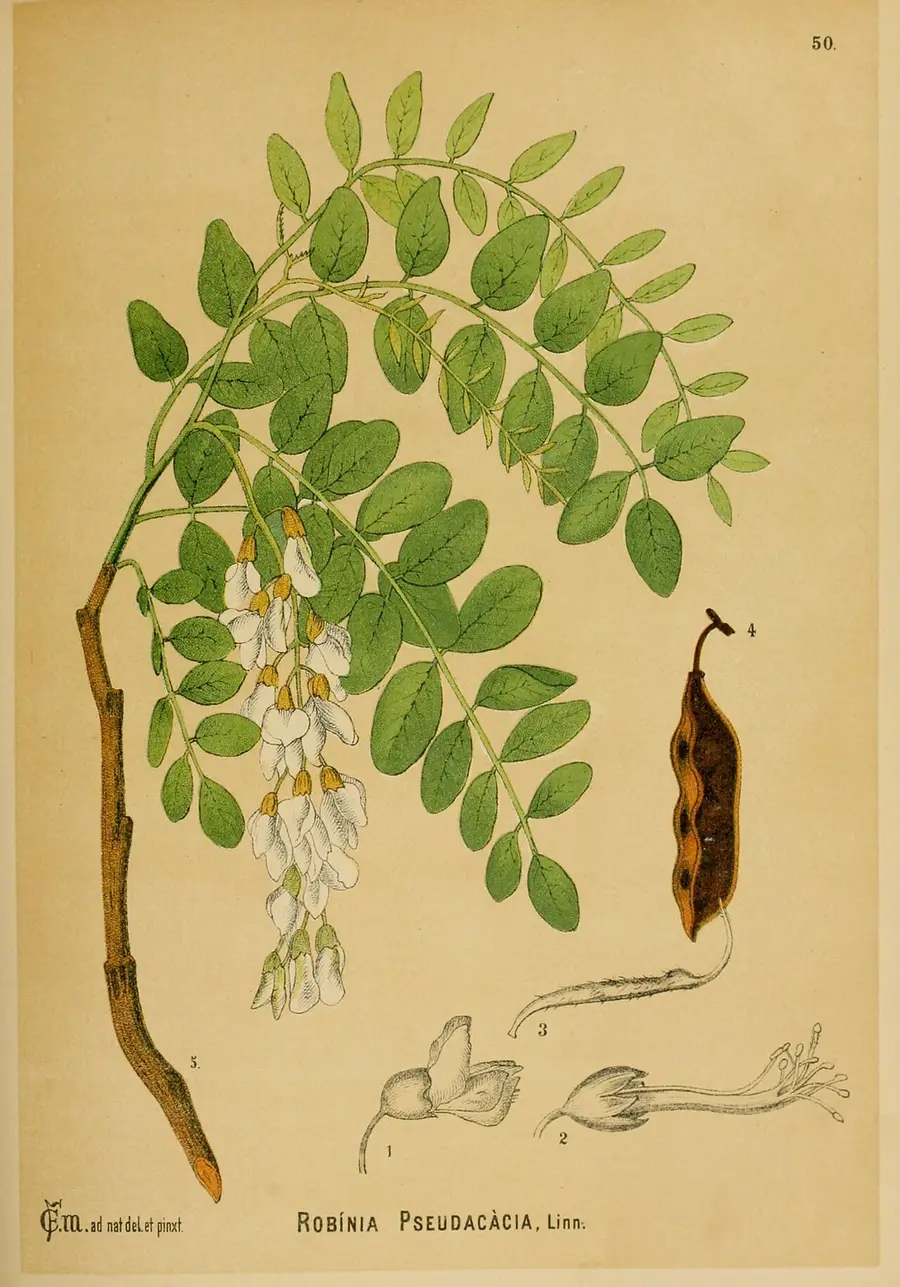
Description
Form
tree, perennial, deciduous
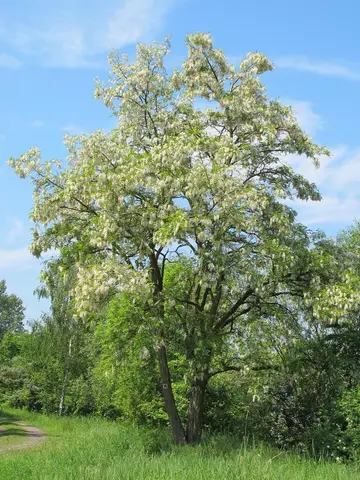
Height: 12–30 m
Flower colour
White
Flowering
May–June
Habitat
Leaves
Compound leaves 15–36 cm long with 9–19 oval leaflets. A pair of stiff thorns sits at the base of each leaf.
Flowers
White, pea-like, very fragrant flowers in hanging clusters; an important nectar source for bees.
Fruit and seeds
Flat, brown pods 5–10 cm long that stay on the tree through winter.
Classification
- KingdomPlantae
- PhylumTracheophyta
- ClassMagnoliopsida
- OrderFabales
- FamilyFabaceae
- GenusRobinia
- SpeciesRobinia pseudoacacia
Native range
According to POWO its native range is the Appalachian and Ozark regions of the eastern United States (from Pennsylvania to Alabama and Georgia). It has been taken to Europe, Asia and many other parts of the world and has run wild.
IUCN Red List status: Least concern (LC).
Culture and history
Acacia honey
The pale honey sold as "acacia honey" in Europe and Türkiye actually comes from the flowers of this tree.
An invasive species
Because it suckers easily from its roots and can fix nitrogen from the air, it is considered an invasive species that disrupts native vegetation in many European countries.
Toxicity
The bark, leaves and seeds contain toxic proteins such as robin and phasin. Serious poisonings have been reported in horses that gnawed the bark. In children, eating the seeds or bark can cause vomiting and abdominal pain.
In an emergency call your local poison centre; for pets, contact a vet straight away. See also: plants and pets.
Look-alikes
- True acacias (Acacia, e.g. silver wattle, A. dealbata): A different genus from Australia and Africa with yellow pompom flowers. The plant sold as "mimosa" in Türkiye is one of these.
- Honey locust (Gleditsia triacanthos): Its trunk and branches carry very long, branched thorns, and its pods are 20–40 cm long.
Questions
Are acacia and black locust the same?
No. The white-flowered tree known as "akasya" in Türkiye is black locust (Robinia pseudoacacia). True acacias (Acacia) are a different genus with yellow pompom flowers.
Black locust: when does it flower?
In spring and summer: May–June. Months are for temperate northern-hemisphere climates and shift with altitude and weather.
Black locust: what is its scientific name?
Robinia pseudoacacia L., in the genus Robinia and the family Fabaceae.
Sources
- Wikipedia: Robinia pseudoacacia
- World Flora Online
- Plants of the World Online (Kew) · native range (WCVP)
- GBIF · classification
- Wikidata
Checked: 2026-11-17. Spotted a mistake? Tell us.