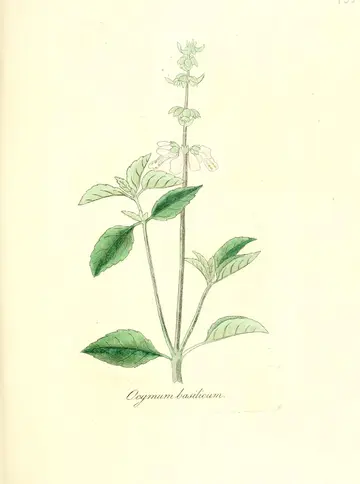
Description
Form
shrub or small tree, perennial, evergreen
Height: Kept at about 1 m in plantations; 10–15 m in the wild
Flower colour
White
Flowering
October–December
Leaves
Leathery, glossy, elliptic leaves with finely toothed edges; young leaves are finely hairy.
Flowers
White, lightly scented flowers with yellow stamens, single or a few together in the leaf axils.
Fruit and seeds
A woody capsule holding one to three large seeds.
Classification
- KingdomPlantae
- PhylumTracheophyta
- ClassMagnoliopsida
- OrderEricales
- FamilyTheaceae
- GenusCamellia
- SpeciesCamellia sinensis
Native range
According to POWO it is native to southern and southeastern China, Hainan, Assam and the eastern Himalaya, Myanmar, Thailand, Laos and Vietnam.
IUCN Red List status: Data deficient (DD).
Culture and history
One leaf, many teas
Green tea is made by heating the leaves straight away, black tea by rolling them and letting them oxidise, and oolong by a method in between; all come from the same plant.
Rize tea
Tea growing spread around Rize in the 1930s and 1940s; the eastern Black Sea region now supplies all of Türkiye's tea.
Toxicity
ASPCA lists caffeinated tea leaves and tea as toxic to cats and dogs: the caffeine (methylxanthines) can cause vomiting, diarrhoea, excessive thirst, restlessness, abnormal heart rhythm, tremors and seizures.
In an emergency call your local poison centre; for pets, contact a vet straight away. See also: plants and pets.
Look-alikes
- Camellia (Camellia japonica): Same genus, grown as an ornamental; its flowers are much larger, pink, red or white and often double. Compare side by side →
Questions
Do green tea and black tea come from different plants?
No. Both are made from Camellia sinensis leaves; the difference is in how the leaves are processed.
Tea plant: when does it flower?
In autumn and winter: October–December. Months are for temperate northern-hemisphere climates and shift with altitude and weather.
Tea plant: is it toxic to cats and dogs?
Toxic to cats and dogs. Caffeine: toxic to cats and dogs.
Tea plant: what is its scientific name?
Camellia sinensis (L.) Kuntze, in the genus Camellia and the family Theaceae.
Sources
- Wikipedia: Camellia sinensis
- World Flora Online
- Plants of the World Online (Kew) · native range (WCVP)
- GBIF · classification
- Wikidata
- ASPCA: Evcil hayvanlara verilmemesi gereken insan yiyecekleri
Checked: 2026-11-16. Spotted a mistake? Tell us.