Description
Form
herb, perennial
Height: 30–100 cm
Flower colour
PinkWhite
Flowering
July–September
Leaves
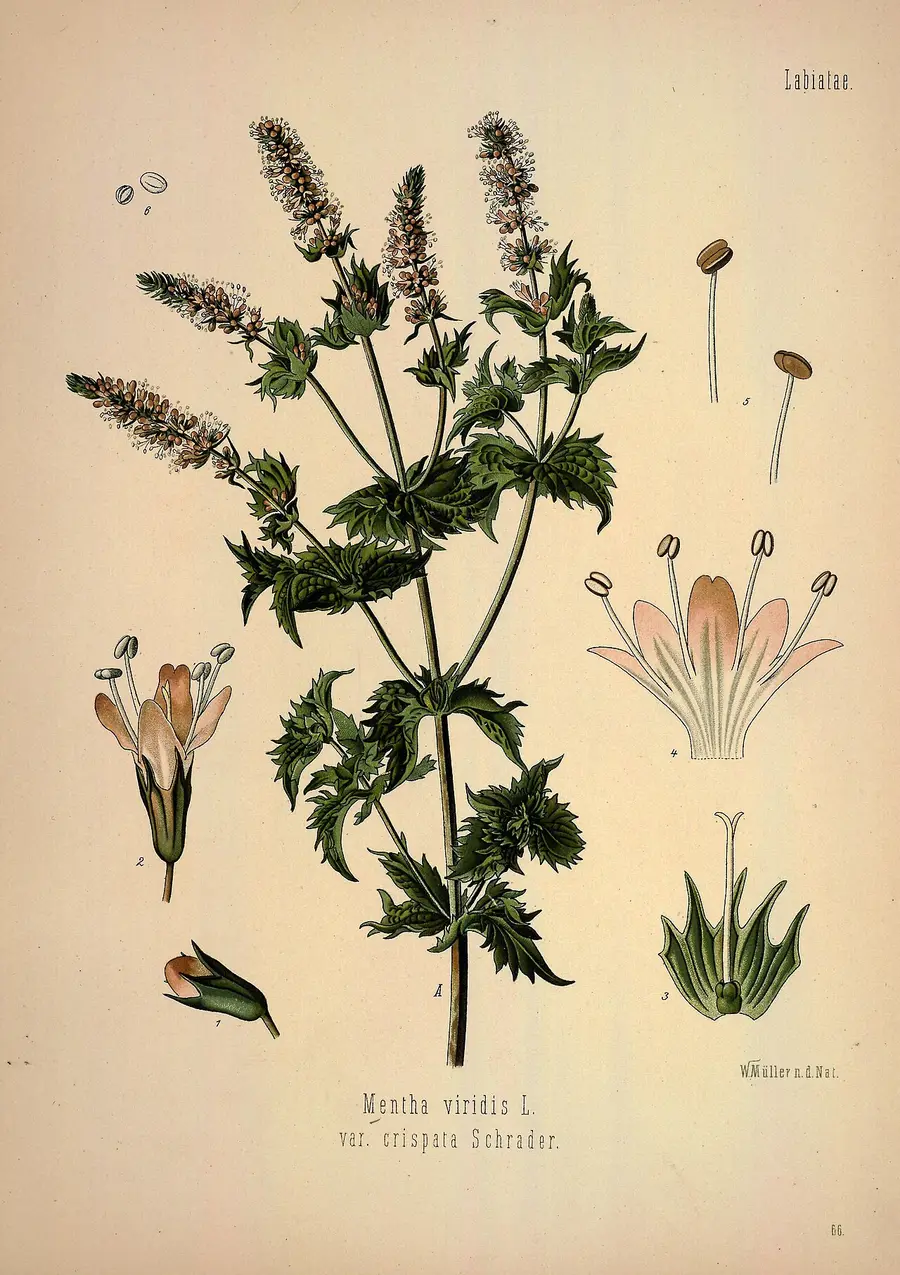
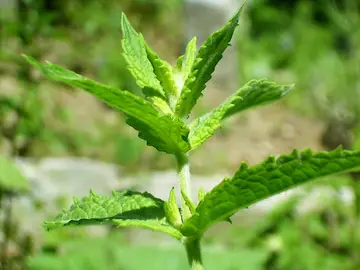
Opposite, lance-shaped leaves 5–9 cm long and 1.5–3 cm wide, toothed and pointed, on square stems; hairless to hairy, with a fresh smell when crushed.
Flowers
Small (2.5–3 mm) pink or white flowers in slender spikes at the stem tips, in summer.
Fruit and seeds
Tiny nutlets.
Classification
- KingdomPlantae
- PhylumTracheophyta
- ClassMagnoliopsida
- OrderLamiales
- FamilyLamiaceae
- GenusMentha
- SpeciesMentha spicata
Native range
According to Wikipedia it is native to Europe and southern temperate Asia, from Ireland in the west to southern China in the east. POWO's native areas include Türkiye, the Balkans, the Caucasus, Iran, the western Himalaya and Tibet. It is naturalised in many temperate regions.
IUCN Red List status: Least concern (LC).
Growing conditions
Light
Sun or partial shade.
Water
Keep moist.
Soil
Rich, moist soil.
Temperature
Hardy; dies back in winter and regrows in spring.
Spreads fast by runners; grow it in a pot to keep it in check.
Toxicity
ASPCA lists the mint genus (Mentha) as toxic to cats, dogs and horses. The toxic principles are essential oils; large amounts cause vomiting and diarrhoea.
In an emergency call your local poison centre; for pets, contact a vet straight away. See also: plants and pets.
Look-alikes
- Horse mint: A wild mint of stream banks with grey, densely hairy leaves. Compare side by side →
Questions
Is mint toxic to cats?
ASPCA lists the mint genus as toxic to cats, dogs and horses; eating large amounts can cause vomiting and diarrhoea.
Spearmint: when does it flower?
In summer and autumn: July–September. Months are for temperate northern-hemisphere climates and shift with altitude and weather.
Spearmint: how do you grow it?
Light: Sun or partial shade. Water: Keep moist. Soil: Rich, moist soil. Temperature: Hardy; dies back in winter and regrows in spring. Spreads fast by runners; grow it in a pot to keep it in check.
Spearmint: what is its scientific name?
Mentha spicata L., in the genus Mentha and the family Lamiaceae.
Sources
- ASPCA Animal Poison Control: Mint
- Wikipedia: Spearmint
- World Flora Online
- Plants of the World Online (Kew) · native range (WCVP)
- GBIF · classification
- Wikidata
Checked: 2026-11-16. Spotted a mistake? Tell us.