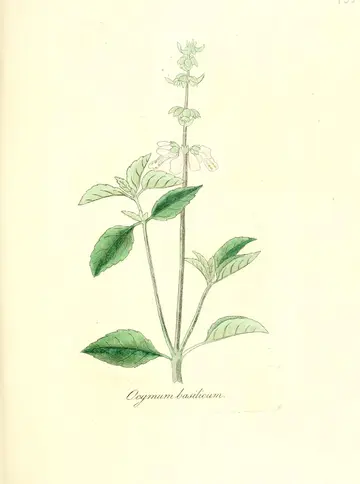
Description
Form
herbaceous, perennial
Height: 40–120 cm
Flower colour
PurplePink
Flowering
June–September
Habitat
Leaves
Opposite, long lance-shaped, toothed leaves, densely grey-hairy especially underneath. The stem is square.
Flowers
Small lilac or pinkish flowers in dense, spike-like clusters at the stem and branch tips.
Fruit and seeds
Very small dry fruits that split into four nutlets.
Classification
- KingdomPlantae
- PhylumTracheophyta
- ClassMagnoliopsida
- OrderLamiales
- FamilyLamiaceae
- GenusMentha
- SpeciesMentha longifolia
Native range
According to POWO it is native to most of Europe, from North and East Africa to South Africa, Türkiye, and western Asia east to Central Asia and the Himalaya.
IUCN Red List status: Least concern (LC).
Toxicity
ASPCA lists the mint genus (Mentha) as toxic to cats, dogs and horses. The toxins are essential oils; signs are vomiting and diarrhoea when eaten in quantity.
In an emergency call your local poison centre; for pets, contact a vet straight away. See also: plants and pets.
Look-alikes
- Spearmint: Garden spearmint (Mentha spicata) has brighter green, almost hairless leaves; horse mint's leaves are distinctly grey-hairy. Compare side by side →
- Other members of the mint family, such as catnip and dead-nettles: Square stems and opposite leaves are shared by the whole family; the mint smell helps, but is not enough on its own to identify the plant.
Questions
Is horse mint toxic to cats and dogs?
ASPCA lists the mint genus as toxic to cats, dogs and horses; the essential oils cause vomiting and diarrhoea when eaten in quantity.
Horse mint: when does it flower?
In summer and autumn: June–September. Months are for temperate northern-hemisphere climates and shift with altitude and weather.
Horse mint: what is its scientific name?
Mentha longifolia (L.) L., in the genus Mentha and the family Lamiaceae.
Sources
- Wikipedia: Mentha longifolia
- Plants of the World Online (Kew) · native range (WCVP)
- GBIF · classification
- Wikidata
- ASPCA Animal Poison Control: Mint (Mentha spp.)
Checked: 2026-11-17. Spotted a mistake? Tell us.