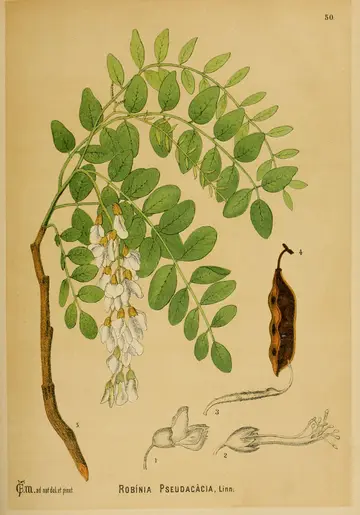
Description
Form
shrub, perennial, deciduous
Height: 2–4 m, rarely 5 m
Flower colour
Yellow
Flowering
May–July
Leaves
Sparse, small leaves 1–3 cm long and up to 4 mm wide that fall early. The thick, somewhat succulent grey-green shoots take over most of their work.
Flowers
Fragrant yellow pea-like flowers 1–2 cm across that cover the shoots in late spring and summer.
Fruit and seeds
Black pods that ripen in late summer, 8–10 cm long according to Wikipedia (4–8 cm according to the Turkish Wikipedia). They often burst open with an audible crack, scattering the seeds.
Classification
- KingdomPlantae
- PhylumTracheophyta
- ClassMagnoliopsida
- OrderFabales
- FamilyFabaceae
- GenusSpartium
- SpeciesSpartium junceum
Native range
According to POWO it is native to Portugal, Spain, the Balearic Islands, France, Corsica, Sardinia, Italy, Sicily, the Balkans, Albania, Greece, Crete, the East Aegean Islands, Türkiye, Lebanon-Syria and Palestine, and to the Azores. It has been introduced to many places with a Mediterranean climate, such as California, Chile, Australia and South Africa.
Growing conditions
Light
Sunny sites.
Soil
Usually dry, sandy soils.
Culture and history
Fibre, brooms and dye
According to Wikipedia it was traditionally used for fibre, especially for tying vines; its fibres were woven into cloth, its branches made into brooms and it yields a yellow dye. The genus name Spartium refers to its use for cordage.
An invasive ornamental
According to Wikipedia it was first brought to California as an ornamental and is now regarded as a noxious invasive species in places with a Mediterranean climate, such as California, Oregon, Hawaii, central Chile, southeastern Australia and the Western Cape.
National flower of Catalonia
According to Wikipedia, known in Catalan as ginesta, it has been regarded as the national flower of Catalonia.
Toxicity
According to Wikipedia all parts of the plant contain toxic alkaloids, including sparteine, and a few poisonings have been described, among them children who swallowed parts of the plant by accident. Symptoms include irritation of the mouth and throat, heavy salivation, vomiting, stomach pain and diarrhoea. No ASPCA entry was found for pets.
In an emergency call your local poison centre; for pets, contact a vet straight away. See also: plants and pets.
Questions
Why does Spanish broom have so few leaves?
According to Wikipedia its leaves are small and fall early, and most of the photosynthesis happens in the green shoots, a water-saving strategy in its dry climate.
Is Spanish broom poisonous?
According to Wikipedia all parts contain toxic alkaloids such as sparteine, and poisonings have been described, including children who swallowed parts of the plant by accident.
Spanish broom: when does it flower?
In spring and summer: May–July. Months are for temperate northern-hemisphere climates and shift with altitude and weather.
Spanish broom: how do you grow it?
Light: Sunny sites. Soil: Usually dry, sandy soils.
Spanish broom: what is its scientific name?
Spartium junceum L., in the genus Spartium and the family Fabaceae.
Sources
- Wikipedia: Spartium junceum
- Plants of the World Online (Kew) · native range (WCVP)
- GBIF · classification
- Wikidata
- Wikipedia
Checked: 2026-11-24. Spotted a mistake? Tell us.