Description
Form
shrub, perennial, evergreen
Height: 0.5–1.5 m
Flower colour
BluePurple
Flowering
February–May
Leaves
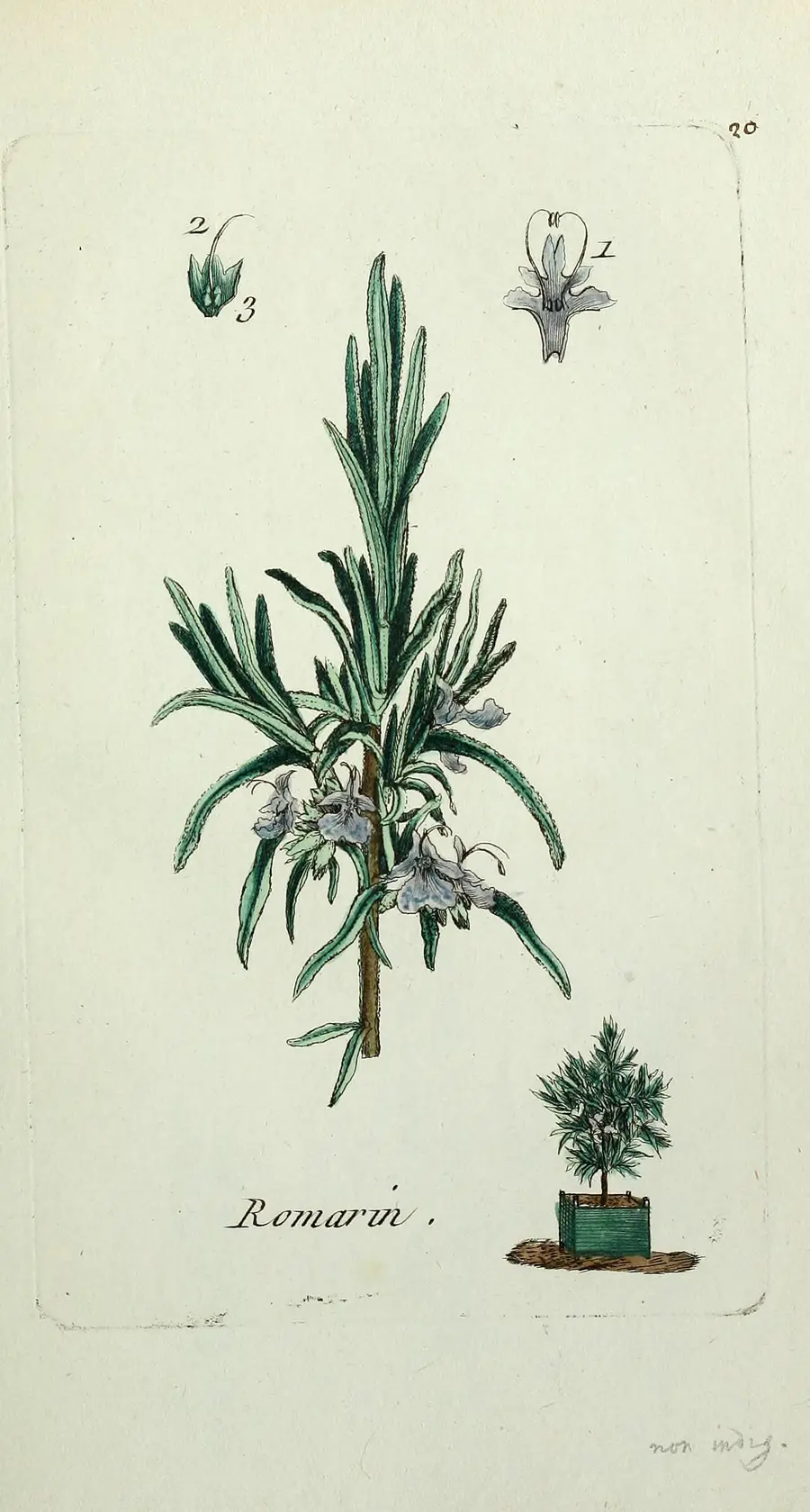
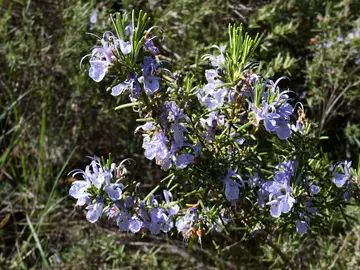
Narrow, needle-like leaves, dark green above and white-felted below, with rolled edges.
Flowers
Small, two-lipped, pale blue to lilac flowers along the stems from late winter.
Fruit and seeds
Tiny nutlets.
Classification
- KingdomPlantae
- PhylumTracheophyta
- ClassMagnoliopsida
- OrderLamiales
- FamilyLamiaceae
- GenusSalvia
- SpeciesSalvia rosmarinus
Native range
According to POWO it is native to the Mediterranean Basin: Spain, Portugal, France, Italy, the Balkans, Greece, Cyprus, Türkiye and North Africa, in dry coastal scrub and on rocky slopes.
Growing conditions
Light
Full sun.
Water
Low; very drought tolerant.
Soil
Poor, well-drained soil.
Temperature
Tolerates light frost.
Root rot from wet soil is the main danger.
Culture and history
A herb of remembrance
Rosemary has long been a symbol of remembrance in European tradition; Ophelia mentions it in Shakespeare's Hamlet.
Toxicity
ASPCA lists rosemary as non-toxic to cats, dogs and horses.
In an emergency call your local poison centre; for pets, contact a vet straight away. See also: plants and pets.
Look-alikes
- English lavender: Its grey leaves are softer, and its flowers are held in spikes on long leafless stalks. Compare side by side →
Questions
Why is rosemary now called Salvia rosmarinus?
DNA studies showed Rosmarinus is nested within Salvia, so in 2017 the species was moved into the sage genus.
Rosemary: when does it flower?
In winter and spring: February–May. Months are for temperate northern-hemisphere climates and shift with altitude and weather.
Rosemary: how do you grow it?
Light: Full sun. Water: Low; very drought tolerant. Soil: Poor, well-drained soil. Temperature: Tolerates light frost. Root rot from wet soil is the main danger.
Rosemary: is it toxic to cats and dogs?
Non-toxic to cats and dogs. Non-toxic.
Rosemary: what is its scientific name?
Salvia rosmarinus Spenn., in the genus Salvia and the family Lamiaceae.
Sources
- ASPCA Animal Poison Control: Rosemary
- Wikipedia: Rosemary
- World Flora Online
- Plants of the World Online (Kew) · native range (WCVP)
- GBIF · classification
- Wikidata
Checked: 2026-11-16. Spotted a mistake? Tell us.